







Definition and Meaning
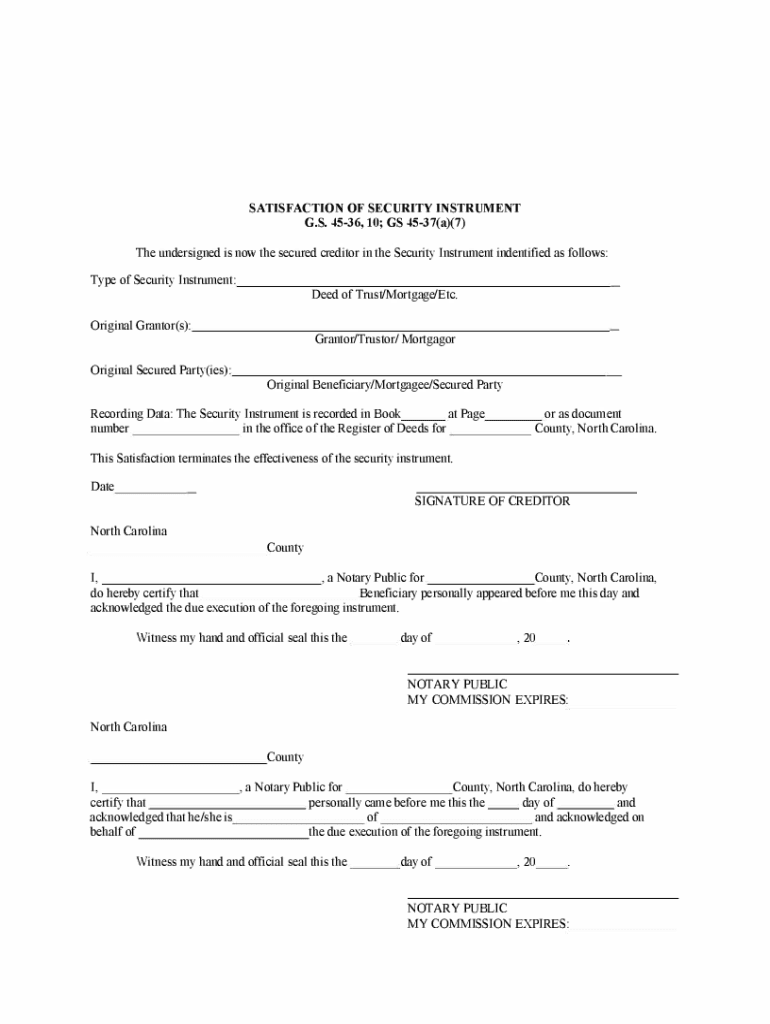
The Satisfaction of Security Instrument G S 45-36, 10; GS is a legal document used in the United States, specifically in North Carolina, to acknowledge that a debtor has fulfilled their obligations under a security instrument. This document usually applies to deeds of trust or mortgages. Once this form is completed and recorded, it effectively terminates the lien associated with the security instrument, releasing the property from the lien's encumbrance.
Examples include situations where a borrower has fully paid off the mortgage or other secured debt, and the creditor provides this form to display that the loan obligations have been settled. The document additionally helps update public records to reflect that the secured party no longer has a claim against the property.
Steps to Complete the Satisfaction of Security Instrument G S 45-36, 10; GS
-
Obtain the Form: Begin by acquiring the appropriate form from a local registrar or lender.
-
Gather Required Information: Collect details about the original security instrument, such as the grantor’s name, the secured party, and recording information.
-
Complete the Form: Fill in all necessary sections with accurate information, specifying the satisfaction of the obligations.
-
Signature and Notarization: Ensure that the creditor or authorized party signs the document. It is crucial to have the form notarized to verify authenticity.
-
Record with Local Authority: Submit the completed and notarized form to the appropriate county office for recording, ensuring public records reflect the update.
-
Document Filing: Keep copies of the filed satisfaction for personal records and provide copies to involved parties like the borrower.
Legal Use of the Satisfaction of Security Instrument G S 45-36, 10; GS
This document serves a vital legal function in confirming that a secured debt has been satisfied in full. It legally protects property owners by releasing real estate from the encumbrance of a lien. Accurate filing prevents future disputes over property ownership and lien claims. It is often required during property transactions to establish clear title transfer.
Non-compliance or improper filing can lead to issues in selling or refinancing properties. Therefore, understanding its legal significance and correct usage is crucial for parties involved in real estate transactions.
Key Elements of the Satisfaction of Security Instrument G S 45-36, 10; GS
-
Grantor Information: Details of the original property owner involved in the security instrument.
-
Secured Party Details: Identifying information of the entity or person who provided the loan or credit.
-
Original Instrument Details: Information about the original security instrument, including where and when it was recorded.
-
Certification of Satisfaction: Statement confirming that the obligations under the security instrument have been fulfilled in full.
-
Signatures and Notarization: Required signatures from the secured party and a notary public to authenticate the document.
State-Specific Rules for the Satisfaction of Security Instrument G S 45-36, 10; GS
In North Carolina, specific statutes govern the completion and filing of this document. The statutes require the form to be recorded with the county registrar’s office in the county where the original security instrument was recorded. North Carolina laws mandate notarization and correct filing procedures to ensure the document is legally valid.
Failure to adhere to state-specific regulations can result in an ineffective satisfaction filing, leaving the property under a lien despite the debt being cleared.
Examples of Using the Satisfaction of Security Instrument G S 45-36, 10; GS
A common scenario involves a homeowner who has fully paid off their mortgage. Upon final payment, the lender provides this form, which the homeowner files with the county to remove the lien. This process ensures that when the homeowner decides to sell, refinance, or transfer the property, there is no longer any legal claim by the lender on the title.
In other cases, during refinancing, lenders may require all existing liens to be cleared via this satisfaction document before issuing a new loan.
Required Documents
To properly execute the satisfaction document, gather the following:
- A copy of the original security instrument
- Proof of debt satisfaction, such as final payment receipts
- Identification documents for individuals involved
- Notarization documents, if any
These documents support the filing and ensure that all necessary information is recorded accurately.
Form Submission Methods: Online, Mail, In-Person
In North Carolina, one can typically submit the form in person or via mail to the county registrar’s office. Some jurisdictions might offer online filing options, requiring access to local government websites. When submitting, ensure all necessary fees are paid, and follow additional instructions specified by the local authority.
Important Terms Related to Satisfaction of Security Instrument G S 45-36, 10; GS
- Lien: A legal right or interest that a lender has in the borrower's property, granted until the debt obligation is satisfied.
- Grantor: The party who transfers rights in the property, usually the borrower.
- Secured Party: The lender or creditor in the security agreement.
- Notarization: The process of signing a document in the presence of a licensed notary public to verify authenticity.
- Recording Office: The local government office where property records, including liens and satisfactions, are filed.




