




01. Edit your home hygiene cleaning online
Type text, add images, blackout confidential details, add comments, highlights and more.

Type text, add images, blackout confidential details, add comments, highlights and more.

Draw your signature, type it, upload its image, or use your mobile device as a signature pad.

Send head start oral form via email, link, or fax. You can also download it, export it or print it out.
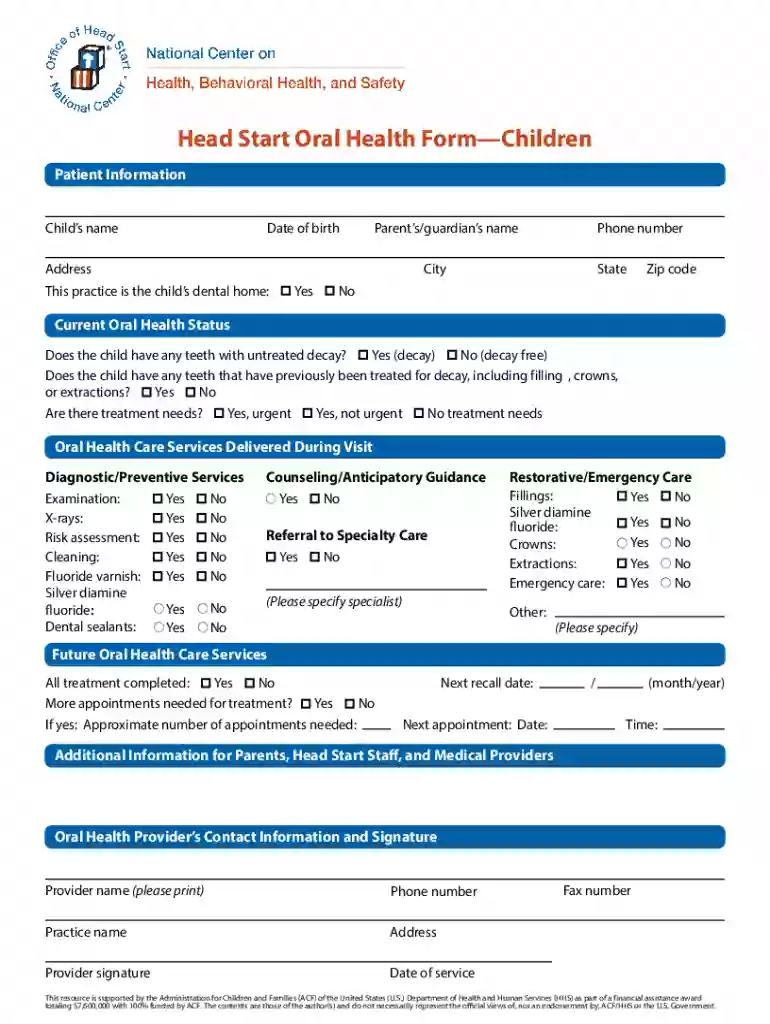
The Head Start Oral Health Form for Children is utilized to evaluate the dental health status of children enrolled in the Head Start program. It collects comprehensive data on untreated decay, previous dental treatment history, current needs, and the services provided during a dental visit. This information is crucial for developing an effective oral health plan and ensuring that each child's dental care needs are appropriately addressed.
To effectively use the Head Start Oral Health Form, caregivers and healthcare providers should familiarize themselves with each section of the document. The form includes spaces for documenting untreated decay, noting past treatments, and assessing current treatment needs. Additionally, providers can record any services delivered during the visit and outline future care requirements. Familiarity with these fields ensures thorough data collection and supports comprehensive treatment planning.
The form can be typically obtained through local Head Start program offices or directly from healthcare providers participating in the Head Start initiative. It is advised to check with local agencies to determine whether digital or physical copies are available, or whether there are state-specific versions with unique requirements. This ensures compliance with local policies and streamlines the form acquisition process.
The Head Start Oral Health Form is an essential tool for maintaining detailed records of a child's dental health. It supports early detection of dental issues, facilitating timely interventions and ongoing monitoring of oral health. By integrating dental care into the broader Head Start initiative, the form helps address the critical health needs of young children, providing a foundation for lifelong health.
Healthcare providers, particularly pediatric dentists and general practitioners involved in community health programs, are the main users of the Head Start Oral Health Form. Additionally, caregivers and local Head Start program coordinators use the form to ensure accurate data collection and follow-up care, smoothing the integration of dental health into overall child wellness plans.
The use of the Head Start Oral Health Form is bound by specific legal standards to protect patient confidentiality and ensure data integrity. All entries must be accurate and recorded in alignment with HIPAA regulations. Healthcare providers must also obtain necessary consent from guardians to share information with relevant parties involved in providing continued care.
For instance, if a pediatric dentist observes untreated cavities during an exam, they would document this finding under the untreated decay section. If the child had previously received fluoride treatments, this information would be recorded in the previous treatments field. Based on this examination, necessary services such as sealants or fillings could be detailed, providing a comprehensive outlook of the child's dental health and outlining essential next steps for care.
We've got more versions of the home hygiene cleaning form. Select the right home hygiene cleaning version from the list and start editing it straight away!
At DocHub, your data security is our priority. We follow HIPAA, SOC2, GDPR, and other standards, so you can work on your documents with confidence.
Nov 12, 2024 The dosage forms have evolved from tablets and solid beverages to oral liquids, candies, chocolates, and more.
Feb 19, 2026 Understand the goals and objectives of Head Start Programs and Local Oral Health Programs; Describe the importance of oral health and theRead more


