







Definition and Purpose of the AAO Transfer Form
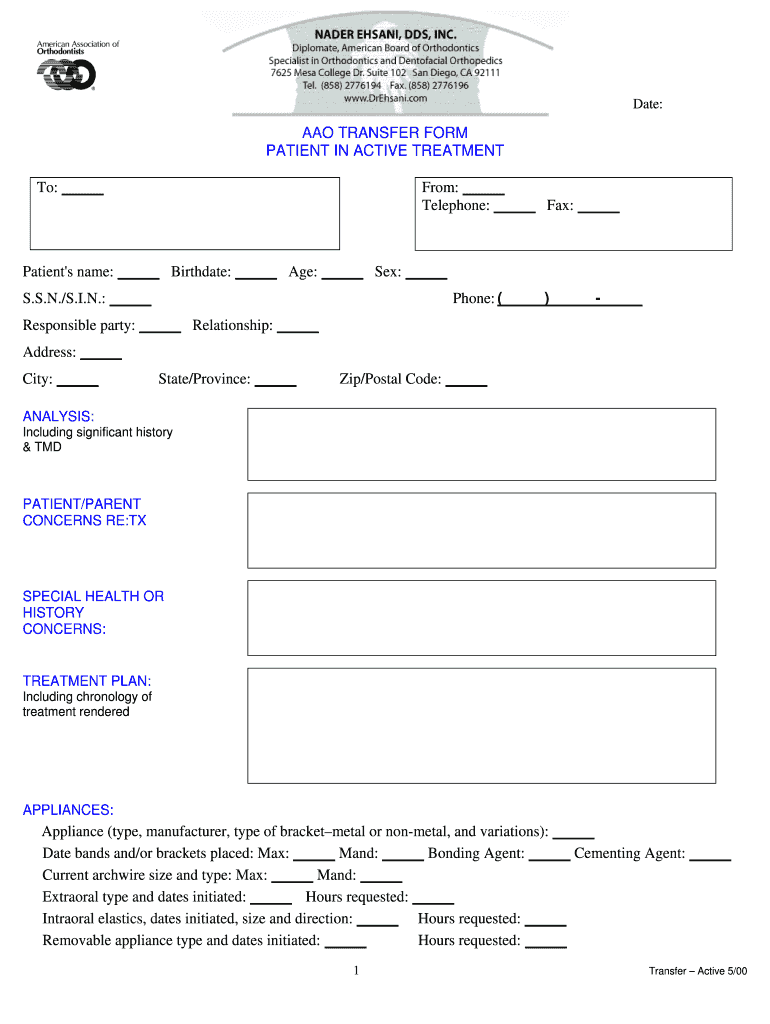
The AAO Transfer Form is an official document utilized during the process of transferring orthodontic patients' records between different orthodontic practices. This form serves to ensure that all pertinent information regarding a patient’s ongoing treatment is accurately communicated from one provider to another, thereby facilitating continuity of care. Key elements typically included in the form consist of:
- Patient demographic information, including name, contact details, and date of birth.
- Treatment history that outlines procedures undertaken, progress notes, and any appliances currently in use.
- Dosage and type of medications, if applicable.
- Financial details, which reflect any outstanding balances or financial contracts between the previous and new orthodontic practices.
- Authorization for release of records, ensuring that the patient's information can be legally transferred.
Addressing these details helps avoid miscommunication and supports a smoother transition for the patient, reinforcing the importance of clinical integrity and patient care.
Steps to Complete the AAO Transfer Form
Successfully filling out the AAO Transfer Form requires careful attention to detail. Here are the steps to ensure proper completion:
- Gather Necessary Information: Collect all relevant patient details, including identification, treatment history, and financial information.
- Provide Patient Information: Accurately fill in the patient's name, address, phone number, and birth date. This ensures that the patient's identity is clearly established.
- Detail Treatment History: Note all treatments that have been conducted thus far, including appliances used and any significant changes in the patient's oral health.
- Include Financial Data: If there are any financial obligations or outstanding balances, include these details for transparency.
- Authorization Signature: Secure the patient’s signature for the release of their records. This legal authorization is critical for compliance with HIPAA regulations.
- Review for Accuracy: Double-check all entries to eliminate errors. An accurately completed form avoids delays in processing.
- Submit the Form: Determine the best method for submission, whether electronically, via mail, or in-person, based on the receiving practice's preferences.
Completing the AAO Transfer Form meticulously enhances the likelihood of a smooth transition while maintaining patient confidentiality.
Who Typically Uses the AAO Transfer Form
The AAO Transfer Form is primarily utilized by various stakeholders in the orthodontic and healthcare fields. Common users include:
- Orthodontists: When transferring patient records to provide continuity of care for their patients.
- Dental Assistants and Administrative Staff: Often responsible for managing patient records and ensuring the transfer form is correctly filled.
- Patients: Individuals undergoing orthodontic treatment who are changing providers and need their treatment history conveyed to the new provider.
Each of these parties plays a vital role in ensuring that the transfer is handled smoothly and efficiently, allowing for effective management of orthodontic care.


Important Terms Related to the AAO Transfer Form
Understanding key terms associated with the AAO Transfer Form can facilitate its effective use. Important definitions include:
- HIPAA Compliance: Refers to the legal protection of patient information during the transfer process. Compliance ensures that patient data is handled securely.
- Authorization for Release: A requirement which must be signed by the patient to legally allow information sharing between orthodontic providers.
- Transfer of Care: Describes the process of moving a patient from one orthodontic practice to another, including all necessary documentation and communication.
- Orthodontic Appliances: Devices used in orthodontic care, such as braces or retainers, which should be detailed in the form for comprehensive recordkeeping.
By being familiar with these terms, individuals involved in the transfer process can navigate it with greater ease and accuracy.
Legal Use of the AAO Transfer Form
The legal aspects surrounding the AAO Transfer Form are essential for protecting patient information and ensuring compliance with healthcare regulations, particularly HIPAA. Points to consider include:
- Confidentiality of Patient Records: The form stipulates that all patient details must be treated confidentially and disclosed only to authorized individuals and practices.
- Legitimacy of Signatures: The patient's signature serves as legal consent for transferring their records, making it a crucial component of the form.
- Documentation of Care Transfers: Legally documenting the transfer of care helps both practices maintain accountability and adhere to professional standards.
Understanding these legal frameworks not only safeguards patient rights but also enhances the professionalism of the orthodontic practices involved.
Key Elements of the AAO Transfer Form
Several critical components make up the AAO Transfer Form, which collectively support its functionality in patient record transfers:
- Patient Information Section: Essential for identifying the patient and ensuring clear communication.
- Treatment History Section: Details the entire scope of the patient's orthodontic journey, providing valuable insight to the new provider.
- Financial Obligations Section: Outlines any financial agreements in place and ensures transparency between the patient and both practices.
- Acknowledgment of Receipt: Often included at the end of the form, confirming that the new orthodontist has received the patient's records and agreeing to continue treatment.
By including these key elements, the AAO Transfer Form represents a comprehensive tool for managing patient information securely and efficiently.




