





Definition and Purpose of the IOB KYC Form
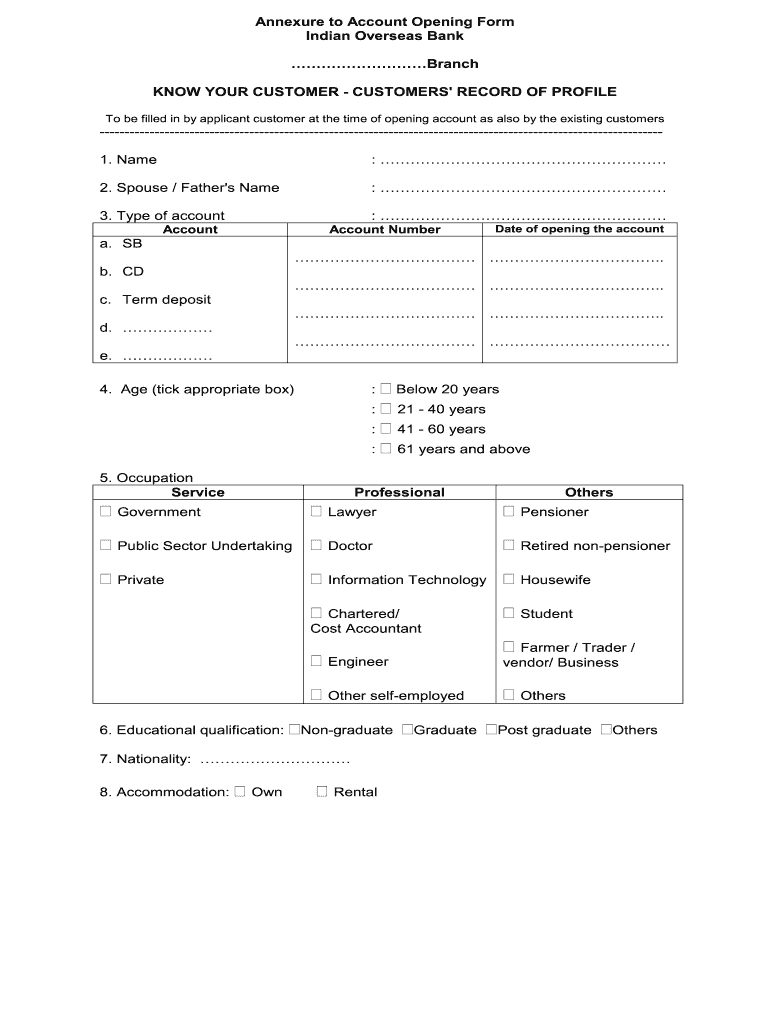
The Indian Overseas Bank (IOB) KYC form is a crucial document for customers as it gathers essential information needed for the Know Your Customer (KYC) process. KYC is a regulatory requirement that helps prevent financial fraud, identity theft, and money laundering. The IOB KYC form ensures that the bank verifies the identity of its customers and complies with legal obligations.
The form collects various personal details, including:
- Full name
- Address
- Date of birth
- Contact number
- Income sources
- Occupation
- Educational qualifications
The information collected aids the bank in assessing the risk associated with individual accounts and facilitates smooth banking operations.
Steps to Fill Out the IOB KYC Form Online
Completing the IOB KYC form online has been streamlined for customer convenience. Follow these steps to fill it out:
- Visit the IOB Website: Go to the official Indian Overseas Bank website or access the specific URL for the KYC form.
- Navigate to KYC Section: Locate the KYC form section, often found under account services or customer services.
- Select the KYC Form: Choose the option for the IOB KYC form online.
- Fill in Personal Details: Enter all required fields carefully. This includes personal identification information and any additional details as necessitated by the form.
- Upload Supporting Documents: Attach necessary documents for proof of identity and address verification. Commonly accepted documents may include a government-issued ID, utility bills, or bank statements.
- Review and Submit: Double-check all entered details for accuracy before submitting the form.
This online process ensures that customers can conveniently complete their KYC without visiting a branch, making it easier for them to update their information as needed.
Requirements for Completing the IOB KYC Form
Certain documents are mandatory when filling out the IOB KYC form, ensuring that identity verification is credible and compliant with regulatory standards. Key requirements include:
- Proof of Identity: A valid government-issued ID is required. Acceptable forms include:
- Passport
- Driver’s license
- Voter ID
- Proof of Address: Documentation verifying the customer's residence must also be provided. This can be:
- Utility bill (electricity or water bill)
- Lease agreement
- Bank statement
It’s essential that the documents submitted are not expired and clearly show the customer's name and address to ensure proper verification.
Updates and Changes to IOB KYC Information
Changes in personal circumstances often necessitate updates to KYC information. The IOB provides several methods for customers to update their KYC details efficiently:
-
Online Update Procedure: Customers can log into their IOB net banking account and access the KYC update section. Here’s how:
- Log in to your internet banking account.
- Navigate to the KYC update option.
- Fill in the updated information and upload the necessary documents.
- Submit the request for processing.
-
Branch Visit: Alternatively, customers can visit their nearest IOB branch for assistance. It is advisable to carry relevant documents to facilitate the update process.
-
Mobile Update Option: Some updates may also be performed via the bank's mobile app, enhancing convenience for users on the go.
Regular updates are crucial to maintaining accurate records and ensuring compliance with banking regulations.
Legal and Regulatory Context of the IOB KYC Form
The IOB KYC form is governed by regulatory compliance measures outlined by the Reserve Bank of India. These regulations are in place to combat money laundering and ensure transparent financial transactions. Key aspects of the legal framework include:
- Mandatory Compliance: All banks must adhere to strict KYC norms to verify the identity of their customers.
- Data Privacy Laws: Sensitive customer information collected through the IOB KYC form is protected under India's data protection laws. Banks must ensure that personal information is securely stored and handled.
- Penalties for Non-Compliance: Failing to complete KYC requirements may result in penalties for both the institution and the customer, including potential account restrictions.
Understanding these regulations is crucial for both customers and banking institutions to ensure trust and safety in the financial system.
Common Scenarios Needing KYC Updates
KYC details might need to be updated in several scenarios that affect personal or financial status. Customers should be aware of the following common situations:
- Change of Address: Moving residences requires an update to the address in the KYC record.
- Alteration in Name: Legal name changes due to marriage or other reasons necessitate an update to avoid discrepancies.
- Change in Occupation: An employment change affecting income sources requires a KYC update for accurate risk assessment by the bank.
Being proactive about updating KYC information can help maintain uninterrupted banking services and align with compliance requirements.
E-KYC and Its Benefits for IOB Customers
The concept of electronic KYC (e-KYC) has gained popularity due to its efficiency and ease of access. The IOB platform offers options for customers to complete KYC quickly and seamlessly. Here are the benefits of e-KYC:
- Speed: E-KYC processes are typically faster than traditional methods, allowing customers to onboard and access services in minutes.
- Convenience: Customers can complete KYC from anywhere without needing to visit a bank branch, which is particularly useful for those with busy schedules.
- Reduced Documentation: E-KYC often requires less documentation, simplifying the process for both customers and the bank.
With the increasing use of digital platforms, e-KYC represents a significant advancement in customer service and operational efficiency for financial institutions.