
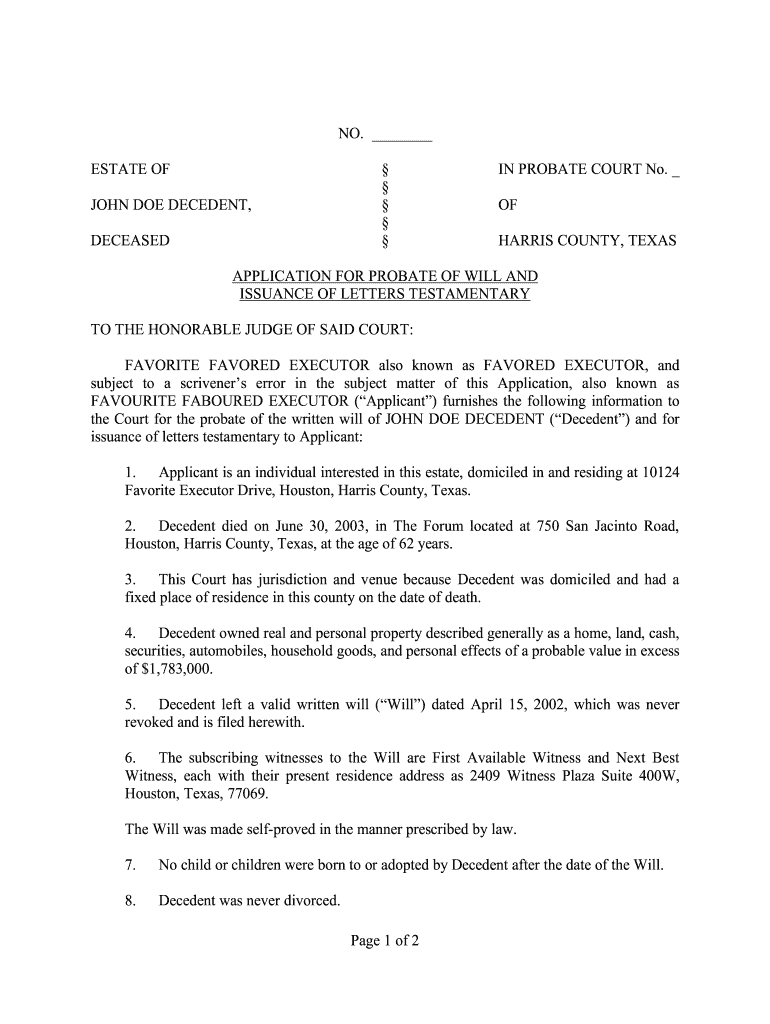







Definition & Meaning of Sample Letter of Testamentary
A sample letter of testamentary is a legal document issued by a probate court, granting an individual the authority to act on behalf of a deceased person's estate. This document is essential for executors to manage the deceased's assets, settle debts, and distribute the remaining property according to the terms of the will. The letter serves as proof of the executor’s legal right to administer the estate and is often required when dealing with financial institutions and other entities.
Key components of a letter of testamentary include:
- Court Reference: Information identifying the probate court that issued the letter.
- Decedent Information: The name, date of death, and any relevant identification details of the person who has passed away.
- Executor Information: The name of the appointed executor, who has the legal authority to manage the estate.
- Will Verification: A statement affirming that a valid will exists and has not been revoked.
- Scope of Authority: Details regarding the powers granted to the executor, which may include selling property, handling bank accounts, and paying debts.
Understanding the purpose and format of a sample letter of testamentary is crucial for beneficiaries and executors navigating the complexities of estate administration.
How to Use the Sample Letter of Testamentary
Using a sample letter of testamentary involves several steps to ensure its effectiveness in conveying the necessary legal authority. Although the specific format may vary by state, the following guidelines offer a general framework for utilizing such a document:
- Complete Necessary Forms: Begin by gathering all required documents, including the decedent's will and identification.
- Filing with Probate Court: Submit a petition to the probate court, accompanied by the completed letter of testamentary. This initiates the legal process.
- Obtain the Court's Seal: Once the court reviews and approves your petition, the letter will be issued with an official seal or signature.
- Present the Letter as Needed: Use the letter when interacting with banks, insurance companies, or other financial entities to assert your authority in managing the estate.
Examples of transactions requiring the letter of testamentary include:
- Accessing bank accounts and closing them, if necessary.
- Selling real property owned by the deceased.
- Distributing assets according to the will’s terms.
Using the sample letter of testamentary correctly is fundamental for ensuring a smooth estate administration process.
Important Terms Related to Sample Letter of Testamentary
Familiarity with specific terminology enhances understanding and navigation of the probate process. Here are some important terms associated with a sample letter of testamentary:
- Executor: An individual designated in a will who is responsible for administering the estate of the deceased.
- Testator: The person who has created a will, outlining their wishes for the distribution of their estate upon death.
- Probate: The legal process through which a deceased person's will is validated, and their estate is administered according to their wishes.
- Letters of Administration: Similar to letters testamentary, but issued when a person dies without a will, granting authority to manage the estate.
- Beneficiary: An individual or entity designated to receive assets from the estate as stipulated in the will.
Understanding these terms helps individuals involved in estate administration communicate effectively and navigate the associated legal processes.
State-Specific Rules for the Sample Letter of Testamentary
State laws regarding the letter of testamentary can vary significantly, impacting how it is created and utilized. Here are some considerations to keep in mind for different states:
- Application Process: Each state has specific forms and procedures for applying for letters testamentary. For instance, in Texas, applicants often use Form 101 to initiate the probate process, whereas Florida may require form PB-315.
- Required Documents: States may demand different documentation. Most require the original will, death certificate, and sometimes a list of the deceased's assets.
- Fees: Filing fees for probate applications and letters testamentary can differ widely. In some states, the fees may be a flat rate, while others may calculate fees based on the estate's value.
- Timeframes: The time it takes to receive letters testamentary can also vary. States may have distinct timelines for probate proceedings, affecting how soon executors can act.
Understanding these nuances is crucial for executors and beneficiaries to ensure compliance with state requirements and avoid unnecessary delays in estate administration.
Examples of Using the Sample Letter of Testamentary
Practical scenarios of utilizing a sample letter of testamentary can further illustrate its importance. Here are some examples:
- Bank Account Access: An executor presents the letter to the deceased's bank to gain access to accounts, enabling them to settle debts and manage ongoing expenses tied to the estate.
- Property Transactions: The executor may need to sell the deceased's home. They present the letter to prospective buyers and real estate agents to validate their authority to sell property.
- Insurance Claims: In situations where the deceased had life insurance, the executor uses the letter to file claims and collect benefits on behalf of the beneficiaries as directed in the will.
- Debt Settlement: Executors may need the letter to contact creditors and arrange for the settlement of outstanding debts, ensuring that all obligations are met before distributing assets.
These examples illustrate how the sample letter of testamentary is integral to executing the deceased's final wishes and managing the estate effectively.




