




01. Edit your form online
Type text, add images, blackout confidential details, add comments, highlights and more.

Type text, add images, blackout confidential details, add comments, highlights and more.

Draw your signature, type it, upload its image, or use your mobile device as a signature pad.

Send it via email, link, or fax. You can also download it, export it or print it out.
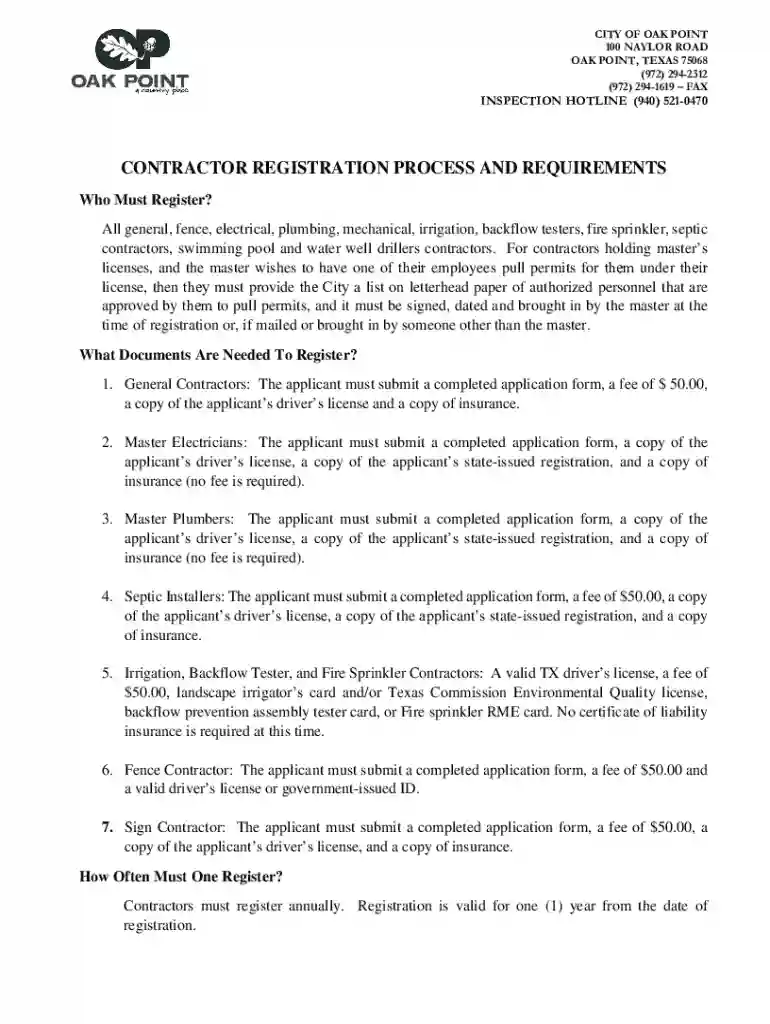
Contractor registration is a formal process that ensures contractors meet specific criteria to perform work legally. This procedure is crucial for maintaining professional standards and protecting public interests. The registration confirms that contractors possess the necessary qualifications, insurance, and credibility to undertake contracts securely. For instance, a contractor working in Oak Point, Texas, must adhere to local regulations, providing a model that illustrates broader practices commonly in place across the United States.
Research Local Requirements: Begin by understanding the specific registration criteria and required documents for your locality. Municipal websites or local business bureaus are reliable sources of this information.
Gather Required Documentation: Compile necessary documents, such as a completed registration form, proof of insurance, licenses, and certifications. Ensure documents reflect the latest standards and regulations applicable to your project type.
Submit the Application: Choose from submission options such as online, mail, or in-person, depending on local guidelines. Confirm all sections of the form are accurately filled out, including personal details, company information, and any required signatures.
Pay Applicable Fees: Fees are integral to the registration. These may vary based on the contractor category or project scope. Ensure the payment is made through approved channels to prevent delays.
Await Approval: After submission, expect a review period where officials verify your application. This can range from a few days to several weeks, depending on local processes and the completeness of your documentation.
Typically, general contractors, electricians, plumbers, and other specialized tradespeople are required to complete this process. Businesses intending to take on construction or renovation projects often engage contractors who are legally registered and compliant with regional standards.


Each state has unique regulations governing contractor registration. For instance, Texas requires contractors in specific cities to register annually. It is critical to research and comply with these jurisdiction-specific rules to avoid potential legal issues.
Adhering to the contractor registration process ensures legal compliance. This process protects all parties by establishing clear legal standards and expectations. Non-compliance can lead to penalties, project delays, or legal action.
Consider a contractor planning a large-scale residential project. Prior to starting, they must complete the registration process to legally bid on projects, obtain permits, and secure client contracts. This registration not only enables them to operate effectively but also builds client trust through verified credibility.
Failure to complete the contractor registration can result in fines, legal action, or revoked licenses. These repercussions highlight the importance of adhering to legal obligations associated with contractor work. Understanding the legal framework helps prevent disruptions and maintains professional standards in practice.
We've got more versions of the CONTRACTOR REGISTRATION PROCESS AND REQUIREMENTS form. Select the right CONTRACTOR REGISTRATION PROCESS AND REQUIREMENTS version from the list and start editing it straight away!
At DocHub, your data security is our priority. We follow HIPAA, SOC2, GDPR, and other standards, so you can work on your documents with confidence.


