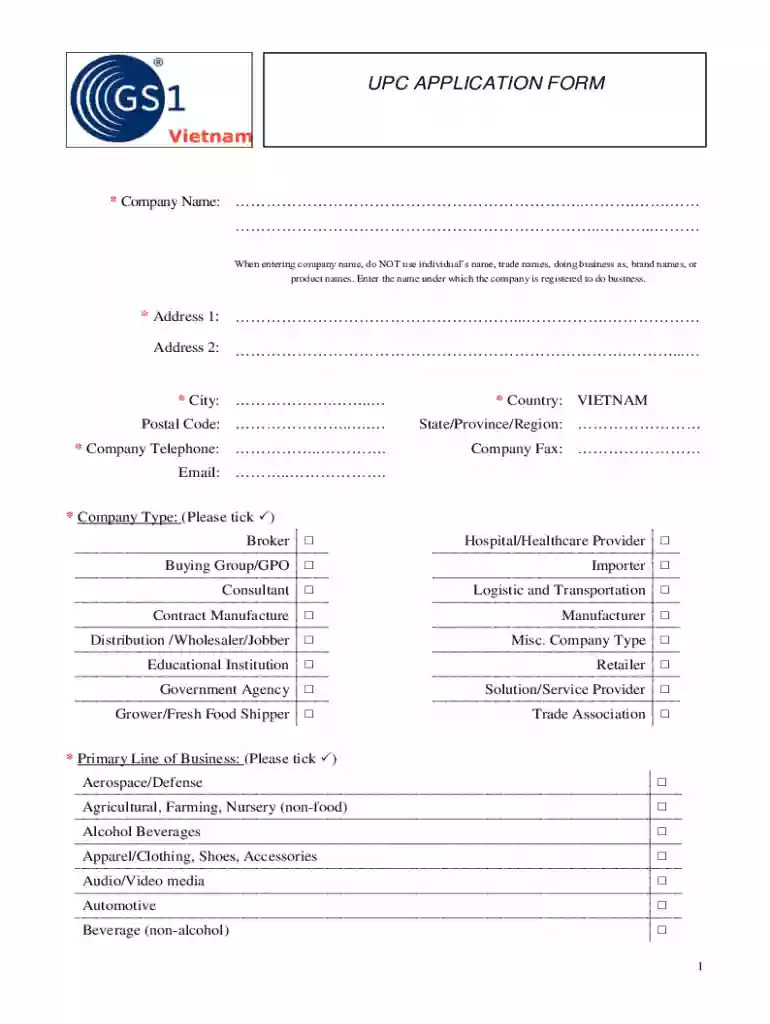
Definition and Purpose of the UPC Application Form
The Universal Product Code (UPC) application form is primarily used by businesses to register their products with a unique code that facilitates inventory tracking and sales transactions. This process involves providing business details to ensure accurate product identification.
Components of the Form
- Registered Name and Address: Your company’s official name and business address.
- Contact Information: Includes phone numbers and emails for primary business contacts.
- Business Type: Checkboxes for specifying if the business is a corporation, partnership, or another entity.
- Business Categories: Options to identify the primary and secondary lines of business.
How to Use the UPC Application Form
Understanding Key Sections
-
Filling Out Business Information: Complete this section with precise and up-to-date details about your business’s identity, ensuring full compliance with regulatory requirements.
-
Product Specifics: Specify product categories to align with industry standards, helping streamline supply chain processes.
How to Obtain the UPC Application Form
There are multiple ways to obtain the UPC application form, depending on your preference for digital or traditional means.
Online Acquisition
- Visit Official Websites: Most UPC applications are available through dedicated online platforms of issuing agencies.
- Download Options: Enable efficient access and ability to complete the form electronically.
Physical Copies
- Request via Mail: Some businesses prefer receiving a hard copy for manual completion.
- In-Person Pick-up: Available from local business registrar offices or chambers of commerce if you prefer direct assistance.
Steps to Complete the UPC Application Form
Guideline for Successful Form Completion
-
Collect Necessary Information: Gather all relevant business and product data before starting.
-
Accurate Entries: Ensure all sections are filled with precise and verifiable information.
-
Signature and Stamp: A company leader must sign and stamp the form for authenticity.

Tips for Ensuring Complete Submissions
- Review Details: Double-check entries for accuracy to prevent rejection.
- Electronic Signature Options: For online submissions, use digital signature services compliant with e-signature laws.
Key Elements of the UPC Application Form
Essential Information Blocks
- Business Structure: Clarifies the legal structure, affecting your eligibility and obligations.
- Signature Section: Confirms authenticity and agreement to terms of submission.
Importance of the UPC Application Form
Why Businesses Need It
- Product Identification: UPC codes are vital for inventory management and sales processing.
- Standardization: Ensures that businesses comply with global product distribution protocols.
Benefits of Compliance
- Market Access: Enables entry into larger retail markets requiring UPCs for product listings.
Who Typically Uses the UPC Application Form
Suitable Business Profiles
- Retailers: Needing standardized codes for their inventory systems.
- Manufacturers: Wanting to distribute products broadly, including international markets.
Use Cases Across Industries
- Pharmaceuticals: For medicine packaging requiring strict identification markers.
Important Terms Related to the UPC Application Form
Definitions and Explanations
- GS1 Standards: Governing body that regulates UPC codes and ensures consistency worldwide.
- Global Trade Item Number (GTIN): A unique identifier integral to the UPC system, facilitating global commerce.
Terminology Clarification
- Check Digit: Essential for verifying the UPC’s accuracy when scanned.
Submission Methods for the UPC Application Form
Electronic Submission
- Online Portals: Allow for rapid submission and processing, streamlining the approval process.
- Secure Uploads: Provide digital security for sensitive business information.
Traditional Methods
- Mailing: An option for businesses that operate offline or prefer physical documentation.
- In-Person: Access to assistance and immediate validation of entry by staff.
Penalties for Non-Compliance
Consequences of Inaccurate or Late Submissions
- Rejection of Products: Without a valid UPC, products may be refused entry into retailer systems.
- Fines and Legal Ramifications: Possible penalties for repeated or deliberate misreporting.
Ensuring Compliance
- Stay Updated: Regularly check for any changes in submission requirements or guidelines to maintain compliance.
By understanding and adhering to these guidelines, businesses can effectively navigate the UPC application process, ensuring proper product registration and market access.