







Definition & Meaning
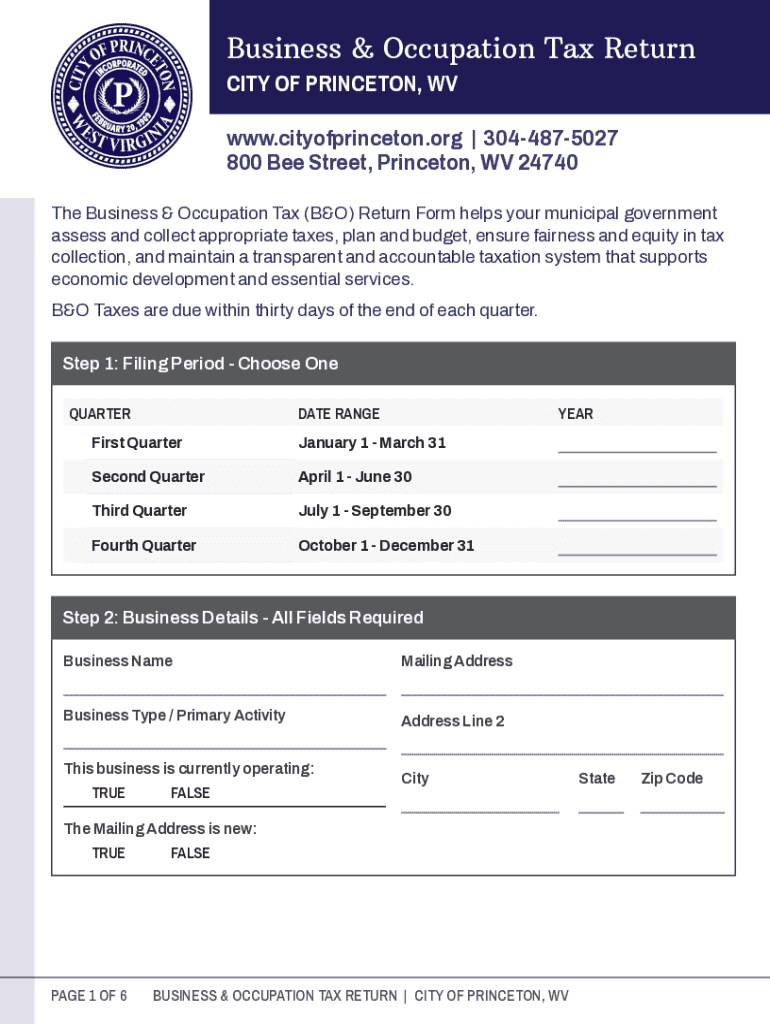
The Business and Occupation Tax Return for the City of Princeton, WV, is a tax document that allows businesses to report and pay their Business and Occupation (B&O) taxes. This tax is a gross receipts tax, which means it's calculated based on the total income generated by a business without deductions for business expenses. This form is essential for ensuring compliance with local tax regulations and contributes to municipal budgeting and economic development in Princeton.
How to Use the Business and Occupation Tax Return
Using the Business and Occupation Tax Return involves several steps. Firstly, business owners must gather all necessary financial information, including gross receipts from various business activities. After that, they need to follow the form's instructions to fill in personal details and the specific income figures for each business category. It is crucial to check for accuracy and completeness before submission, as errors could lead to penalties or delays in processing.
Steps to Complete the Business and Occupation Tax Return
-
Identify the Filing Period: Businesses must determine the correct quarter for filing, as the form requires quarterly submission.
-
Gather Financial Data: Collect all relevant financial records, such as sales receipts and bookkeeping entries.
-
Fill in Business Details: Include the business name, address, contact information, and federal tax ID number.
-
Report Gross Receipts: Enter the total sales figures for each type of business activity conducted.
-
Calculate Taxable Income: Utilize the form's instructions to determine taxable income and compute the owed tax amount.
-
Review and Submit: Double-check all entries for accuracy, sign the declaration of accuracy, and submit it via the provided channels.
Reasons for Filing the Business and Occupation Tax Return
Filing this tax return is crucial for multiple reasons:
- Compliance: Ensures adherence to local tax laws and avoids penalties.
- Contributions to Public Services: Supports municipal services like infrastructure and safety.
- Economic Development: Accurate reporting helps in planning city-wide economic initiatives and budget allocations.
Who Typically Uses the Business and Occupation Tax Return
This tax return is primarily used by business owners operating within the City of Princeton, WV. It includes various types of entities such as:
- Sole proprietors
- Corporations
- Partnerships
- Limited Liability Companies (LLCs)
These entities vary in structure but share the common need to report taxable income to maintain operational legality.


Key Elements of the Business and Occupation Tax Return
Key elements of the form include:
- Business Identification Information: Essential for the accurate processing and attribution of taxes.
- List of Business Activities: Defines the categories under which income is reported.
- Gross Receipts Data: The foundation for calculating tax obligations.
- Tax Calculation Instructions: Guidelines on deducing tax from gross receipts to ensure correct payments.
Filing Deadlines / Important Dates
The Business and Occupation Tax Return is due quarterly. Adhering to these deadlines is crucial to avoid penalties:
- Quarter 1: Due April 15
- Quarter 2: Due July 15
- Quarter 3: Due October 15
- Quarter 4: Due January 15
Late submissions can incur fines and interest charges, emphasizing the importance of timely filing.
Penalties for Non-Compliance
Failing to comply with the requirements of filing this form can result in significant consequences:
- Late Penalty Charges: Financial penalties for submissions made after the deadline.
- Interest on Outstanding Taxes: Compounded monthly, increasing the total outstanding amount.
- Legal Consequences: Continued non-compliance may result in legal action by the city government.
These penalties highlight the necessity of adhering to Princeton's tax filing regulations.
Required Documents
To successfully complete the Business and Occupation Tax Return, businesses must have the following documents ready:
- Financial Statements: To verify gross receipts reported.
- Tax Identification Number Documentation: To ensure correctly registered tax accounts.
- Previous Returns and Payment Receipts: For reference and validation of continuity and compliance with past filings.
Having these documents prepared will facilitate a smoother and more accurate filing process.




