







Definition and Meaning
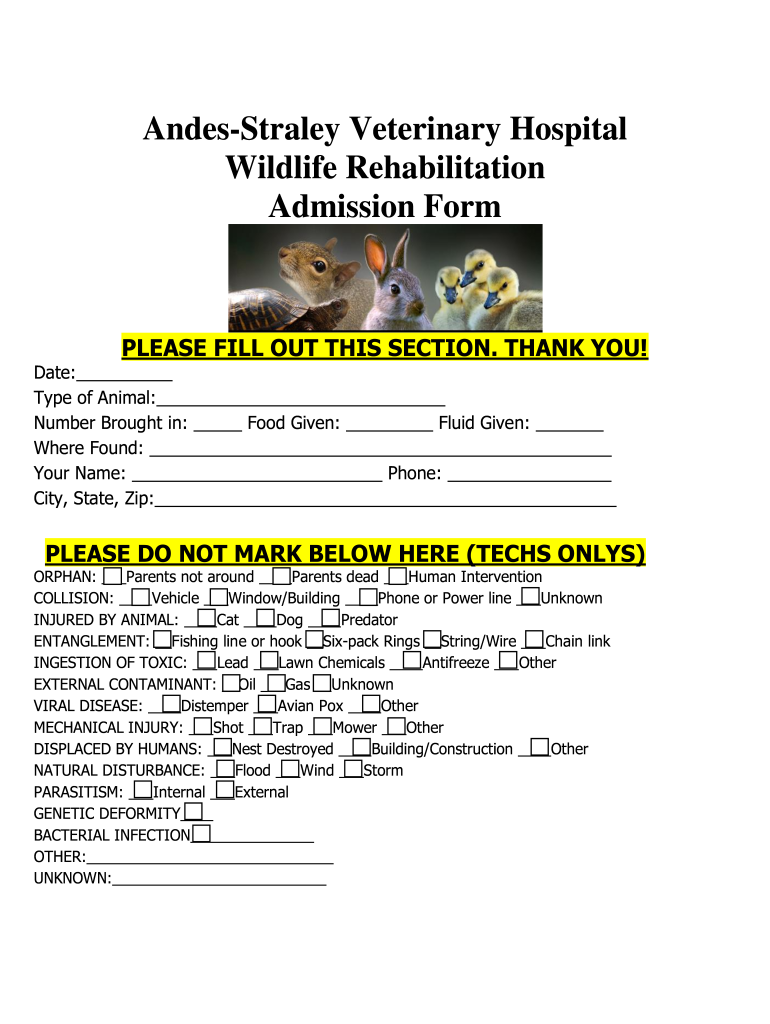
The Wildlife Rehabilitation Admission Form - Andes-Straley is a specialized document used within the Andes-Straley Veterinary Hospital. It serves as an official record of the admission of wildlife into their rehabilitation program. This form captures essential information about the animals in need of care and rehabilitation, allowing veterinary staff to assess their condition, determine necessary treatments, and track their progress. It includes sections to document the animal's type, condition at the time of admission, and the circumstances leading to their injury or distress. As a vital component of wildlife conservation efforts, the form facilitates effective communication between veterinary professionals and supports the hospital's mission to provide high-quality care for injured and distressed wildlife.
How to Use the Wildlife Rehabilitation Admission Form - Andes-Straley
To effectively utilize the Wildlife Rehabilitation Admission Form, it is crucial to follow a structured approach:
-
Identify the Purpose:
- Determine if the animal in question requires immediate medical attention or long-term rehabilitation.
- Categorize the animal based on its species, status (endangered, threatened), and specific needs.
-
Gather Information:
- Collect preliminary data about the animal’s condition, source of injury, and circumstances of its distress.
- Ensure accuracy in this initial step to facilitate proper evaluation and treatment plans.
-
Complete the Form:
- Use the designated fields to input the animal's details clearly and comprehensively.
- Include information about the admitting personnel, date, and time of admission.
-
Submit for Review:
- Submit the completed form to the veterinary staff responsible for wildlife care.
- Await assessment results to collaborate on an appropriate care strategy for the animal.
-
Regular Updates:
- Update the form with ongoing assessments, treatments provided, and changes in the animal's condition during its stay.
Steps to Complete the Wildlife Rehabilitation Admission Form - Andes-Straley
Filling out the Wildlife Rehabilitation Admission Form involves several key steps:
-
Animal Identification:
- Record the species, age, size, and unique identifying features.
- Note any tags, bands, or markings that are present.
-
Condition Assessment:
- Document visible injuries, symptoms, and the animal’s current physical state.
- Indicate if immediate triage is necessary.
-
Circumstantial Details:
- Provide a synopsis of how and where the animal was found.
- List any known interactions with humans or other animals prior to admission.
-
Submitter Information:
- Record details of the individual or organization submitting the animal, including contact info.
- Include their relationship to the animal, if relevant.
-
Veterinary Recommendation:
- Allow space for veterinary experts to outline suggested interventions or tests.
- Leave space for final treatment plans once initial evaluations are complete.
-
Signatures and Date:
- Ensure all relevant parties sign the form, confirming accuracy and understanding of recorded details.
- Include the date of completion for record-keeping.
Key Elements of the Wildlife Rehabilitation Admission Form - Andes-Straley
The form comprises several critical components designed to capture thorough information. Key elements include:
- Animal Description: Detailed section for species, physical attributes, and behavioral observations.
- Health Status: Comprehensive health evaluation, including injuries and distress level.
- Capture and Rescue Circumstances: Documentation of the discovery and retrieval methods.
- Veterinary Assessment: Diagnostic considerations and initial prognosis.
- Submitter Details: Full identification and contact information for procedural follow-up.
- Consent and Authorization: Legal consents for treatment and data recording.
Legal Use of the Wildlife Rehabilitation Admission Form - Andes-Straley
The successful deployment of this form hinges on adherence to legal requirements:
- Data Protection: Ensure secure handling of sensitive information as per state guidelines.
- Consent Forms: Obtain all necessary permissions from authorized personnel.
- Compliance: Adhere to local and federal regulations surrounding wildlife handling and rehabilitation.
- Documentation: Maintain accurate and thorough records to support legal compliance and conservation initiatives.
Who Typically Uses the Wildlife Rehabilitation Admission Form - Andes-Straley
Users of this form generally include:
- Veterinary Professionals: For assessment, treatment planning, and monitoring.
- Wildlife Rescuers and Organizations: For documentation of rescued animals’ conditions and status.
- Conservation Agencies: As part of efforts to track and manage the wellness of wildlife in their care.


State-Specific Rules for the Wildlife Rehabilitation Admission Form - Andes-Straley
While the core structure of the form remains consistent, various states might have specific regulations:
- Permits and Licensing: Some states require specific permits for wildlife handling.
- Species-Specific Protocols: Variations in handling endangered or protected species.
- Reporting Obligations: Different states may have distinct reporting frequencies and methods for wildlife care.
Digital vs. Paper Version
The form is available in both digital and paper versions, each offering unique advantages:
Digital Version
- Accessibility: Can be completed and submitted electronically, facilitating remote access for quick submission.
- Efficiency: Automated calculations and drop-down options streamline the data entry process.
- Security: Enhanced with features like encryption to protect sensitive information.
Paper Version
- Versatility: Helpful in environments lacking reliable internet access.
- Ease of Use: Preferred by individuals less comfortable with digital tools or in field conditions where electronics might be impractical.
Requirements for Completing the Form
- Accuracy: Ensure all details are precise and verifiable.
- Comprehensiveness: Complete every section to avoid incomplete data submission.
- Timeliness: Aim to fill out and submit the form soon after the animal’s admission to ensure rapid response and action.
Overall, the Wildlife Rehabilitation Admission Form - Andes-Straley is a critical document for the structured and legally compliant admission of wildlife into medical care, fostering organized and efficient rehabilitation processes.


