




01. Edit your form online
Type text, add images, blackout confidential details, add comments, highlights and more.

Type text, add images, blackout confidential details, add comments, highlights and more.

Draw your signature, type it, upload its image, or use your mobile device as a signature pad.

Send it via email, link, or fax. You can also download it, export it or print it out.
The Free Application for Federal Student Aid, commonly known as FAFSA, is a critical document used to apply for federal grants, loans, and work-study funds. It is essential for students seeking financial aid for post-secondary education. The form requires detailed information about a student's household finances, including both assets and debts. This form helps determine eligibility for federal student aid by analyzing the financial strength of the student's and their family's current circumstances.
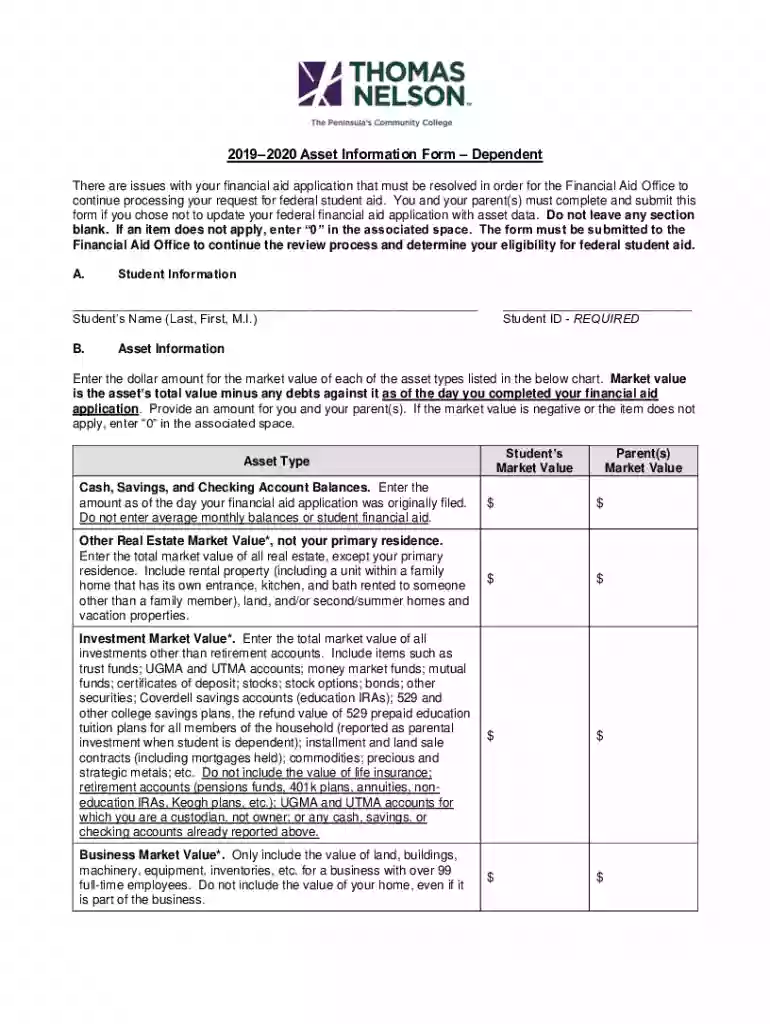
When completing the FAFSA, specifically the "Which Assets and Debts are Reported on the FAFSA" section, it is crucial to provide precise information on various financial components. Key assets that must be reported include cash on hand, current bank account balances, and investments such as stocks, bonds, and real estate holdings excluding the family's principal home. Additionally, college savings plans such as 529 plans must be accounted for. On the debts side, families should list debts that are directly associated with investments, such as mortgages on rental properties.
Accurate and honest reporting on the FAFSA is not only ethical but legally required. Misrepresentation of financial information can lead to serious consequences, including fines or debarment from receiving aid. FAFSA submissions are subject to verification processes, ensuring all reported details meet federal guidelines.
Eligibility for federal student aid through FAFSA depends on citizenship status, possession of a valid Social Security Number, and enrollment as a regular student in an eligible degree or certificate program. Students must show a financial need and maintain satisfactory academic progress in college or career school.


FAFSA can be submitted online, which is the recommended and fastest method. An online submission offers several advantages, like error-checking in real-time and immediate submission confirmation. Alternatively, students can submit a paper version by mailing it, though this method takes longer to process.
Consider a student whose family owns a small business. To properly complete the FAFSA form, the student should include the net worth of the business if it employs over 100 full-time employees. This example illustrates the complexity some applicants may face and the necessity of understanding which assets need to be declared.
Filing the FAFSA early is beneficial as some financial aid programs operate on a first-come, first-served basis. The federal deadline for FAFSA submission is typically June 30 of the academic year for which aid is requested. However, individual states and colleges may have their deadlines, which are often earlier. It is crucial to check these dates annually to ensure timely filing.
Submitting the FAFSA digitally is the most efficient approach, offering quicker processing times and immediate feedback on any errors. The digital platform allows applicants to save the progress and complete the form at their own pace. In contrast, the paper form is more time-consuming as it requires manual assistance and longer mailing times.
By adhering to these guidelines and understanding the intricacies of the FAFSA process, applicants can maximize their opportunities for securing financial aid for their education.
We've got more versions of the Which Assets and Debts are Reported on the FAFSA?FastwebDemystifying the FAFSA Form and the Financia form. Select the right Which Assets and Debts are Reported on the FAFSA?FastwebDemystifying the FAFSA Form and the Financia version from the list and start editing it straight away!
At DocHub, your data security is our priority. We follow HIPAA, SOC2, GDPR, and other standards, so you can work on your documents with confidence.


