Definition and Meaning
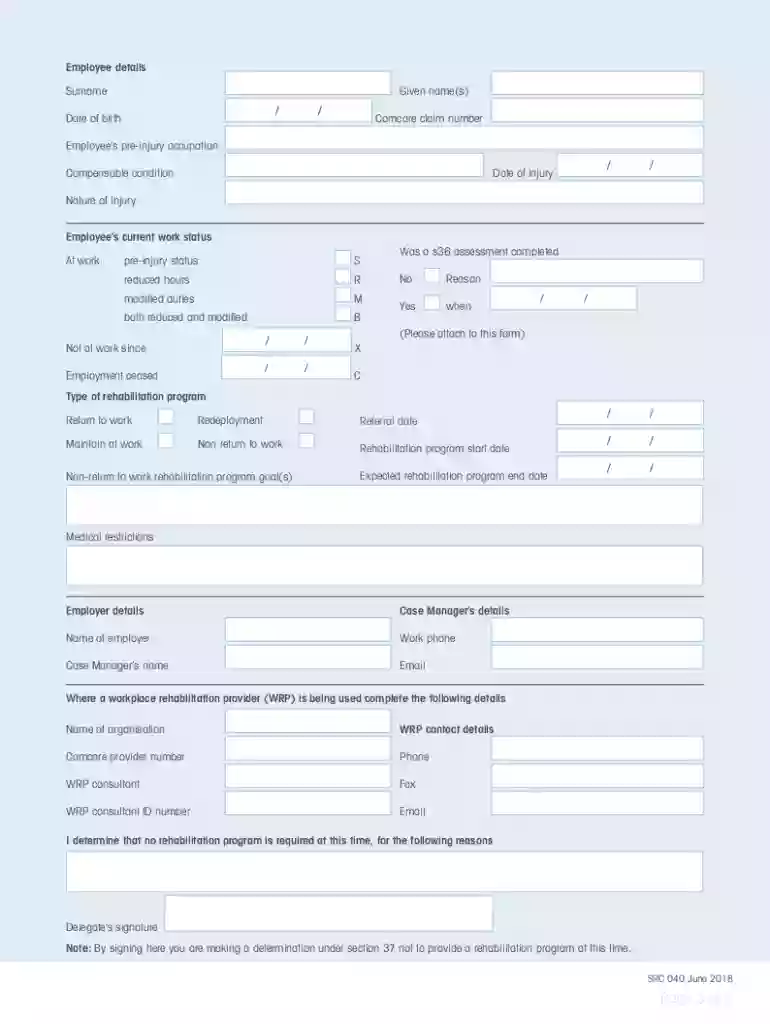
A Rehabilitation Program form is a formal document used to outline an agreed rehabilitation program. It is typically used within the context of employee rehabilitation under specific legal acts, such as the Safety, Rehabilitation, and Compensation Act 1988. This form is essential for documenting the rehabilitation process for individuals who need structured programs to return to work or regain previous functional capacities. The form serves as a contractual agreement between the involved parties, detailing the steps and responsibilities required for successful rehabilitation. It ensures that all stakeholders, including the employee, case manager, and employer, are aligned with the program's objectives, timelines, and expected outcomes.
Key Elements of the Rehabilitation Program Form
The Rehabilitation Program form comprises several critical components to ensure a comprehensive and clear rehabilitation plan:
- Personal Information: Details about the individual undergoing rehabilitation, including name, contact information, and employment details.
- Rehabilitation Goals: Specific objectives that the program aims to achieve, such as returning to work or improving physical capabilities.
- Responsibilities: Information on each participant’s responsibilities, including the employee, case manager, and other relevant personnel.
- Program Timeline: A detailed schedule outlining the duration and key milestones within the rehabilitation program.
- Evaluation Criteria: Methods and metrics for assessing progress and success, which may include medical assessments or functional capacity evaluations.
- Dispute Resolution: Procedures for addressing disagreements or disputes related to the rehabilitation process.
Steps to Complete the Rehabilitation Program Form
Completing the Rehabilitation Program form involves several key steps to ensure accuracy and compliance with relevant guidelines and requirements:
- Gather Necessary Information: Collect all relevant personal, medical, and employment details about the individual requiring rehabilitation.
- Consultation and Agreement: Collaborate with all involved parties, including the case manager and relevant healthcare providers, to agree upon the rehabilitation goals and methods.
- Complete the Form Sections: Include personal information, program goals, responsibilities, timelines, and evaluation criteria.
- Review and Verify Details: Check to ensure all information is correct and that the program aligns with any legal or organizational standards.
- Formalize the Agreement: Have all parties sign the form to acknowledge their understanding and commitment to the rehabilitation program.
Examples of Using the Rehabilitation Program Form
There are several practical scenarios where the Rehabilitation Program form is utilized effectively:
- Return-to-Work Programs: Employees recovering from injuries or illnesses participate in structured plans documented in this form to facilitate a smooth transition back to the workplace.
- Workplace Accidents: Following an incident, the form is used to create a tailored rehabilitation program that aligns with medical recommendations and workplace policies.
- Chronic Conditions Management: The form supports ongoing management of chronic conditions that affect an employee’s capacity to perform their job functions.
Legal Use of the Rehabilitation Program Form
The Rehabilitation Program form plays a vital role in ensuring compliance with legal standards related to employee rehabilitation processes:
- Legal Compliance: The form supports adherence to legislation such as the Safety, Rehabilitation, and Compensation Act 1988, detailing the rights and obligations of all parties.
- Documentation for Disputes: It provides a documented agreement that can serve as evidence in case of disputes between the employee and employer regarding the rehabilitation process.
- Confidentiality Requirements: Sensitive information captured in the form must comply with privacy and data protection laws ensuring the confidentiality of personal and medical information.
Who Typically Uses the Rehabilitation Program Form
The Rehabilitation Program form is primarily used by several key stakeholders involved in the rehabilitation process:

- Employees and Case Managers: Employees undergoing rehabilitation and case managers responsible for overseeing the program's implementation use this form to outline and agree upon the rehabilitation path.
- Employers and HR Departments: Organizations utilize the form to document rehabilitation arrangements and ensure alignment with company policies and legal requirements.
- Healthcare Professionals: Medical practitioners and allied health professionals may reference the form to align their treatment plans with the agreed rehabilitation goals.
Software Compatibility
Although the Rehabilitation Program form can be completed manually, many organizations leverage software tools for more efficient form management and documentation. These tools may include:
- DocHub: Known for its capability to process multiple file formats, including PDF and DOC, allowing users to create, edit, and manage rehabilitation forms seamlessly.
- Cloud Storage Integration: Forms can be managed through cloud services such as Google Drive for easy access and sharing amongst stakeholders.
- Electronic Signatures: Platforms like DocHub facilitate legally binding digital signatures, supporting a paperless workflow and ensuring compliance with electronic signature laws.
Important Terms Related to the Rehabilitation Program Form
Understanding critical terms related to the Rehabilitation Program form can aid in the accurate completion and use of the form:
- Case Manager: A professional responsible for coordinating the rehabilitation process, ensuring all parties adhere to the program.
- Functional Capacity Evaluation (FCE): An assessment tool used to evaluate an individual's capability to perform work-related tasks.
- Rehabilitation Goals: Specific objectives that guide the entire rehabilitation process, tailored to the individual's needs and potential outcomes.
By focusing on these aspects, individuals and organizations can ensure the Rehabilitation Program form is used effectively to support successful rehabilitation outcomes.