




01. Edit your form online
Type text, add images, blackout confidential details, add comments, highlights and more.

Type text, add images, blackout confidential details, add comments, highlights and more.

Draw your signature, type it, upload its image, or use your mobile device as a signature pad.

Send it via email, link, or fax. You can also download it, export it or print it out.
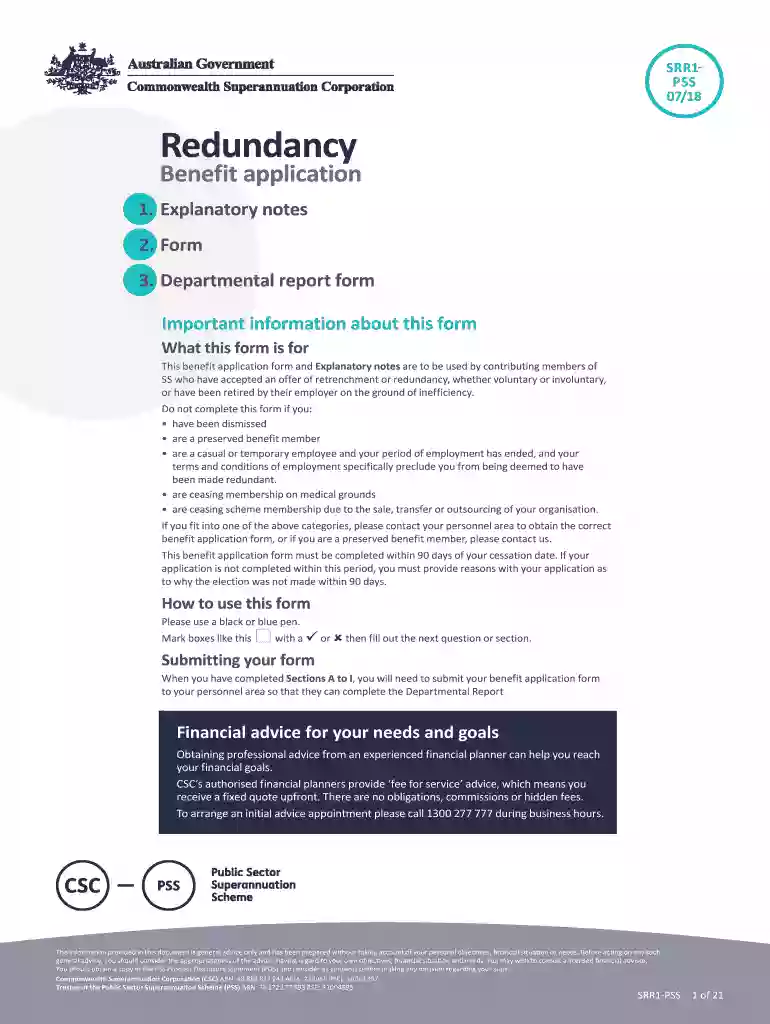
The redundancy benefit application is a formal document used by employees who are eligible to receive benefits due to redundancy or retrenchment. This application serves as a request and authorization for the release of funds associated with redundancy benefits. The primary aim of this form is to ensure that applicants accurately declare their eligibility, personal and employment details, and specific benefit options, facilitating the secure and efficient processing of their claims.
To qualify for redundancy benefits, applicants must meet specific criteria, largely dependent on employment history and the terms of their employment contracts. Generally, eligibility is determined by:
Additionally, applicants must provide documentation supporting their claim, such as termination notices or employment contracts, to establish eligibility.


Completing the redundancy benefit application involves several organized steps, which ensure thorough and accurate form submission:
Understanding commonly used terms can aid in the accurate completion of the application:
Submission of the redundancy benefit application requires several essential documents that verify the applicant's situation and eligibility:
Once submitted, applications for redundancy benefits follow a review process to ensure accuracy and compliance:
Applicants must remain mindful of legal obligations and possible implications:
Applicants have the option to either submit a digital or a paper version of the redundancy benefit application:
This detailed guide covers the essential aspects of the redundancy benefit application, offering applicants the clarity needed to navigate their submission effectively.
We've got more versions of the Redundancy benefit application Redundancy benefit application form. Select the right Redundancy benefit application Redundancy benefit application version from the list and start editing it straight away!
At DocHub, your data security is our priority. We follow HIPAA, SOC2, GDPR, and other standards, so you can work on your documents with confidence.
If you are still unemployed when your dismissal or severance pay ends, you should file a claim for benefits. If your severance pay exceeds your benefitRead more
(i) Facts. Plan A provides an annual benefit of 2% of career average pay times years of service commencing at normal retirement age (age 65).Read more


