



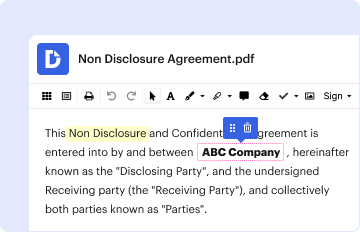
01. Edit your form online
Type text, add images, blackout confidential details, add comments, highlights and more.

Type text, add images, blackout confidential details, add comments, highlights and more.
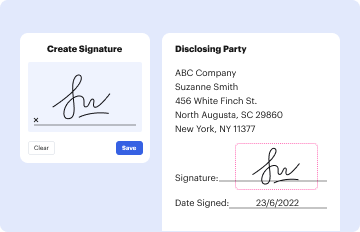
Draw your signature, type it, upload its image, or use your mobile device as a signature pad.

Send it via email, link, or fax. You can also download it, export it or print it out.
The NDSUS Ergonomics Form is designed to assess and document workplace ergonomics. This form aims to identify potential ergonomic hazards and implement necessary adjustments to enhance employee safety and productivity. Ergonomics, the science of designing the job, equipment, and workplace to fit the worker, is critical in minimizing workplace injuries such as repetitive strain injuries or musculoskeletal disorders.
Using the NDSUS Ergonomics Form involves a systematic approach to examining the workplace environment and tasks involved. The form provides a structured format to record observations and recommendations.
Completing the NDSUS Ergonomics Form requires thorough attention to detail and a comprehensive understanding of ergonomic principles.
The form is primarily used by safety officers, human resources departments, and facility managers. It is a tool for occupational health professionals aiming to ensure that workplace ergonomics align with best practices.


The form consists of several important sections, each designed to provide a comprehensive overview of the ergonomic evaluation process.
The form can typically be obtained through your organization's human resources division or safety officer. It might also be available through internal digital document management systems.
The form ensures compliance with occupational safety standards and regulations, serving as an essential document for legal and health audits.
While the base requirements for ergonomic assessments remain consistent, certain state-specific regulations may influence the use of the form.
We've got more versions of the ndsus ergonomics form form. Select the right ndsus ergonomics form version from the list and start editing it straight away!
At DocHub, your data security is our priority. We follow HIPAA, SOC2, GDPR, and other standards, so you can work on your documents with confidence.
Dec 2, 2010 Ergonomic and safety issues are coordinated through the Safety Officer, reactively, rather than proactively. Evaluations are subcontracted
Ergonomics is the process of designing or arranging workplaces, products and systems so that they fit the people who use them. You can request an ergonomic


