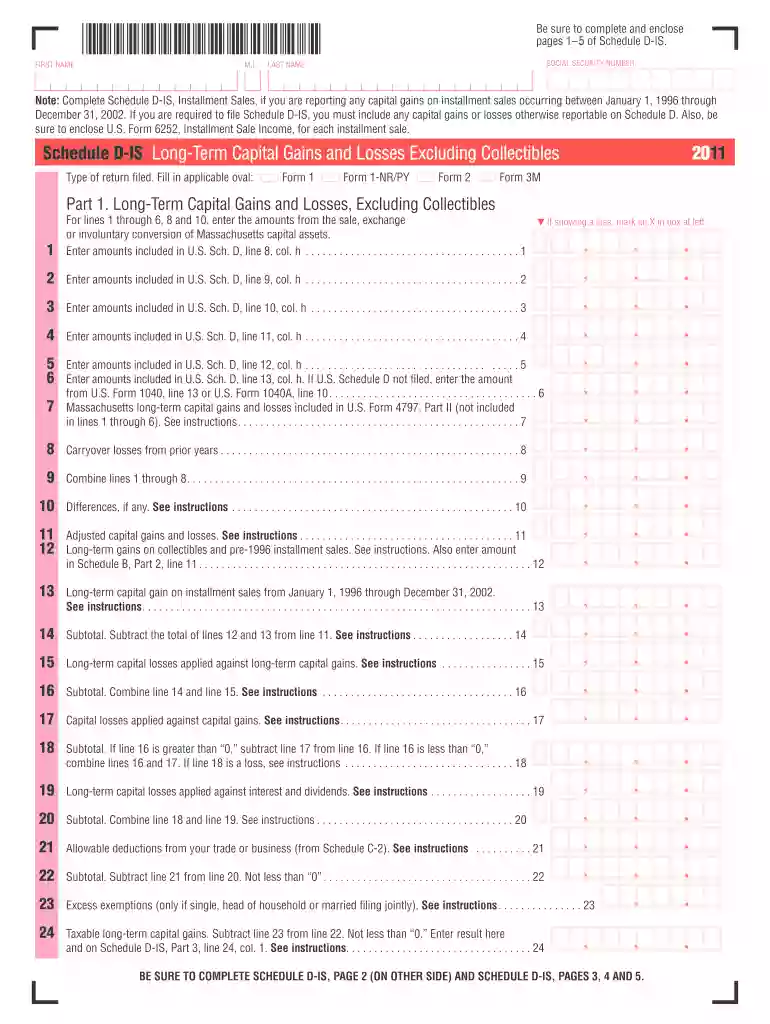
Understanding Schedule D-IS: Definition and Meaning
Schedule D-IS is a specialized tax form used to report long-term capital gains and losses from installment sales, specifically for transactions occurring between January 1, 1996, and December 31, 2002. This form is integral for taxpayers who sold property on an installment basis and need to declare the capital gains derived from these sales over multiple years.
Key Elements of Schedule D-IS
- Long-Term Capital Gains: This involves profits from asset sales held for more than a year, which qualify for favorable tax rates.
- Installment Sales: Sales where at least one payment is received after the tax year in which the sale occurred.
- Relevant Tax Years: Though targeted transactions are from 1996 to 2002, taxpayers may still file to correct or update past returns.
How to Use Schedule D-IS for Tax Reporting
Once you determine the necessity of Schedule D-IS, integrate it with your primary return by following these steps:
- Documentation Gather: Collect all sale agreements and records of payments received.
- Calculate Gains/Losses: Use the form to calculate your long-term capital gains or losses based on installment payments received during the tax year.
- Attach to Return: Ensure Schedule D-IS is attached to your Form 1040 when filing.
Examples of Using Schedule D-IS
- Real Estate Sales: If you sold a property valued at $500,000 via an installment agreement and received an initial payment followed by annual payments, report each installment on Schedule D-IS.
- Business Asset Sales: Selling business equipment through installments also mandates you to report using this form for accurate capital gain calculations.
Steps to Complete the Schedule D-IS
Completing Schedule D-IS involves detailed attention, as incorrect reporting could trigger audits or penalties.
- Sales Information: Enter all sales details, including buyer’s and seller’s information, property description, and installment terms.
- Payment Records: Accurately list the amounts received and corresponding dates.
- Gain Calculation: Follow IRS guidelines to calculate the percentage of each installment considered as capital gain.
- Reporting and Verification: Double-check calculations and ensure alignment with your Form 1040 entries.
Schedule D-IS Penalties and Non-Compliance Risks
Non-compliance with Schedule D-IS requirements can lead to penalties:
- Underreporting Fines: Significant underreporting of gains can result in fines and interest charges.
- Audit Triggers: Inaccurate reporting increases audit risks, which can lead to further scrutiny of your financial transactions.
Alternative Schedules and Variants to Schedule D-IS
Understanding other relevant forms may aid in clarifying reporting processes:
- Schedule D: For general capital gains reporting.
- Form 6252: Specific to installment sales; use this form in conjunction with Schedule D-IS for detailed records.
Digital vs. Paper Version
Taxpayers have the option to choose between digital filing or paper forms:
- Digital Filing: Tools like TurboTax and QuickBooks simplify calculations but require accurate data entry.
- Paper Submission: Traditional mail can be used, though it’s slower and manual validation is crucial to avoid errors.
State-Specific Rules for the Schedule D-IS
While Schedule D-IS is a federal form, some states have unique rules affecting:
- State Income Calculations: Specific states might have deductions or considerations for installment sales.
- Tax Credits: Be aware of any applicable state credits or offsets that could impact your filing.
Required Documents and Filing Deadlines for Schedule D-IS
Being prepared with necessary documentation is key:
- Bring Contracts: Installment sale agreements and payment records.
- Deadlines: Align submissions with federal tax deadlines, typically April 15 of the filing year.
Form Submission Methods
- Online: Secure IRS e-file system allows for faster processing.
- Mail: Ensure forms are posted well before the deadline to avoid delays.
- In-Person: Filing directly through IRS centers can be an option for more personalized support, though availability is limited.
IRS Guidelines for Schedule D-IS
The IRS provides resources and support for Schedule D-IS, including:
- Instruction Manuals: Review IRS booklet instructions for completing the form.
- Help Lines: Utilize IRS contact centers for clarifying doubts or seeking guidance on specific scenarios.
Who Typically Uses the Schedule D-IS?
Various taxpayers find Schedule D-IS necessary:

- Property Sellers: Individuals engaging in installment sales of real estate.
- Business Owners: Those selling business assets over time.
- Investors: Situations involving structured payment sales tied to investment propositions.
Business Entity Types
- LLC and Partnerships: May find themselves using this and related forms depending on their sale transactions.
- Corporations: Though less common, certain corporate transactions might necessitate similar reporting.
Developing a comprehensive understanding of Schedule D-IS and its application can facilitate accurate reporting and compliance. Thoroughly documenting each process step and being aware of state nuances enhance a taxpayer’s competence in managing installment sale taxes efficiently.