
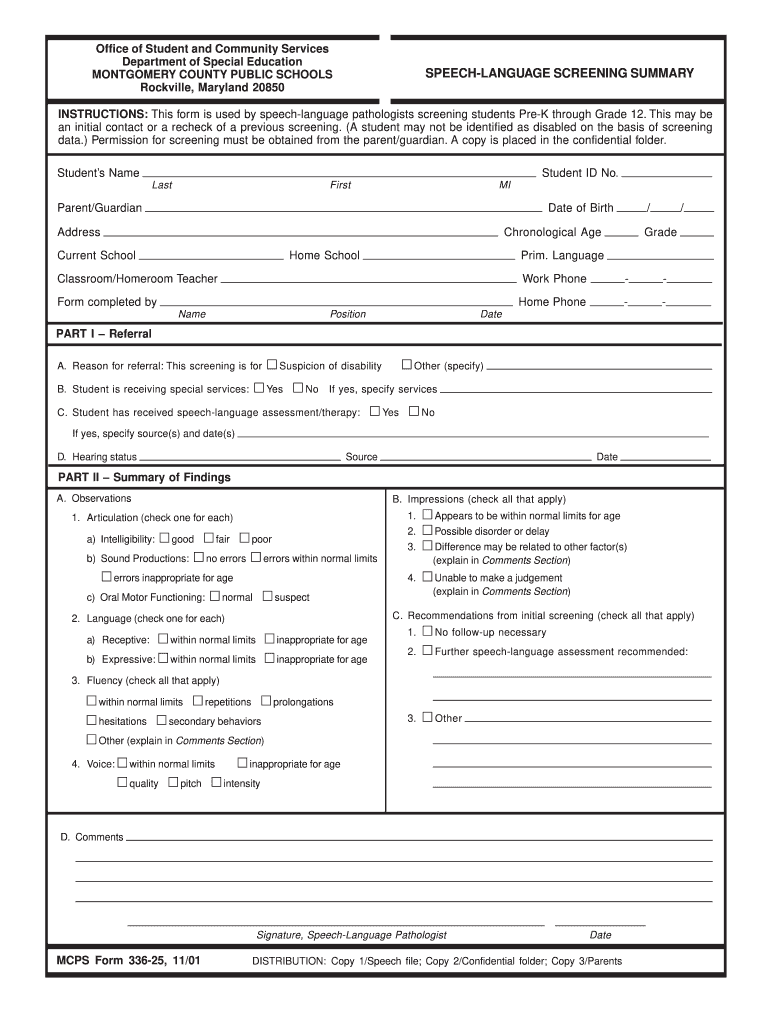







Definition and Purpose of the Printable Speech Language Screener
The printable speech language screener is a structured tool designed to assess the speech and language abilities of individuals, particularly children enrolled in educational settings. It serves as an initial screening mechanism utilized by speech-language pathologists (SLPs) to identify potential communication disorders. This document plays a critical role in facilitating early intervention, ensuring that students who may need further evaluation or assistance receive the appropriate support.
Key Components of the Screener
- Referral Information: Specifies the reasons prompting the assessment, such as observed speech delays or challenges in language comprehension.
- Summary of Findings: Offers a concise overview of the individual's performance in various domains of speech and language.
- Recommendations: Provides actionable advice for parents, educators, and therapists regarding follow-up actions based on preliminary findings.
How to Use the Printable Speech Language Screener
Utilizing the printable speech language screener involves several systematic steps. This process ensures clarity and consistency in assessing each child’s language development.
Steps to Use the Screener
- Obtain Consent: Collect parental permission before administering the screener, as confidentiality and consent are paramount in educational environments.
- Complete Referral Section: Enter detailed information about the child’s referral. This will guide the SLP in understanding the context of the screening.
- Conduct the Screening: Use the screener's standardized questions and tasks to assess various skills, including articulation, vocabulary usage, and sentence structure.
- Document Observations: Record significant observations during the screening process. This includes noting any difficulties the child may encounter while responding to questions or tasks.
- Summarize Findings: After the assessment, complete the summary of findings section, detailing strengths and areas of concern identified during the screening.
- Share Results: Communicate the results to parents and teachers, providing recommendations based on the findings.
How to Obtain the Printable Speech Language Screener
Acquiring the printable speech language screener is straightforward and can be done through various avenues, ensuring easy access for professionals and parents.
Sources for the Screener
- School Districts: Many educational institutions provide their speech language screeners as part of their special education resources.
- SLP Organizations: Professional associations often offer downloadable versions of the screener, sometimes free of charge or as part of a membership benefit.
- Online Platforms: Numerous websites and resources, including those focusing on speech therapy, allow for free PDF downloads of different screening tools, including the CELF 5 screener template.
Importance of the Printable Speech Language Screener
The significance of the printable speech language screener cannot be overstated, as it serves several vital functions in educational and clinical settings.
Benefits of Using the Screener
- Early Detection: Facilitates the early identification of speech and language issues, which is crucial for timely interventions.
- Structured Approach: Provides a consistent methodology for assessing various speech and language skills, ensuring comprehensive evaluations across different children.
- Resource for Educators: Acts as a valuable tool for teachers and educators to understand the communication needs of their students, leading to targeted instructional strategies.
Typical Users of the Printable Speech Language Screener
Various stakeholders utilize the printable speech language screener, each playing a unique role in supporting children's speech and language development.
Primary Users Include
- Speech-Language Pathologists: Responsible for administering the screener, analyzing results, and recommending interventions or further evaluations.
- Teachers: Utilize the screener to gain insights into students’ communication skills, enabling them to adapt teaching methods accordingly.
- Parents: Engage in using the screener to understand their child’s speech and language development and seek additional support if necessary.
Key Elements of the Printable Speech Language Screener
Understanding the critical elements of the printable speech language screener enhances the effectiveness of its use in assessments.
Fundamental Components
- Standardized Questions: Include exercises that target specific language skills, ensuring a uniform approach to evaluation.
- Observation Areas: Focus on various aspects of language use, such as expressive and receptive language abilities, articulation, and fluency.
- Follow-up Documentation: Contains sections for planning next steps, whether that be further assessment or setting specific learning objectives for the child's development.
Examples of Using the Printable Speech Language Screener
Real-world applications of the printable speech language screener demonstrate its practicality and effectiveness in diverse scenarios.
Usage Scenarios
- School Settings: An SLP uses the screener to evaluate a kindergarten student who is not meeting language benchmarks, leading to targeted interventions.
- Private Therapy: A parent brings their child to a private practice where the therapist uses the screener to formulate a tailored speech therapy plan.
- Teletherapy Contexts: With the rise of remote services, clinicians adapt the screener for virtual assessments, utilizing online tools to capture responses effectively.
Legal Use of the Printable Speech Language Screener
Adhering to legal and ethical guidelines is crucial when using the printable speech language screener, particularly regarding data handling and confidentiality.
Important Legal Considerations
- Parental Consent: Required before any screening can take place, aligning with privacy laws and protecting the child's rights.
- Confidentiality of Results: Must be strictly observed, with findings shared only with authorized individuals involved in the child's education or therapy.
- Ethical Use in School Environments: Schools are mandated to use the screener in compliant and respectful manners, ensuring that the screening process is fair and unbiased.




