




01. Edit your form online
Type text, add images, blackout confidential details, add comments, highlights and more.

Type text, add images, blackout confidential details, add comments, highlights and more.

Draw your signature, type it, upload its image, or use your mobile device as a signature pad.

Send it via email, link, or fax. You can also download it, export it or print it out.
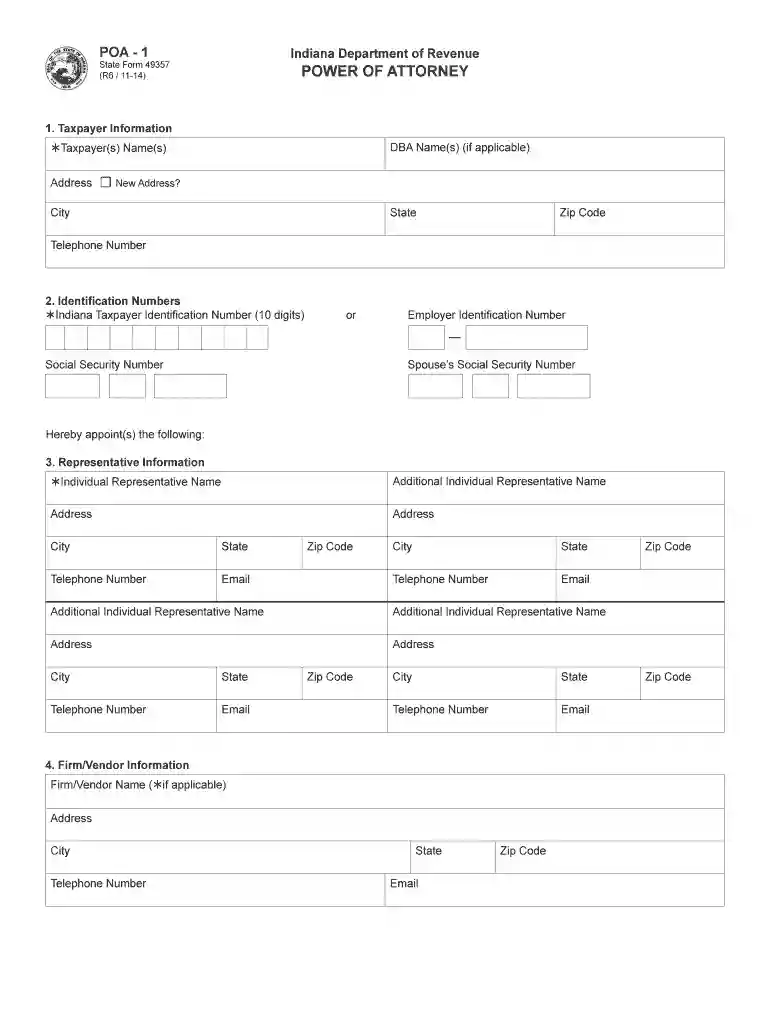
The Indiana Department of Revenue Power of Attorney - Tax form, commonly referred to as the POA, is an official document that authorizes another individual or entity to represent a taxpayer in matters related to taxation within the state of Indiana. This form grants specific legal rights to the appointed representative, permitting them to act on behalf of the taxpayer in various tax-related affairs. The scope of authority can range from handling inquiries and receiving confidential tax information to making decisions on tax filings, depending on the permissions specified within the document. This POA remains valid for five years unless it is revoked in writing prior to that period.
Understanding the critical components of the Indiana Department of Revenue Power of Attorney - Tax is essential for its accurate completion and effective use. The form includes:
Completing the Indiana Department of Revenue Power of Attorney - Tax form involves several critical steps to ensure accuracy and compliance:
Understanding some crucial terms associated with the POA form can aid in its correct utilization:
The POA ensures that the taxpayer's interests are legally represented in dealings with the Indiana Department of Revenue. It is compliant with state laws, ensuring both parties are aware of their rights and responsibilities. Adhering to the legal framework helps prevent disputes and ensures the representative can perform tasks such as negotiating payment plans, obtaining tax documents, or addressing audits on behalf of the taxpayer without violating any regulations.
This document is particularly beneficial for individuals who need assistance managing their tax obligations or businesses requiring someone knowledgeable in tax matters to handle interactions with the Department of Revenue. Common users include:


While the Indiana Department of Revenue POA specifically pertains to state tax matters, the guidelines align with federal standards set by the Internal Revenue Service (IRS). It's critical to understand:
Completing the POA form successfully requires the submission of additional documentation to verify identities and validate the authority being transferred:
In presenting a comprehensive picture of the Indiana Department of Revenue Power of Attorney - Tax, these detailed blocks offer an informed guide for anyone seeking to understand, complete, or utilize this critical legal form effectively.
We've got more versions of the Indiana Department of Revenue Power of Attorney - Tax form. Select the right Indiana Department of Revenue Power of Attorney - Tax version from the list and start editing it straight away!
At DocHub, your data security is our priority. We follow HIPAA, SOC2, GDPR, and other standards, so you can work on your documents with confidence.
Jan 31, 2012 Power of Attorney. Internal Revenue Service. A foreign country or U.S.. Center. Any amount. Assembling the Return possession. P.O. Box 409101.
Power of attorney forms are available from the department. Casual conversations with a taxpayers representative who does not have a power of attorney on file
An INTIME ePOA is equivalent to a Form POA-1 for the purpose of discussing tax matters. DOR reserves the right to request a Form POA-1 in certain circumstances.


