







Definition & Meaning
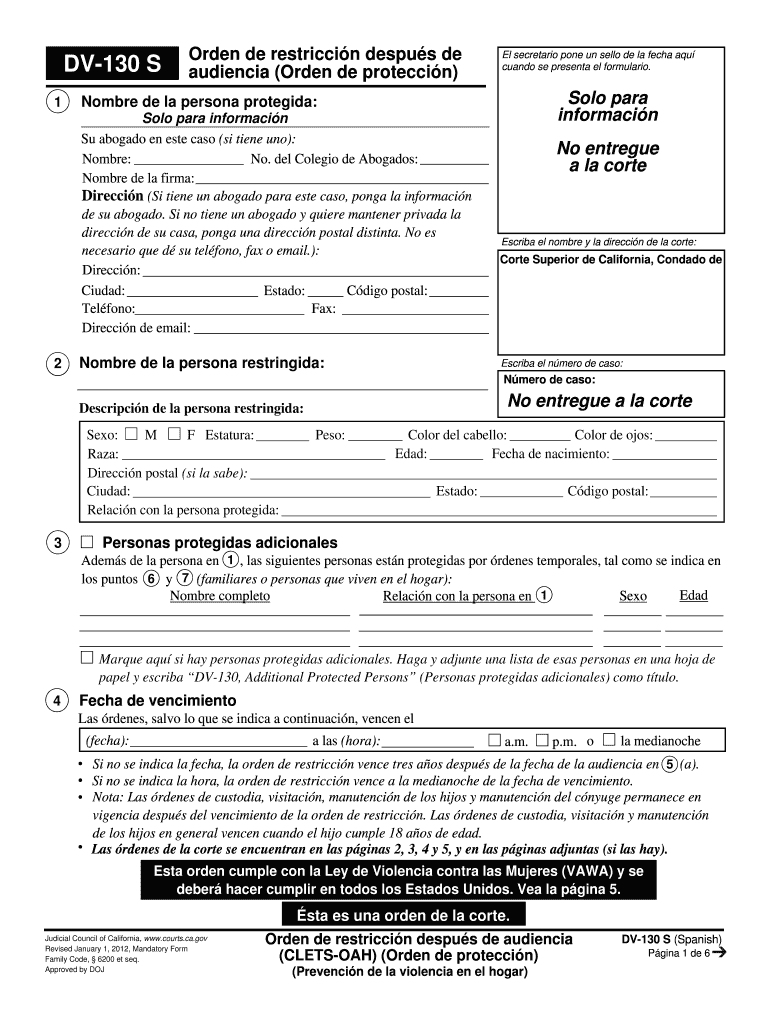
The DV-130 Restraining Order After Hearing (CLETS OAH) (Order of Protection) (Spanish) Judicial Council is a legal form used in California to establish a restraining order after a court hearing. This form is an official order issued by a judge to protect individuals from domestic violence or harassment. It specifies the behaviors that the restrained person must avoid and details any other protective measures that the court deems necessary. The order is enforceable throughout the United States and is critical for ensuring the safety and protection of individuals at risk of harm.
Key Elements of the DV-130
- Applicant Details: Includes information about the person seeking protection, known as the protected party.
- Restrained Person Details: Identifies the individual whom the restraining order is against, outlining the restricted actions.
- Prohibited Actions: Details specific behaviors that the restrained person must refrain from, such as contacting the protected party or entering specific locations.
- Child Custody and Support: If applicable, includes terms related to child custody and visitation rights to ensure the safety of the children involved.
- Duration of Order: Specifies the time period for which the restraining order is valid, generally ranging from one to five years.
How to Obtain the DV-130 Restraining Order After Hearing
- Attend the Court Hearing: The order is typically issued after a hearing where both parties have the opportunity to present their case.
- Submit Required Documents: Provide supporting documentation such as evidence of harassment or abuse, any prior police reports, and a completed request for a restraining order.
- Legal Representation: While not mandatory, having an attorney can help in presenting the case effectively.
- Court Decision: Based on the evidence and testimonies, the judge will decide whether to issue the restraining order.
Steps to Complete the DV-130 Form
- Fill Out Personal Information: Include the full name, address, and contact details of both the protected party and the restrained individual.
- Describe Incidents: Provide detailed descriptions of instances requiring protection, including dates, times, and nature of incidents.
- Specify Restraints: Clearly outline the specific actions that the restrained person is prohibited from undertaking.
- Include Children's Details: If applicable, enter the names and birthdates of any children involved and specify desired custody arrangements.
- Review and Submit: Double-check the information for accuracy, then file the completed form with the court.
Legal Use of the DV-130
The DV-130 Restraining Order After Hearing serves several legal purposes, including:
- Protection from Domestic Violence: Offers legal protection to victims of domestic violence by legally obliging the alleged abuser to avoid certain activities.
- Order of Custody: Can be used to make temporary or permanent decisions regarding child custody and visitation.
- Enforcement and Compliance: Violations of the restraining order are subject to legal penalties, including arrest or fines, ensuring compliance.
Important Terms Related to DV-130
- CLETS: California Law Enforcement Telecommunications System, which ensures that restraining orders are accessible to law enforcement nationwide.
- Protected Party: The individual seeking protection under the restraining order.
- Restrained Person: The individual against whom the restraining order is issued.
Examples of Terms
- Stay-Away Order: A directive to keep a certain distance from the protected party at all times.
- No-Contact Order: A prohibition against contacting the protected party by any means, including phone, text, or social media.
Who Typically Uses the DV-130
Primarily used by individuals experiencing domestic violence, harassment, or stalking, the DV-130 is crucial for:
- Victims of Domestic Abuse: Supporting their safety and well-being through legal protection.
- Parents Seeking Custody Orders: Establishing temporary or long-term custody arrangements in cases involving domestic disputes.
- Individuals Stalking Concerns: Protecting those who are being followed or intimidated against their will.


State-Specific Rules for the DV-130
While the DV-130 is a California-specific form, its enforcement is valid throughout the United States. However, state-specific rules may include:
- Filing Locations: Guidelines on where to submit the form, as it may vary by county.
- Local Resource Centers: Availability of legal aid and resources for individuals seeking assistance with restraining orders.
Practical Examples
- Cross-Jurisdiction: A DV-130 issued in California remains enforceable even if the protected party relocates to another state.
- Local Variation: Certain counties may offer additional services or support for parties involved in restraining order cases.
Examples of Using the DV-130
Real-world applications for the DV-130 include scenarios such as:
- Domestic Abuse Cases: A victim of recurring domestic violence uses the DV-130 to legally prevent the abuser from contacting or approaching them.
- Child Custody Disputes: Parents use the form to establish safe custody measures in the wake of domestic violence allegations.
- Stalking Situations: Individuals facing persistent stalking files a restraining order to gain legal protection.
Case Study: Domestic Violence Protection
A woman experiencing physical abuse from her partner successfully applies for a DV-130, gaining a legal barrier that bars the partner from approaching or communicating with her, thereby providing immediate safety and peace of mind.
State-by-State Differences
Understanding how the DV-130 is viewed across different states is crucial:
- Enforcement Variability: Some states may have specific protocols for accepting and enforcing California restraining orders.
- Interstate Assistance: Local law enforcement in different states is required to honor the terms of the order, due to its federal recognition under the Violence Against Women Act.
This ensures consistent protection regardless of state borders.




