




01. Edit your form online
Type text, add images, blackout confidential details, add comments, highlights and more.

Type text, add images, blackout confidential details, add comments, highlights and more.

Draw your signature, type it, upload its image, or use your mobile device as a signature pad.

Send it via email, link, or fax. You can also download it, export it or print it out.
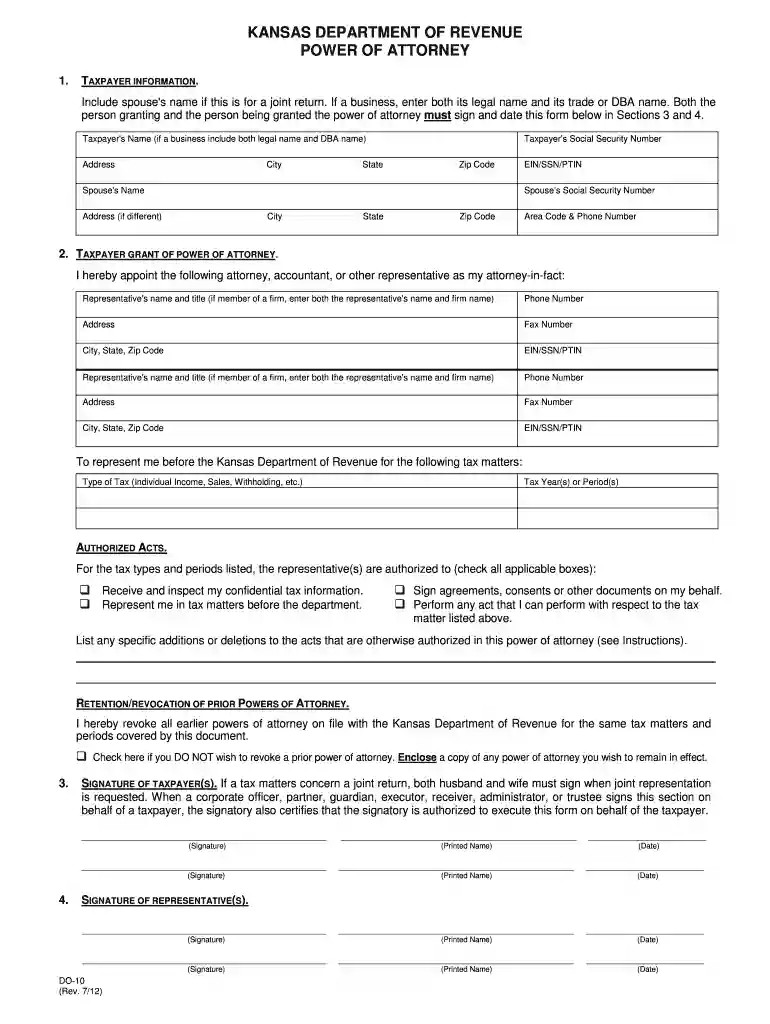
The DO-10 Power of Attorney Rev 5-17 is a specific form issued by the Kansas Department of Revenue. This legal document allows taxpayers to appoint a representative to handle tax-related matters on their behalf. Such authorization is particularly crucial for individuals who require assistance with tax filings, audits, or inquiries. The form delineates the scope of authority granted to the representative, ensuring that they can act within the parameters set by the taxpayer. This legal tool is essential for establishing clear communication and representation channels between the taxpayer and the Kansas Department of Revenue.
To use the DO-10 Power of Attorney Rev 5-17 form efficiently:
Acquire the Form: Obtain the form from the Kansas Department of Revenue’s official website or their office.
Complete Required Sections: Fill out the taxpayer’s information, details of the appointed representative, and the powers being granted.
Sign the Document: Both the taxpayer and the designated representative must sign the form to validate it.
Submission: Submit the completed form to the Kansas Department of Revenue via mail, online, or in person at their office.
Proper completion and submission ensure the representative can legally act on behalf of the taxpayer within the specified authority levels.
Completing the DO-10 Power of Attorney Rev 5-17 involves several crucial steps:
Fill Out Taxpayer Information:
Specify the Representative:
Define Scope of Authority:
Signatures:
Submit the Form:
This form carries legal weight by allowing an appointed representative to interact with the Kansas Department of Revenue on behalf of the taxpayer:
Such legal capabilities can significantly ease the taxpayer’s burden, particularly in complex tax situations.
Understanding terminology is crucial when dealing with this form:
Grasping these terms helps ensure the form is used appropriately and effectively.
Practical scenarios highlight the form’s utility:
Such examples illustrate the form’s adaptability to various personal and professional situations.
Kansas-specific regulations encompass:
Understanding these rules ensures the form’s proper execution within Kansas jurisdiction.
The form’s vital components include:
Each element ensures the functionality and legality of the power of attorney.
Individuals and entities that benefit from this form include:
Such users leverage the form to manage their tax affairs efficiently, ensuring compliance and reducing personal workload.


We've got more versions of the DO-10 Power of Attorney Rev 5-17 - Kansas Department of form. Select the right DO-10 Power of Attorney Rev 5-17 - Kansas Department of version from the list and start editing it straight away!
At DocHub, your data security is our priority. We follow HIPAA, SOC2, GDPR, and other standards, so you can work on your documents with confidence.
Volumes of the Kansas Administrative Regulations are sold by the Elections/Legislative Matters Divi- sion of the Office of the Secretary of State, First Floor,
This list includes but is not limited to: - A hard hat. - Protective shoes with slip resistant. Soles. - Protective goggles. - Heavy Gloves. - Wet weather gear.
Aspen Publishers is a leading information provider for attorneys, business professionals and law students.


