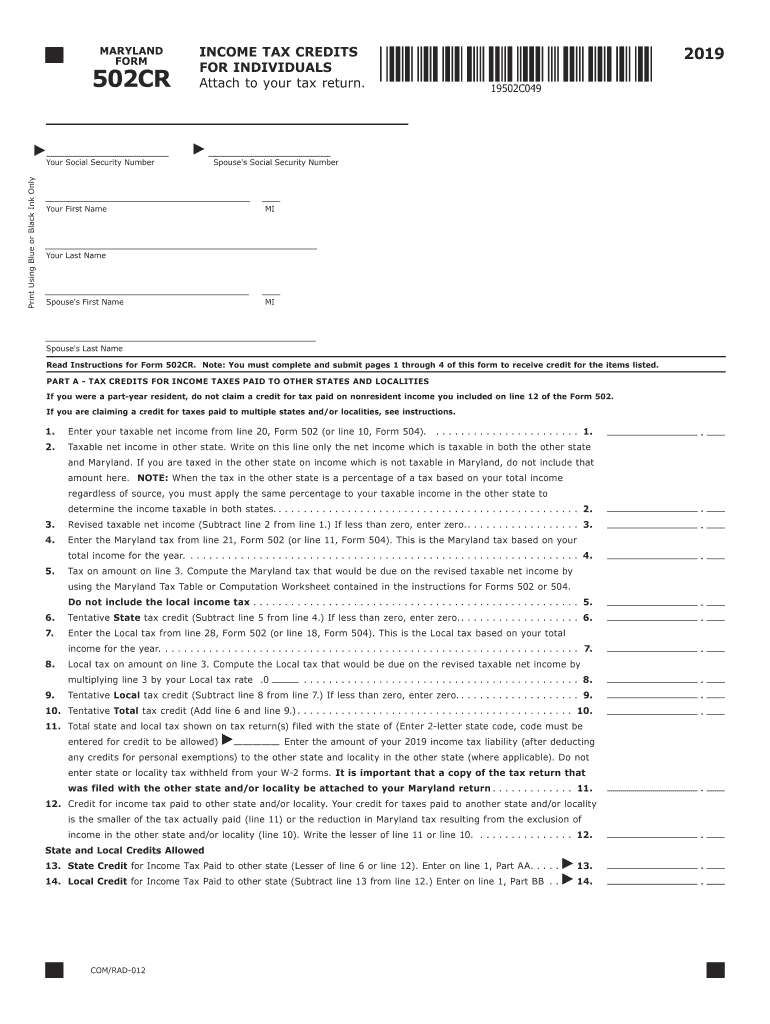







Definition and Meaning of Income Tax Credits for Individuals
Income tax credits for individuals represent reductions in the amount of tax that citizens owe the federal or state governments. These credits directly reduce the tax liability on a dollar-for-dollar basis. Unlike deductions that lower taxable income, tax credits offer more significant savings. For instance, if an individual owes $2,000 in taxes and qualifies for a $500 tax credit, their total tax liability is reduced to $1,500. These credits are classified into various types, such as refundable and non-refundable credits, each having distinct criteria and benefits.
How to Use the Income Tax Credits for Individuals Form
Utilizing the income tax credits for individuals form requires a comprehensive understanding of the form's structure and the types of credits available. Taxpayers should:
- Review the list of available credits and eligibility requirements.
- Collect necessary documents to validate eligibility for claimed credits.
- Accurately fill out the sections corresponding to each specific credit.
- Ensure that numbers are correctly calculated based on those instructions and attached to the appropriate lines in the main tax return, such as Form 1040.
Understanding which credits are applicable is crucial to optimizing the use of this form. Various credits can be claimed simultaneously, subject to meeting distinct eligibility requirements.
Steps to Complete the Income Tax Credits for Individuals Form
Completing the form involves several critical steps:
- Gather Documentation: Collect all relevant financial records and receipts that support your eligibility for the credits being claimed.
- Read Instructions Carefully: Each section of the form comes with specific instructions. It is essential to follow these guidelines to prevent errors.
- Fill in Personal Information: Input your personal details accurately, including Social Security Number, and any other identification numbers required.
- Itemize Credits: Specify each credit type being claimed and ensure that calculations match the criteria as detailed in the instructions.
- Review and Double-Check Entries: Before submission, verify all information for accuracy to prevent delays or denials.
- Attach to Main Tax Return: Ensure that this form is securely attached to your primary return.
IRS Guidelines for Income Tax Credits
The IRS provides guidelines to help taxpayers understand which credits they can claim:
- Eligibility Requirements: Each credit has specific conditions that must be met, such as income limits or qualifying expenses.
- Documentation: Maintain thorough documentation to prove eligibility for each credit.
- Refundability: Understand the difference between refundable and non-refundable credits. Refundable credits can lead to a refund even if there is no tax liability.
Keeping abreast with the latest IRS publications ensures that individuals comply with federal tax laws and leverage all available credits effectively.
Filing Deadlines and Important Dates
Meeting filing deadlines is crucial to benefit from tax credits. The federal tax filing deadline is typically April 15. Taxpayers must submit their returns by this date to claim credits. Extensions can be filed using Form 4868, granting additional time to file the return but not to pay any taxes owed. It is important to check specific state deadlines, as they may vary and require separate extension requests.
Required Documents for Income Tax Credits
To substantiate claims for income tax credits, individuals should gather the following documents:
- W-2 Forms: For proof of income and tax withheld.
- Receipts and Invoices: For expenses related to credits, such as education or childcare.
- 1098-T and 1098-E Forms: For education-related credits.
- Mortgage Interest Statements: If applicable, for corresponding credits.
Proper documentation is crucial for audit compliance and ensures accurate credit claims.
Examples of Using Income Tax Credits
Income tax credits can be applied in various scenarios:
- Education Credits: Such as the American Opportunity Credit for families paying college tuition.
- Energy Efficiency Credits: For homeowners implementing solar energy systems.
- Child and Dependent Care Credit: For working parents incurring childcare expenses.
These examples demonstrate the utility of tax credits across different life situations.
Eligibility Criteria for Tax Credits
Eligibility for income tax credits often depends on:
- Income Level: Many credits have phase-outs when income exceeds certain thresholds.
- Filing Status: Some credits are specific to filing status, such as Single or Married Filing Jointly.
- Dependents: Having qualifying dependents can influence eligibility for credits like the Child Tax Credit.
Evaluating any stated eligibility through the lens of personal circumstances helps in determining applicable credits.