




01. Edit your form online
Type text, add images, blackout confidential details, add comments, highlights and more.

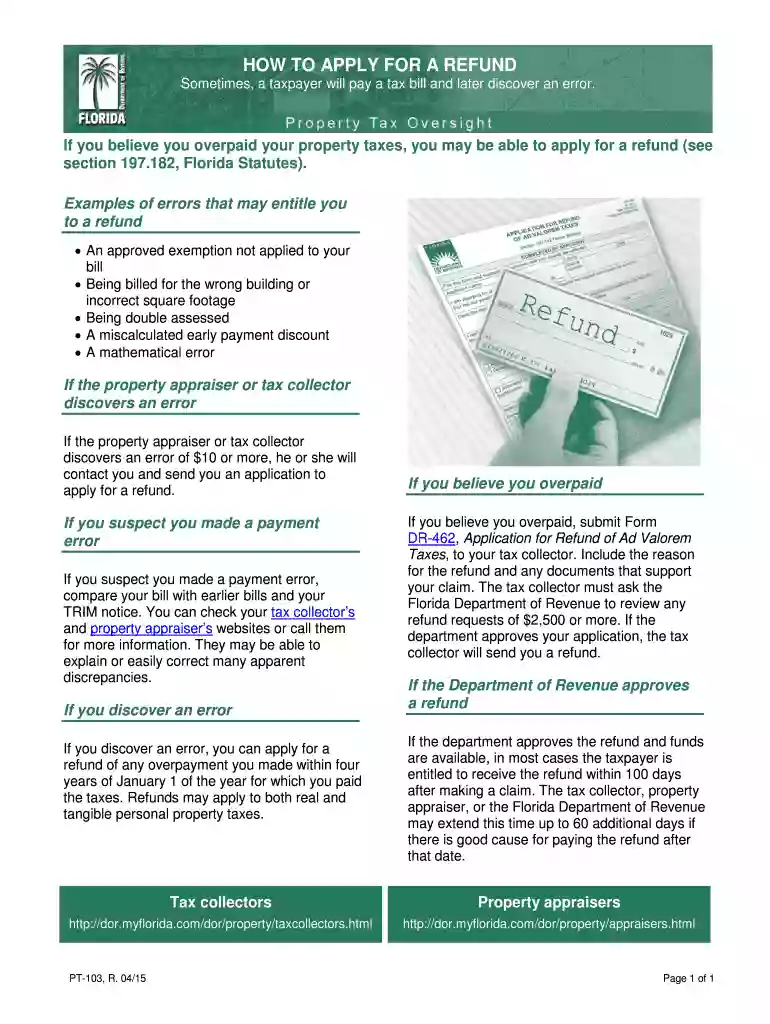
Type text, add images, blackout confidential details, add comments, highlights and more.

Draw your signature, type it, upload its image, or use your mobile device as a signature pad.

Send it via email, link, or fax. You can also download it, export it or print it out.
The "How to Apply for a Refund" refers to a formal procedure by which individuals or entities request the return of money paid erroneously or in excess for a service or product. This process is a structured method to address overpayments or incorrect billings, ensuring that rightful refunds are issued. Within the context of tax-related refunds, this process often involves filing specific forms, such as Form DR-462 for overpaid property taxes in Florida. Understanding the specific requirements and nuances of this application process is crucial for successfully obtaining a refund.
Identify Overpayment or Error:
Obtain the Appropriate Form:
Complete the Form:
Gather Supporting Documentation:
Submit the Application:
Monitor the Status:
The application for a refund typically necessitates several documents to verify the claim and justify the request:
Proof of Payment:
Identification Documents:
Explanatory Statement:
Application Form:
Additional Supporting Evidence:
Refund eligibility is contingent upon several factors, often determined by the type of refund being pursued:
Timing:
Proof of Overpayment:
Compliance with Terms:
Jurisdictional Requirements:


Refund procedures often vary by state, reflecting differences in regional regulations and administrative protocols:
Florida Refund Process:
State-Specific Deadlines:
Documentation Variances:
Awareness of filing deadlines is crucial in the refund application process to ensure timely and successful refunds:
General Application Cutoffs:
Property Tax Refunds:
Notification Deadlines:
Consumers and businesses can submit refund applications through various methods, tailored to accommodate accessibility and convenience:
Online Submissions:
Mail-In Applications:
In-Person Submissions:
Several key aspects define the refund application process:
Accuracy:
Evidence-Presenting:
Follow-Up:
The legal framework governing refund processes sets out specific standards and practices to be adhered to:
Federal Compliance:
State-Level Rules:
By understanding each of these components and carefully adhering to defined procedures and deadlines, applicants can streamline their refund application process and maximize their chances for a successful outcome.
We've got more versions of the HOW TO APPLY FOR A REFUND form. Select the right HOW TO APPLY FOR A REFUND version from the list and start editing it straight away!
At DocHub, your data security is our priority. We follow HIPAA, SOC2, GDPR, and other standards, so you can work on your documents with confidence.
Any corporation that overpaid its estimated tax for the tax year may apply for a quick refund if the overpayment is: At least 10% of the expected tax
Students who cease enrollment will have their tuition and fees adjusted according to the applicable Refund Policy published by the Registrars Office.
To get your refund, you must file a return. You have 3 years to claim a tax refund. Refund: Claim it or lose it (video, 2:05). Check your refund. If you e


