




01. Edit your form online
Type text, add images, blackout confidential details, add comments, highlights and more.

Type text, add images, blackout confidential details, add comments, highlights and more.

Draw your signature, type it, upload its image, or use your mobile device as a signature pad.

Send it via email, link, or fax. You can also download it, export it or print it out.
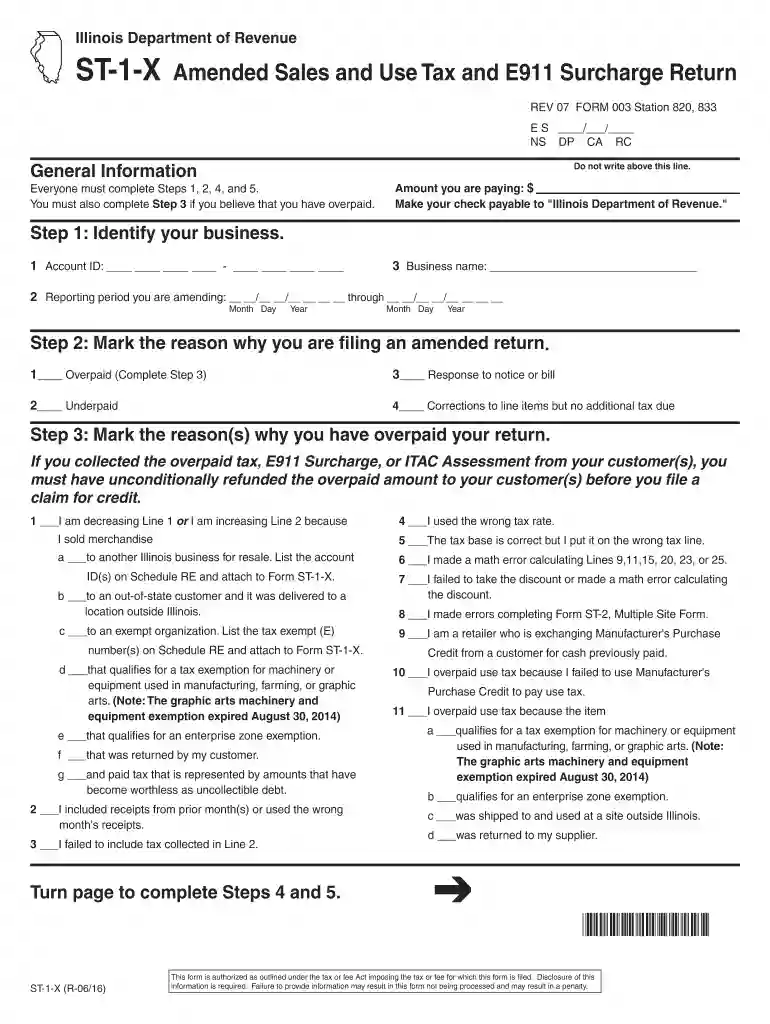
The "ST-1" form for Illinois 2011 is a critical document for businesses as it pertains to the Sales and Use Tax returns. It allows businesses operating in Illinois to report the sales tax collected and remit any taxes owed to the Illinois Department of Revenue. For the tax year 2011, this form also covers the E911 Surcharge, which is an essential component of telecommunications services in the state. This form is integral for maintaining compliance with Illinois tax laws and ensuring that all transactions are accurately reported.
Acquiring the ST-1 form for Illinois 2011 can be done through various methods. Businesses can visit the Illinois Department of Revenue's official website where downloadable versions of the form are typically available. For those who prefer physical copies, contacting the Department of Revenue or visiting their regional offices can provide access to printed forms. Moreover, tax preparation software often includes options to download necessary forms for the respective filing year, ensuring comprehensive tax management tools.
The ST-1 form is primarily used by businesses, ranging from small sole proprietors to large corporations operating within Illinois that have sales tax collection obligations. Retail stores, service providers, and any entity engaged in the sale of taxable goods or services in Illinois are required to file this form. It is also used by businesses that are involved in taxable telecommunications services due to the associated E911 Surcharge requirement.


Filing the ST-1 form serves as a legal obligation for businesses under Illinois tax law. It ensures the proper collection, reporting, and remittance of sales and use taxes, which supports public state services. Failure to submit an accurate ST-1 form can lead to penalties, audits, or legal actions. It's crucial for businesses to understand their obligations under Illinois law and to utilize the form correctly to avoid compliance issues.
Non-compliance with filing the ST-1 form can have significant repercussions, including:
The Department of Revenue requires that the ST-1 form be filed on a monthly basis for most businesses, with the deadline typically falling on the twentieth day of the following month. However, depending on the business's annual tax liability, some filers may qualify for quarterly reporting. It's vital for businesses to stay informed of specific deadlines to avoid penalties.
We've got more versions of the print out st1 form for illinois 2011 form. Select the right print out st1 form for illinois 2011 version from the list and start editing it straight away!
At DocHub, your data security is our priority. We follow HIPAA, SOC2, GDPR, and other standards, so you can work on your documents with confidence.
Jan 17, 2011 Form ST-1, Sales and Use Tax Return. This form should be Illinois residents who purchase cigarettes out of state should file this form.
Apr 5, 2011 In Illinois, construction contractors are deemed end users of tangible personal property purchased for incorporation into real property. As end
Feb 16, 2019 The NCCN Guidelines and the illustrations herein may not be reproduced in any form without the express written permission of NCCN. 2020


