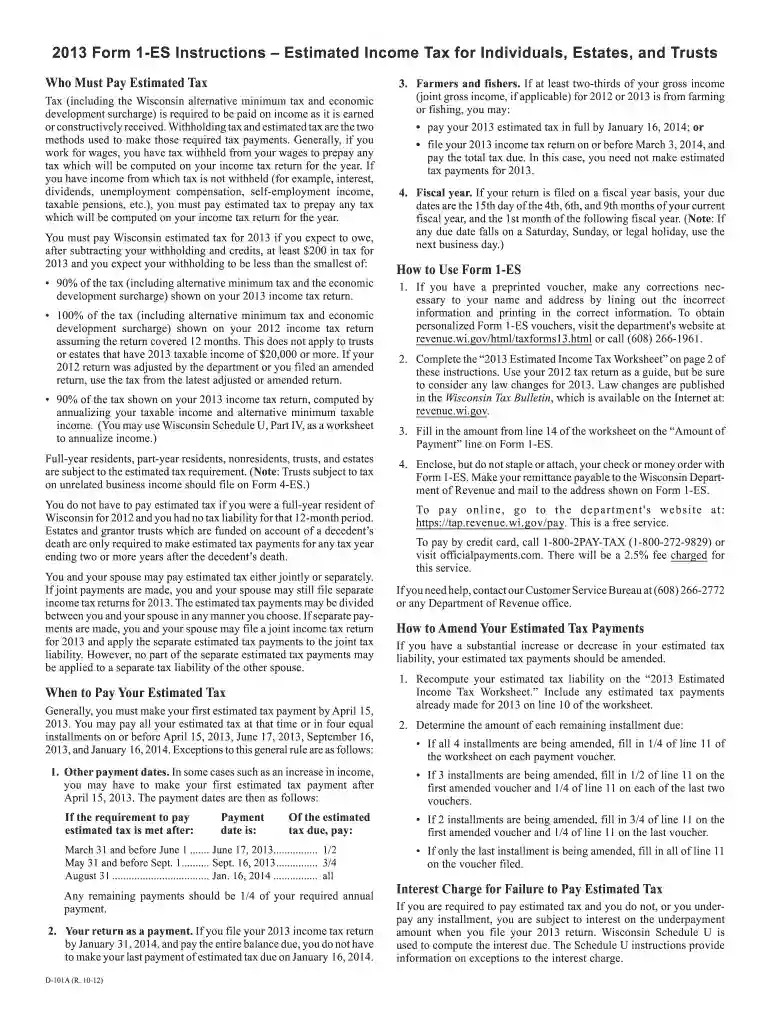
Definition and Purpose of Wisconsin Form 1-ES 2012
Wisconsin Form 1-ES 2012 is an essential document used by individuals, estates, and trusts to calculate and pay estimated income tax for the state of Wisconsin. This form is specifically designed for the fiscal year 2012 and outlines how taxpayers can comply with state tax obligations by making scheduled payments throughout the year. The primary function of this form is to prevent underpayment penalties by facilitating timely tax payments based on expected annual income.
Key Components of the Form
- Estimated Income: Taxpayers must estimate their income for the entire year and calculate the corresponding tax liability.
- Payment Schedule: Provides a structured timeline for tax payments, reducing the risk of financial strain or missed deadlines.
- Underpayment Penalties: Highlights the importance of accurate estimation to avoid potential penalties.
How to Use Wisconsin Form 1-ES 2012
Using Wisconsin Form 1-ES 2012 involves several steps to ensure compliance with Wisconsin's state tax requirements. The process begins with calculating the estimated taxable income.
Step-by-Step Instructions
- Estimate Your Income: Determine the total income expected for 2012 from all sources, including wages, investments, and self-employment.
- Calculate Estimated Tax Liability: Use the applicable Wisconsin tax rates to calculate the estimated tax due for the year.
- Form Completion: Enter the estimated income and calculated tax on Form 1-ES 2012.
- Determine Payment Amounts: Divide the total estimated tax into four quarterly payments or adjust for a feasible schedule that meets tax obligations.
- Payment Submission: Use the payment vouchers provided with Form 1-ES to submit payments on or before the due dates.
Steps to Complete the Wisconsin Form 1-ES 2012
Completing the form accurately is crucial for remaining compliant. Follow these guidelines to ensure proper completion:
Detailed Instructions
- Personal Information: Fill in your name, address, and taxpayer identification number at the top of the form for identification purposes.
- Income Sections: Accurately document income from all sources, taking care to include income types defined by Wisconsin tax guidelines.
- Credits and Deductions: Identify eligible state credits and deductions that can reduce tax liability, ensuring accurate application to the calculated taxes.
- Payment Vouchers: Attach the relevant payment voucher with each installment, ensuring each is marked with the correct period designation.
Obtaining Wisconsin Form 1-ES 2012
Accessing the form is essential for timely completion and submission. The document is available through several channels:
Methods to Acquire the Form
- Online Access: Download directly from the Wisconsin Department of Revenue website, where the forms are available in PDF format.
- Request by Mail: Contact the Wisconsin Department of Revenue to request a paper copy to be mailed to your address.
- In-person Retrieval: Visit a local Department of Revenue office to obtain a physical copy of the form.
Who Typically Uses Wisconsin Form 1-ES 2012
Understanding who needs to use this form is vital for proper tax planning.

Common Users
- Self-Employed Individuals: Those without tax withholding from an employer must use this form for estimated tax payments.
- Estates and Trusts: Managing ongoing income-generating properties or funds requires the use of Form 1-ES.
- Retirees with Investment Income: Individuals with substantial income from investments or pensions that are not subject to automatic withholding.
Filing Deadlines and Important Dates
Adhering to filing deadlines is critical to avoid penalties.
Key Dates
- Quarterly Due Dates: Payments are generally due on April 15, June 15, September 15, and January 15 of the following year.
- Extensions and Adjustments: Understand the implications of adjusting payments due to changes in income throughout the year.
Penalties for Non-Compliance
Non-compliance with estimated tax payments can result in financial penalties.
Understanding Penalties
- Underpayment Penalties: Imposed for failing to pay the required estimated tax by each installment date.
- Interest Charges: Interest may be applied to any unpaid taxes at the federal interest rate for underpayments during any period that taxes remain unpaid.
- Strategies to Mitigate Penalties: Regularly review income projections and adjust payments as necessary to align with actual income changes during the year.
Examples of Using Wisconsin Form 1-ES 2012
Real-world scenarios help illustrate proper form usage.
Practical Scenarios
- Scenario 1: Self-Employed Consultant: A consultant anticipates earning varying income throughout the year. Form 1-ES is used to estimate and adjust tax payments quarterly.
- Scenario 2: Investment Gains: A retiree with a fluctuating investment portfolio uses the form to ensure taxes on capital gains are paid on time.
By understanding and following the steps and guidelines provided, taxpayers can effectively manage their estimated tax responsibilities with Wisconsin Form 1-ES 2012.