




01. Edit your form online
Type text, add images, blackout confidential details, add comments, highlights and more.

Type text, add images, blackout confidential details, add comments, highlights and more.

Draw your signature, type it, upload its image, or use your mobile device as a signature pad.

Send it via email, link, or fax. You can also download it, export it or print it out.
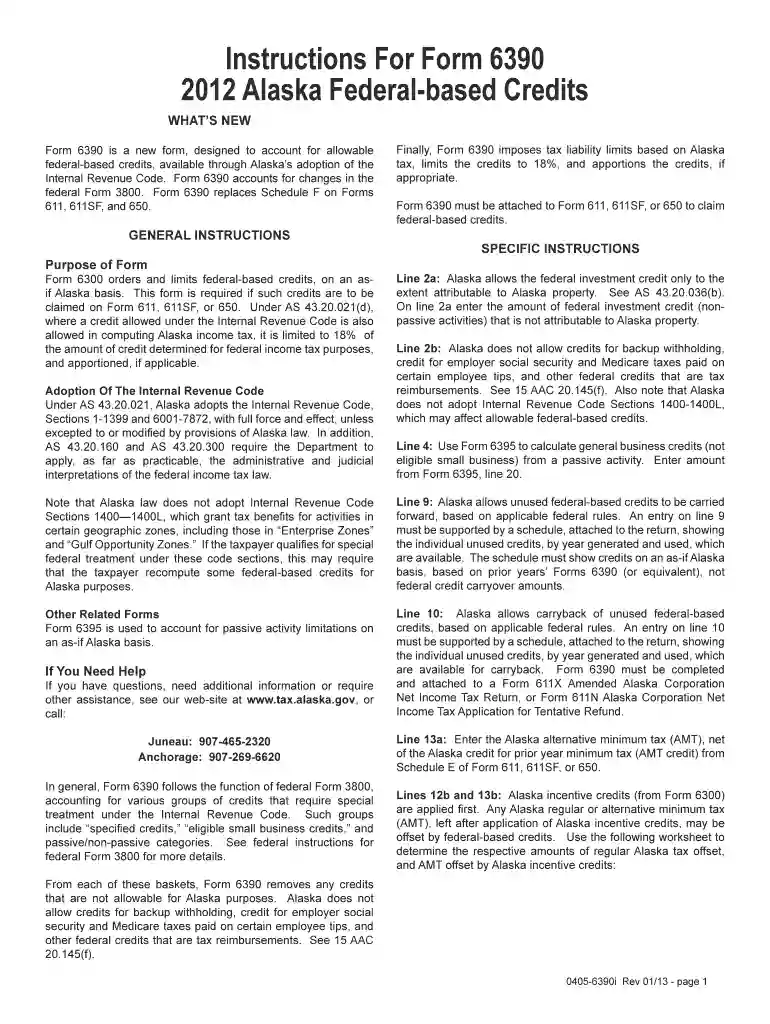
The "- tax alaska" form, also known as Form 6390, is essential for taxpayers in Alaska aiming to claim allowable federal-based credits. This form replaces the previously used Schedule F on certain tax forms. By using this form, individuals and businesses report federal credit amounts that are applicable under Alaska's tax regulations. It's particularly relevant for filers who need to account for credits limited to 18% of the federal amount, as required by state tax laws. Understanding this form is crucial, as it guides taxpayers through the complexities of state tax credits and ensures compliance with Alaska's adaptation of the Internal Revenue Code.
Filling out the "- tax alaska" form involves several steps to accurately report and claim eligible tax credits. It's crucial to first determine the types of credits you qualify for, such as investment credits, carryforwards, or carrybacks. Each line of the form requires specific information, reflecting how your federal credits translate into state-eligible credits. It's beneficial to review each section carefully, ensuring you adhere to the assigned limitations and percentages. Utilize detailed instructions provided with the form to navigate any complexities or unusual scenarios that may arise during completion.
The "- tax alaska" form can be found on the Alaska Department of Revenue's website, where it's available for download. You can also obtain a physical copy from various tax preparation sites or request it by contacting the department directly. Digital access to the form is particularly convenient for those who prefer to fill out and submit their tax documents electronically. Once downloaded or received, ensure that you have the latest version to avoid issues related to outdated information or regulatory changes.
Businesses and individuals engaged in activities that qualify for federal tax credits often use the "- tax alaska" form. This includes corporations, partnerships, and sole proprietors who wish to take advantage of the state’s provision for claiming a portion of federal credits. Tax professionals and accountants working with clients in Alaska also frequently use this form to maximize their clients' tax savings within the legal framework provided by state laws.


The legal use of the "- tax alaska" form is crucial for ensuring that taxpayers comply with state tax regulations while benefiting from federal credits. Any individual or business claiming credits must adhere to the protocols established by the Alaska Department of Revenue. Misrepresentation or erroneous filings can result in audits or penalties, highlighting the importance of accurate and honest completion of this form. The form itself provides a legal framework for claiming state tax deductions legitimately.
Alaska's guidelines for federal-based credits differ from other states primarily in the percentage of federal amounts that can be claimed. Taxpayers should be aware of these state-specific rules, including detailed requirements for credit types that might have unique state restrictions. Moreover, Alaska’s distinct tax environment, with no state income tax but specific credit guidelines, demands close attention to ensure conformity with local tax laws. Always consult the latest state publications or tax professionals knowledgeable about Alaskan tax policies for guidance.
We've got more versions of the - tax alaska form. Select the right - tax alaska version from the list and start editing it straight away!
At DocHub, your data security is our priority. We follow HIPAA, SOC2, GDPR, and other standards, so you can work on your documents with confidence.
You must complete this form if youre a semiweekly schedule depositor or became one because your accumulated tax liability during any month was.
No information is available for this page.
Taxes levied by a city within a borough must be collected by a borough and returned in full to the city levying the tax. This provision applies to home rule and


