Definition and Meaning of the Alaska Qualified Oil and Gas Service Industry Expenditure Credit
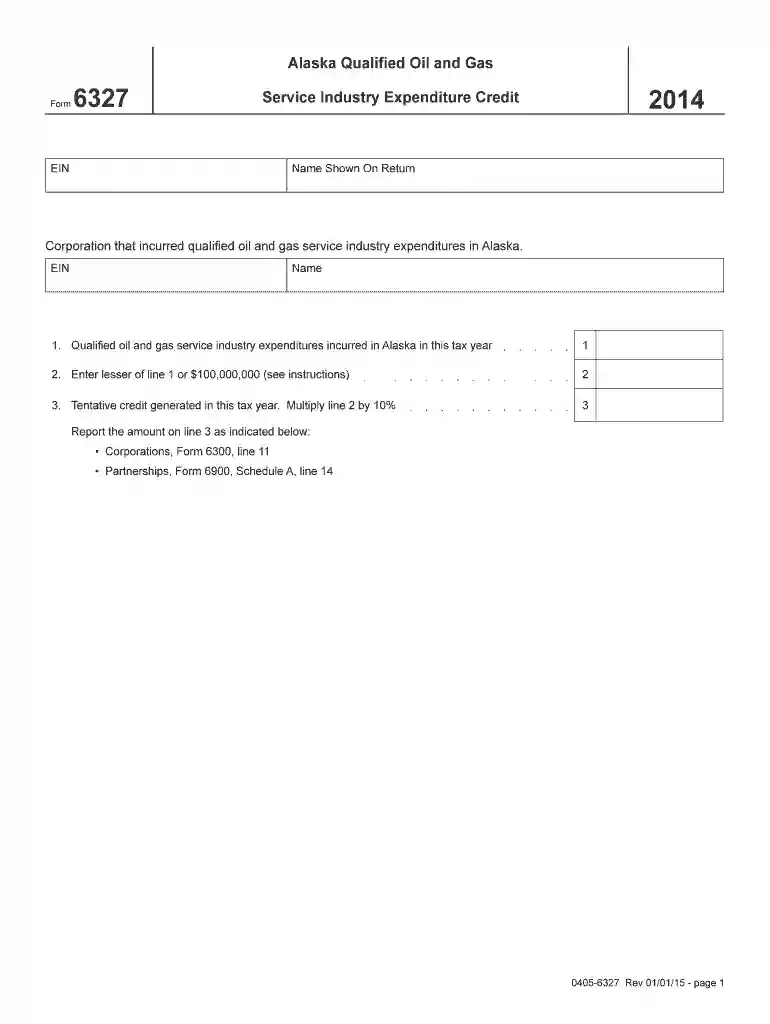
The Alaska Qualified Oil and Gas Service Industry Expenditure Credit is a tax incentive designed to promote investment in the state's oil and gas sectors. This credit allows corporations to report and claim qualified expenditures incurred within Alaska. The primary aim is to foster industry growth by reducing the tax burden on companies investing in local oil and gas service operations. Understanding the details of this credit is crucial for eligible corporations to optimize their tax strategies.
Key Elements of the Alaska Tax Credit Form 6327
The Alaska Tax Credit Form 6327 is integral for corporations aiming to report qualified oil and gas expenditures. Key elements of the form include:
- Qualified Expenditures: These are costs that meet specific criteria set by the state, ensuring that only genuine investments in the oil and gas service industry are claimed.
- Calculation of Credit: The form requires meticulous calculations to determine a tentative credit based on the reported expenditures. Detailed instructions guide applicants through these calculations.
- Reporting Requirements: The form specifies various tax forms on which these credits must be reported, ensuring compliance and proper documentation.
How to Use the Alaska Tax Credit Form 6327
To effectively use the Alaska Tax Credit Form 6327, companies must follow a structured process:
- Identify Eligible Expenditures: Analyze financial records to pinpoint costs that qualify under the state's guidelines.
- Complete Form 6327: Ensure all financial data and expenditure details are accurately entered.
- Calculate Tentative Credit: Utilize provided instructions to compute the tentative amount of credit based on qualified expenditures.
- Submit with Relevant Tax Forms: Attach the completed Form 6327 to designated tax forms as instructed, ensuring full compliance with reporting regulations.
Steps to Complete the Alaska Tax Credit Form 6327
Completing the Alaska Tax Credit Form 6327 involves several organized steps:
- Gather Necessary Documentation: Collect all financial documents related to qualified expenditures.
- Form Analysis: Carefully review the form’s instructions to understand requirements and sections.
- Data Entry: Accurately fill in all requested information, ensuring consistency with financial records.
- Credit Calculation: Follow step-by-step guidelines to compute the tentative credit.
- Review: Double-check all entries for accuracy to avoid compliance issues.
- Submit: Attach Form 6327 to the appropriate tax forms and submit by the stipulated deadline.
State-Specific Rules for the Alaska Tax Credit
Alaska has specific regulations governing the Qualified Oil and Gas Service Industry Expenditure Credit:
- Eligibility: Corporations must demonstrate that their expenditures directly support Alaska's oil and gas service sectors.
- Deadline Compliance: Specific deadlines must be adhered to, with penalties for late submissions.
- Documentation: Corporations must maintain thorough records to substantiate claims, subject to review by the state authorities.
Important Terms Related to Alaska Tax Credit
Understanding specific terms is crucial for correctly completing the Alaska Tax Credit Form 6327:
- Qualified Expenditures: Costs that meet state criteria for investments in the oil and gas service industries.
- Tentative Credit: The initial amount of credit calculated before final determination by tax authorities.
- Supporting Documents: Financial statements and receipts proving the legitimacy of claimed expenditures.
Required Documents for Form Submission
Submitting the Alaska Tax Credit Form 6327 necessitates a range of documents to validate claims:
- Financial Statements: Detailed records of all expenses claimed as qualified expenditures.
- Receipts and Invoices: Evidence of transactions that support reported financial data.
- Corporate Tax Forms: Completed tax forms that the credit form accompanies, as required by state tax authorities.
Filing Deadlines and Important Dates
Adhering to deadlines for the Alaska Tax Credit Form 6327 is crucial to avoid penalties:
- Annual Filing Date: Corporations must submit forms by a specific deadline each year, typically aligning with broader tax submission timelines.
- Extension Requests: Provisions for extensions exist; however, they require timely application and justification.
Penalties for Non-Compliance with Alaska Tax Credit Provisions
Non-compliance with the rules surrounding the Alaska Tax Credit Form 6327 can lead to penalties, such as:
- Financial Penalties: Fines may be imposed for late submission or inaccurate reporting.
- Rejection of Credit Claim: Incorrect or insufficient information can lead to the outright denial of the credit.
- Audits: Failure to adequately document claims can trigger audits, necessitating more extensive reviews of corporate financial practices.