






Definition and Purpose of the Principal Residence Exemption (PRE)
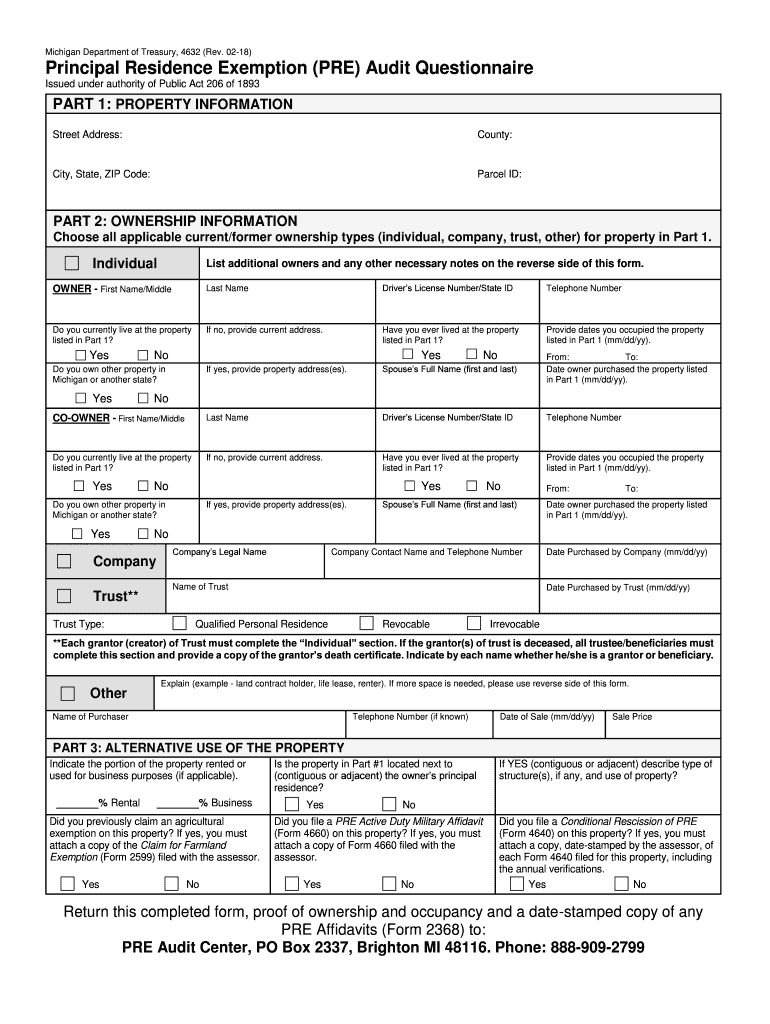
The Principal Residence Exemption (PRE) is a tax benefit awarded to property owners in Michigan, allowing them to exempt a portion of their property's value from local school operating taxes. This exemption is specifically available for an owner’s primary residence, defined as the place where the owner habitually resides and considers their true permanent home. The Michigan Department of Treasury has designed the Principal Residence Exemption Audit Questionnaire to verify individuals' eligibility for this exemption by collecting detailed information about property and ownership.
Key Elements of the PRE Audit Questionnaire
- Property Details: The questionnaire requires detailed information about the property in question, including its address, legal description, and any other identifying details.
- Ownership Information: Respondents must disclose all parties who have an ownership stake in the property, whether individuals, companies, or trusts.
- Occupancy History: A comprehensive history of who has resided in the property and during what periods is essential. This section helps establish the property as the principal residence.
- Alternative Uses: If the property is used for purposes other than as a primary residence, such as leasing, these details must be provided to determine eligibility accurately.
Steps to Complete the PRE Audit Questionnaire
- Gather Required Documents: Before starting, collect necessary documents such as property deeds, tax bills, and any prior correspondence related to the property.
- Complete Property Information: Provide thorough details regarding the physical property, including its address and any parcel identification numbers.
- Detail Ownership and Occupancy: Accurately list all owners and occupants during the specified audit period, ensuring all legal names and contact information are included.
- Submit Any Supporting Evidence: Attach additional documents that support the claimed primary residency, such as utility bills or voter registration records.
- Review and Submit: Double-check all entries for completeness and accuracy, then follow the provided instructions to submit the form, whether online, by mail, or in-person.
Eligibility Criteria for the PRE
To qualify for the PRE, you must occupy the property as your primary residence and own it on or before June 1 of the tax year in which the exemption is claimed. The property should not be used for commercial purposes, and any alternative use must align with the exemptions guidelines. Co-owners must also meet residency and ownership criteria.


Importance of the PRE Audit Questionnaire
The audit questionnaire serves as a critical tool in maintaining the integrity of the PRE program. By ensuring that only eligible properties receive the exemption, the Michigan Department of Treasury can safeguard local school funding from unwarranted reductions due to improper claims. This validation process benefits the community at large by maintaining fairness and equity in tax distribution.
Commonly Used Terms in the PRE Audit Questionnaire
- Principal Residence: The primary home where an individual resides most of the year.
- Occupancy: The period during which an individual physically lives at a residence.
- Exemption Certificate: A formal declaration that specifies an individual's eligibility for tax exemption based on residency.
Penalties for Non-Compliance with the PRE Regulation
Failure to accurately complete or submit the PRE Audit Questionnaire can result in retroactive tax assessments, requiring property owners to pay back taxes with interest. In cases where deliberate misrepresentation is found, additional penalties may be applied, emphasizing the importance of truthful and thorough submission.
Jurisdiction and Issuance
The Principal Residence Exemption Audit Questionnaire is overseen by the Michigan Department of Treasury. As the issuing authority, the department is responsible for developing the questionnaire, collecting responses, and determining exemption eligibility based on submitted data.
Alternatives and Related Forms
While the Principal Residence Exemption Audit Questionnaire remains a critical form for Michigan residents, property owners should be aware of related documents such as the Homestead Property Tax Credit claim or any state-specific property assessment forms that could overlap with their exemption claims. These forms may offer different benefits and are subject to separate eligibility requirements.