







Definition and Meaning
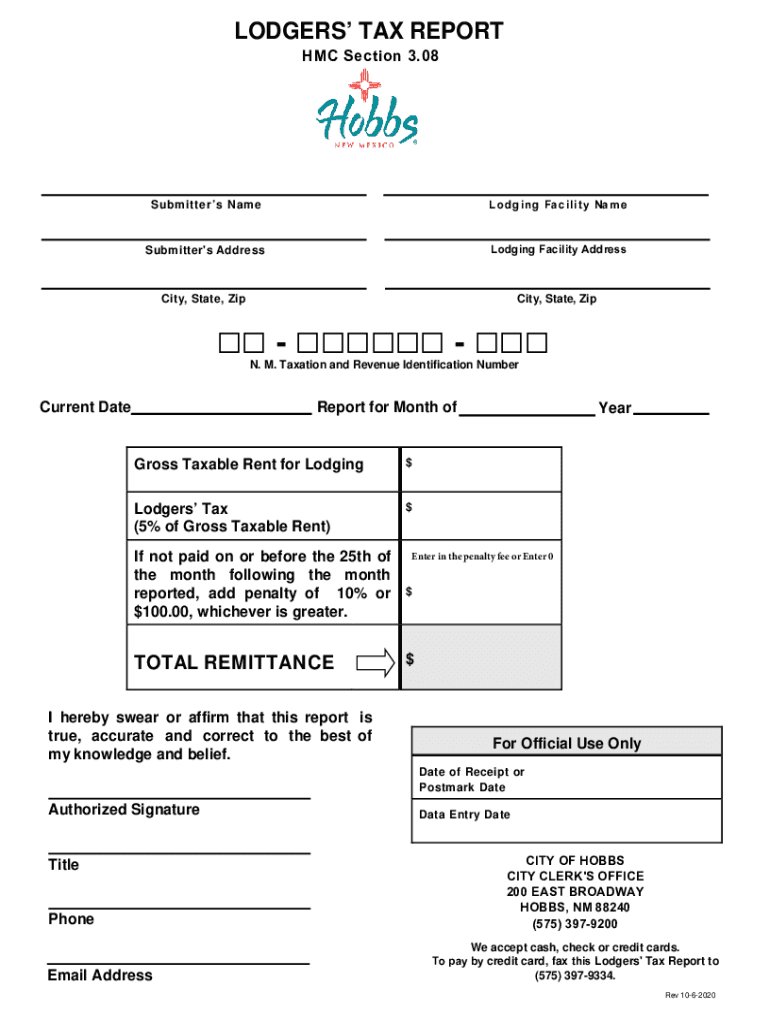
The NM Tax Ordinance 854 template is a structured document designed to facilitate the reporting of lodgers' tax for lodging facilities in Hobbs, New Mexico. This document serves a critical function in ensuring that entities within the hospitality industry comply with local tax regulations by accurately calculating and reporting taxes on gross taxable rent. The use of this standardized form helps streamline the tax reporting process for both businesses and the City Clerk's Office.
Steps to Complete the NM Tax Ordinance 854 Template
Completing the NM Tax Ordinance 854 template involves several key steps. First, it's essential to gather all necessary information, including gross taxable rent amounts and details of the lodging facility. Once the data is compiled, follow these steps:
-
Enter Lodging Facility Information: Start by filling in the name, address, and contact information for the lodging facility. Accuracy is crucial for identification and record-keeping purposes.
-
Report Gross Taxable Rent: In this section, input the amount of gross taxable rent received for the reporting period. This figure is foundational for calculating the lodgers' tax.
-
Calculate the Lodgers' Tax: Multiply the reported gross taxable rent by the applicable tax rate, typically 5%. This section will show the exact amount of lodgers' tax due.
-
Detail Payment Information: Provide the method of payment and any reference numbers related to the transaction. Ensuring that this section is complete helps in reconciling payments.
-
Add Penalty Details (if applicable): Include any penalties incurred due to late submission or payment. This may involve calculating late fees based on local tax guideline percentages.
-
Affirmation of Accuracy: The final section requires the submitter to sign and date the form, affirming the accuracy and completeness of the reported information.
How to Use the NM Tax Ordinance 854 Template
To effectively use the NM Tax Ordinance 854 template, lodging facilities must integrate it into their monthly financial routines. By doing so, they can efficiently gather necessary data and ensure timely submission. It's advisable to designate a specific team member responsible for maintaining compliance with this tax form, thereby minimizing the risk of errors or delays.
Key Elements of the NM Tax Ordinance 854 Template
The NM Tax Ordinance 854 template includes several critical elements that structure the reporting process. These elements include:
- Submitter Information: Capture of detailed contact information for accountability.
- Gross Taxable Rent Section: Focus on the main taxable income, ensuring clarity and accuracy.
- Payment and Penalty Sections: Details on payment methods and penalties to maintain transparency.
Important Terms Related to NM Tax Ordinance 854
Understanding key terminology is crucial when dealing with the NM Tax Ordinance 854 template. Some foundational terms include:
- Gross Taxable Rent: The total revenue subject to the lodgers' tax, excluding any exempt income.
- Lodgers' Tax: A local tax levied on temporary lodging accommodations.
- City Clerk’s Office: The municipal body responsible for collecting and managing these tax submissions.
Filing Deadlines and Important Dates
For compliance, the NM Tax Ordinance 854 template must be filed by the 25th of the month following the reporting period. Missing this deadline can lead to penalties, which underscores the need for a structured approach to meeting these due dates.
Required Documents
When submitting the NM Tax Ordinance 854 template, accompanying documentation might be required to verify the reported figures. Common documents include booking records, receipts, and financial statements outlining the gross taxable rent for the period in question.
Penalties for Non-Compliance
Failure to properly file the NM Tax Ordinance 854 template can result in monetary penalties. These penalties often accumulate daily until the required forms and taxes are properly submitted, increasing the financial burden on the facility. Understanding and adhering to the submission timeline is thus essential to avoid these repercussions.




