Et 706 fill in form 2012-2026

Get Form
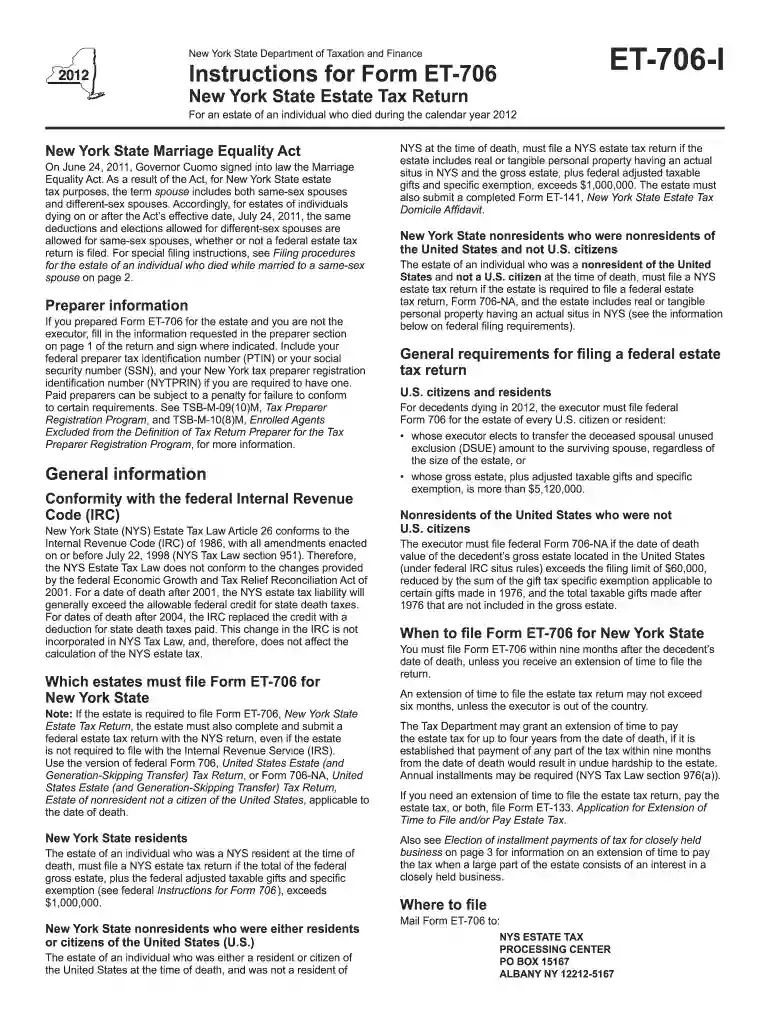
et 706 fill in form 2012 Preview on Page 1

Here's how it works

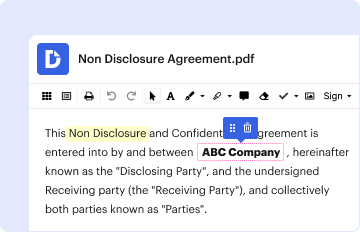
01. Edit your form online
Type text, add images, blackout confidential details, add comments, highlights and more.

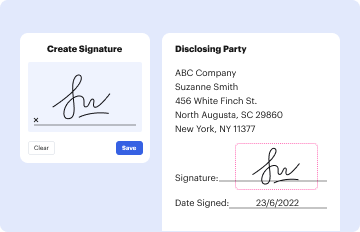
02. Sign it in a few clicks
Draw your signature, type it, upload its image, or use your mobile device as a signature pad.

03. Share your form with others
Send it via email, link, or fax. You can also download it, export it or print it out.

Definition & Purpose of Form 706-NA

Form 706-NA is the United States Estate (and Generation-Skipping Transfer) Tax Return for nonresident alien decedents. It is used to determine the estate tax owed by estates that include U.S. assets of individuals who were nonresidents and not U.S. citizens at the time of their death. This form calculates the value of the taxable estate and the applicable tax under U.S. rules.

Key Features

  • Applies specifically to nonresident aliens with U.S. property interests.
  • Ensures compliance with U.S. federal estate tax regulations.
  • Includes the valuation of U.S. assets, deductions, credits, and tax treaties.

How to Obtain the Form 706-NA

Form 706-NA can be acquired through multiple channels to ensure easy accessibility for applicants.

Downloading the Form

  • Visit the official IRS website and search for "Form 706-NA" to download a PDF version.
  • Access the form through tax preparation software like TurboTax or QuickBooks, which may have the latest version available.

Physical Copies

  • You may request a paper version by contacting the IRS directly and have one mailed to your address.

Steps to Complete Form 706-NA

Filling out Form 706-NA requires careful attention and an understanding of estate tax laws for nonresident aliens. Here's a step-by-step guide to ease the process.

Detailed Instructions

  1. Gather Required Information: Collect all necessary documents, including value reports for assets, previous tax returns, and details of any deductions and credits.
  2. Identify U.S. Assets: Accurately list all U.S. properties and their valuations at the time of the decedent's death.
  3. Calculate Deductions: Determine eligible deductions such as mortgages, debts, and expenses related to estate administration.
  4. Apply Relevant Tax Treaties: If applicable, account for any tax treaties between the U.S. and the decedent's country to prevent double taxation.
  5. Compute Taxable Estate: Subtract deductions from the overall estate value to get the taxable estate amount.
  6. Finalize and Review: Double-check all entries, calculations, and attached documentation to ensure accuracy before submission.

Important Terms Related to Form 706-NA

Understanding the terminology associated with Form 706-NA is crucial for correct completion and filing.

Key Terms to Know

  • Decedent: The deceased individual whose estate is being valued.
  • Gross Estate: The total value of all properties and assets before deductions.
  • Nonresident Alien: An individual who is neither a U.S. citizen nor a resident of the U.S. but has U.S.-based assets.
  • Estate Tax Exemption: The threshold amount that can be transferred without being subjected to estate tax.

Legal Use of Form 706-NA

The legal framework surrounding the use of Form 706-NA involves the proper filing for U.S.-situated assets of nonresident aliens.

Compliance Requirements

  • Must adhere to IRS regulations and deadlines.
  • Involves disclosure of all estate assets under U.S. tax obligations to avoid penalties.
  • Requires consultation with estate professionals or legal experts for complex international taxation issues.

Filing Deadlines & Important Dates

Timely submission of Form 706-NA is crucial to avoid penalties.

Key Deadlines

  • Standard Deadline: The form generally must be filed within nine months after the decedent's death.
  • Extension Requests: An extension of six months may be available upon request but does not extend the time to pay any estate tax due.

Penalties for Late Submission

  • Financial penalties and interest on unpaid taxes accrue if deadlines are not met.

Form Submission Methods

There are various avenues to submit Form 706-NA based on personal preference or situational convenience.

Submission Options

  • Mail: Submit the completed form and accompanying documents to the IRS address specified for Form 706-NA.
  • In-Person Delivery: Hand-deliver the completed form to a local IRS office, ensuring receipt confirmation.

Taxpayer Scenarios

Different types of taxpayers might find themselves needing to file Form 706-NA due to U.S. asset holdings.


decoration image ratings of Dochub

Common Scenarios

  • Foreign Investors: Nonresidents holding U.S. real estate or stocks.
  • International Heirs: Beneficiaries inheriting U.S.-based assets from nonresident alien relatives.

Examples of Using Form 706-NA

Real-world examples assist in understanding how and when Form 706-NA is applied.

Scenarios and Instances

  • Case Example 1: A nonresident alien owning substantial U.S. real estate passes away. Their estate must file Form 706-NA to determine the due estate tax.
  • Case Example 2: An international business owner with U.S. company shares ensures their estate fulfills tax obligations via Form 706-NA after their death.

By providing structured, comprehensive information on Form 706-NA, readers can better understand its application and requirements within the context of U.S. estate tax for nonresident aliens.

See more et 706 fill in form 2012 versions

We've got more versions of the et 706 fill in form 2012 form. Select the right et 706 fill in form 2012 version from the list and start editing it straight away!
Versions Form popularity Fillable & printable
2023 4.7 Satisfied (49 Votes)
2021 4.8 Satisfied (195 Votes)
2020 4.4 Satisfied (98 Votes)
2019 4.4 Satisfied (228 Votes)
2017 4.3 Satisfied (109 Votes)
2016 4.3 Satisfied (54 Votes)
2015 4 Satisfied (30 Votes)
2014 4.1 Satisfied (49 Votes)
2012 3.8 Satisfied (41 Votes)
2011 4 Satisfied (56 Votes)
2010 4 Satisfied (39 Votes)
be ready to get more

Complete this form in 5 minutes or less

Get form

Got questions?

We have answers to the most popular questions from our customers. If you can't find an answer to your question, please contact us.
Contact us
An estate tax return (Form 706) must be filed if the gross estate of the decedent (who is a U.S. citizen or resident), increased by the decedents adjusted taxable gifts and specific gift tax exemption, is valued at more than the filing threshold for the year of the decedents death, as shown in the table below.
Is Form 706 Required for a Step Up in Basis? Form 706 is not required to receive a step up in basis on inherited property. A step up in basis is automatic at the time of inheritance. Even if the property isnt sold, taxes may still be owed.
At our firm, we frequently encounter these errors that can put families at risk: Not filing Form 706 because the estate falls below the exemption threshold. Incomplete or inaccurate asset valuations that trigger IRS audits. Missing critical deadlines for filing or requesting extensions.
Yes, there is a penalty for not filing a Form 706, even if no estate tax is due. The penalty is equal to 5% of the gross estate value for each month, or part of a month, during which the return is late, up to a maximum of 25%. For more information, see the IRS website: .
This code indicates that Form 706, which is used to determine the amount of the estate tax, has been accepted as filed and an examination has been concluded.

Security and compliance

At DocHub, your data security is our priority. We follow HIPAA, SOC2, GDPR, and other standards, so you can work on your documents with confidence.

Learn more
ccpa2
pci-dss
gdpr-compliance
hipaa
soc-compliance