



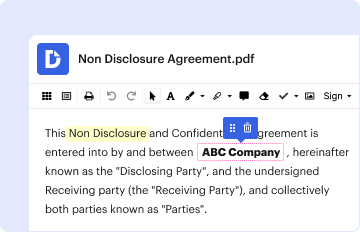
01. Edit your form online
Type text, add images, blackout confidential details, add comments, highlights and more.

Type text, add images, blackout confidential details, add comments, highlights and more.
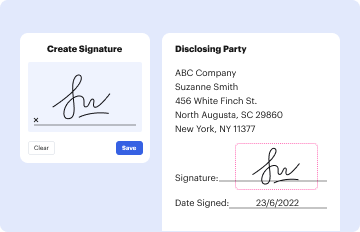
Draw your signature, type it, upload its image, or use your mobile device as a signature pad.

Send it via email, link, or fax. You can also download it, export it or print it out.
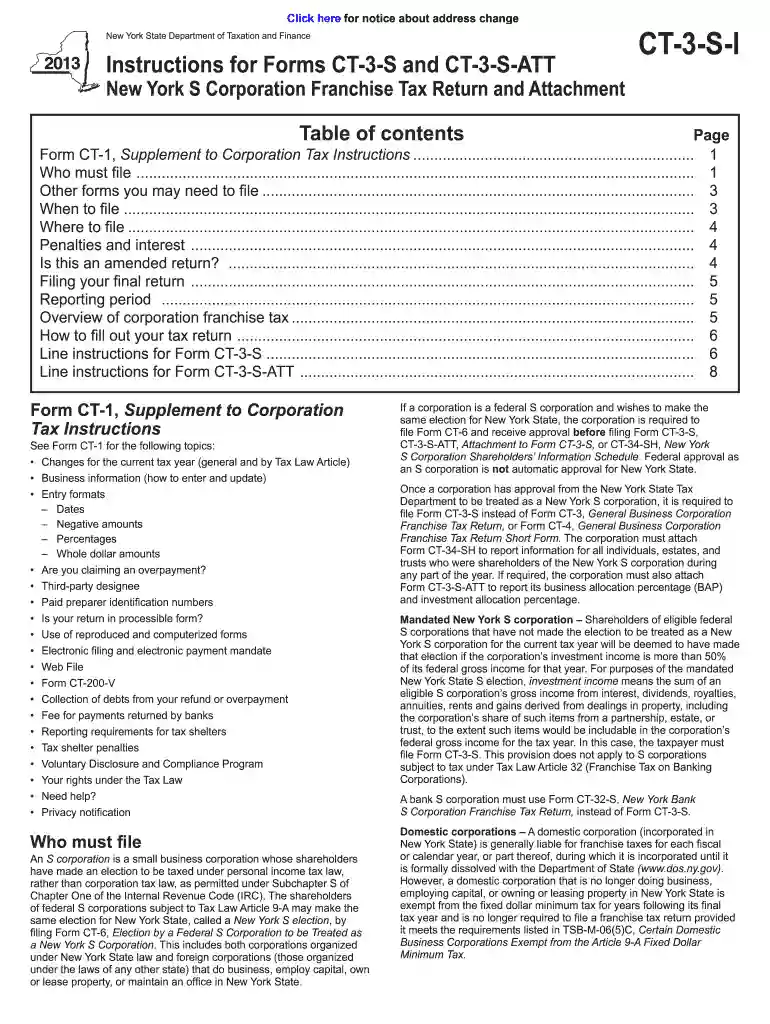
Form CT-3-S is designated for S corporations in New York to file their Franchise Tax Return. This document serves several purposes, including detailing the tax obligations of S corporations, calculating franchise taxes, and complying with state regulations. It's crucial not only for submitting tax information but also for maintaining corporate compliance within New York State. As an S corporation, meeting these tax obligations helps ensure the legal standing of the business.
Completing the CT-3-S form requires precision and attention to detail. Here's a step-by-step breakdown:
S corporations in New York are the primary users of Form CT-3-S. Typically, these are small to medium-sized businesses that have elected S corporation status for tax purposes. Business owners and accountants use the form to ensure compliance with state tax regulations.


Several key terms are critical for understanding and completing the CT-3-S form:
Ensuring timely filing of Form CT-3-S is crucial to avoid penalties and maintain compliance. The standard deadline for S corporations to file their tax returns in New York is March 15th following the calendar year.
Failing to timely file Form CT-3-S or remit the required taxes can lead to significant penalties. Understanding these penalties can help corporations avoid unnecessary legal and financial consequences.
New York has specific regulations that must be adhered to when filing the CT-3-S form. These can include unique computation methods and additional state mandates.
Filing the CT-3-S form electronically can streamline the tax process, reduce errors, and ensure faster processing times.
We've got more versions of the ct 3s instructions 2013 form form. Select the right ct 3s instructions 2013 form version from the list and start editing it straight away!
| Versions | Form popularity | Fillable & printable |
|---|---|---|
| 2025 | 4.9 Satisfied (57 Votes) | |
| 2024 | 4.5 Satisfied (35 Votes) | |
| 2023 | 4.1 Satisfied (30 Votes) | |
| 2022 | 4.8 Satisfied (39 Votes) | |
| 2021 | 4.8 Satisfied (101 Votes) | |
| 2020 | 4.3 Satisfied (97 Votes) | |
| 2019 | 4.4 Satisfied (217 Votes) | |
| 2018 | 4.3 Satisfied (206 Votes) | |
| 2017 | 4.3 Satisfied (69 Votes) | |
| 2016 | 4.4 Satisfied (289 Votes) | |
| 2015 | 4.3 Satisfied (131 Votes) | |
| 2014 | 4.3 Satisfied (70 Votes) | |
| 2013 | 4 Satisfied (46 Votes) | |
| 2012 | 4 Satisfied (52 Votes) | |
| 2011 | 4.3 Satisfied (72 Votes) |
At DocHub, your data security is our priority. We follow HIPAA, SOC2, GDPR, and other standards, so you can work on your documents with confidence.
Apr 15, 2019 You must attach Schedule 3 to Form CT-1040 or your credit will be disallowed. If you entered zero on Form CT-1040,. Line 10, do not complete
The Trunk-Ipsilateral Leg is intended to provide proximal seal and fixation for the endovascular repair of the aneurysm. For more information on the Trunk-
You must attach a copy of the following: (1) federal Form 1120S as filed; (2) Form CT-34-SH; (3) Form CT-3-S-ATT (if required; see instructions); (4) Form CT-60


