Definition & Meaning
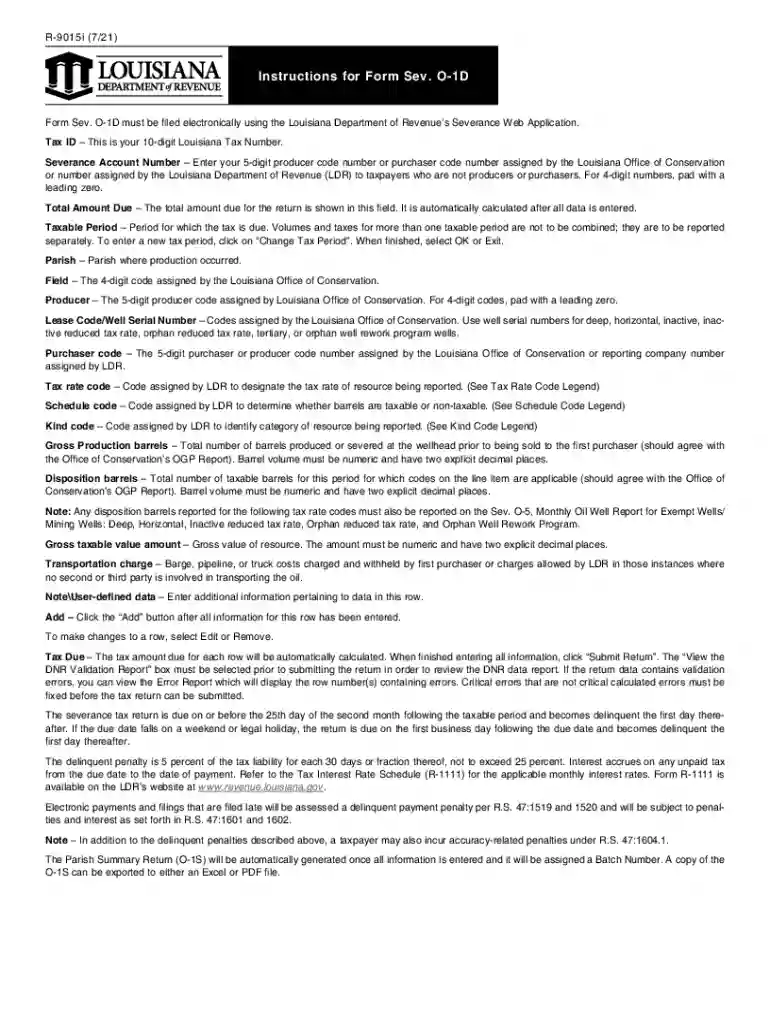
Form Sev O-1s is a tax form used by the State of Louisiana Department of Revenue and Taxation. It is specifically designed for reporting severance taxes related to the extraction of natural resources such as oil and gas. The form plays a crucial role in ensuring that the state captures revenue from these resources, which significantly contribute to Louisiana's economy. Severance tax is imposed when these natural resources are removed from the ground, reflecting the transfer of the right to use or sell these commodities.
Important Context and Usage Scenarios
- Purpose: The primary function of Form Sev O-1s is to report and calculate taxes owed on extracted natural resources. This ensures compliance with state regulations and accurate tax collection.
- Who Uses It: Typically, businesses involved in the extraction or production of natural resources like oil and gas are the primary users of this form. These might include independent contractors, large industrial companies, or partnerships operating within the state.
- Legal Obligations: Filing this form is not just a bureaucratic step but a legal requirement for any entity involved in resource extraction. Not filing can result in penalties and interest on unpaid taxes.
Steps to Complete the Form Sev O-1s State of Louisiana Department of Revenue and Taxation
Completing the Form Sev O-1s requires careful attention to detail, as it involves financial data that affects tax calculations. Here's a comprehensive guide to help you through the process:
-
Gather Necessary Information:
- Taxpayer's ID and severance account number.
- Details of the taxable period.
- Documentation of production volumes and tax rates.
-
Fill Out Identification Section:
- Enter the necessary identifiers, including business name and address.
-
Detail Production Information:
- Record the volume of resources extracted.
- Use available codes for resource type and tax rate for accurate tax calculations.
-
Calculate Tax Liability:
- Subtract any exemptions or deductions from the gross tax calculation to determine the net tax due.
-
Complete Parish Summary Return:
- Compile results for each parish's production to produce a summary return breakdown.
-
Review and Submit:
- Double-check all entries for accuracy before submission.
- File the form electronically for faster processing or mail to the designated state department.
Important Terms Related to Form Sev O-1s State of Louisiana Department of Revenue and Taxation
Understanding the terminology associated with Form Sev O-1s is essential for accurate completion and compliance:
- Severance Tax: A tax levied on the extraction of natural resources.
- Taxable Period: The specific timeframe for which resource extraction activities are reported.
- Production Volume: The quantifiable amount of resources extracted, typically measured in barrels, cubic feet, etc.
- Tax Rate Codes: Specific codes used to determine applicable tax rates based on resource type.
- Parish Summary Return: A summary of total taxes calculated for each parish, reflecting the distributed impact of resource extraction.
Legal Use of the Form Sev O-1s State of Louisiana Department of Revenue and Taxation
The legal implications of Form Sev O-1s extend beyond simple filing:
- Mandatory Compliance: All entities involved in extraction activities within Louisiana must adhere to this regulation by submitting accurate and timely forms.
- Audit Evidence: Properly completed forms serve as official records during audits, helping to substantiate reported figures and calculations.
- Legal Penalties: Failure to submit or misreporting can lead to financial penalties, legal action, or suspension of extraction activities.
State-Specific Rules for the Form Sev O-1s State of Louisiana Department of Revenue and Taxation
Louisiana has specific regulations governing severance taxes:
- Differentiate Resource Types: The state recognizes varying tax rates based on the resource, notably between oil, natural gas, and other minerals.
- Exemptions and Deductions: Louisiana provides certain exemptions, such as for initial wells or small-scale production, which reduce overall tax liability.
- Reporting Timeframes: State laws dictate the timing for submissions, often quarterly, to match the production and fiscal calendar.
Penalties for Non-Compliance
Non-compliance with Form Sev O-1s requirements can have serious consequences:
- Interest on Unpaid Taxes: Louisiana imposes interest, compounded daily, on any unpaid taxes following the due date.
- Additional Fines: Misreporting or deliberate withholding of information can lead to substantial penalties.
- Operational Impact: Severe cases of non-compliance may result in the revocation of rights to operate or extract resources within the state.
Digital vs. Paper Version
Choosing between digital and paper versions of Form Sev O-1s depends on operational preferences and efficiencies:
- Digital Convenience: Electronic submissions facilitate faster processing and confirm receipt, reducing errors associated with manual handling.
- Paper Filing: While still an option, physical submissions are slower and risk being misdirected or lost in transit. This method may suit entities with limited access to digital tools.
Business Types That Benefit Most from Form Sev O-1s State of Louisiana Department of Revenue and Taxation
Specific industries stand to benefit from properly managing their severance tax obligations via Form Sev O-1s:
- Oil and Gas Companies: Entities involved in exploration, drilling, and extraction find this form vital for legal and financial operations.
- Mining Corporations: Companies extracting other minerals are equally dependent on proper severance tax reporting.
- Renewable Energy Firms: Businesses engaged in biomass or geological heat extraction may also have obligations, making the form essential for compliance.
Key Elements of the Form Sev O-1s State of Louisiana Department of Revenue and Taxation
Critical components in Form Sev O-1s require close attention for accurate completion:
- Identification Sections: Ensures that each form is precisely tied to the correct entity and account.
- Tax Rates and Codes: Directly influence the computation of taxes due; accuracy is paramount.
- Parish Returns: Different production areas reflect local tax contributions, necessitating careful calculation for each distinct locale.