





Definition & Purpose of the Medicare Quality of Care Complaint Form
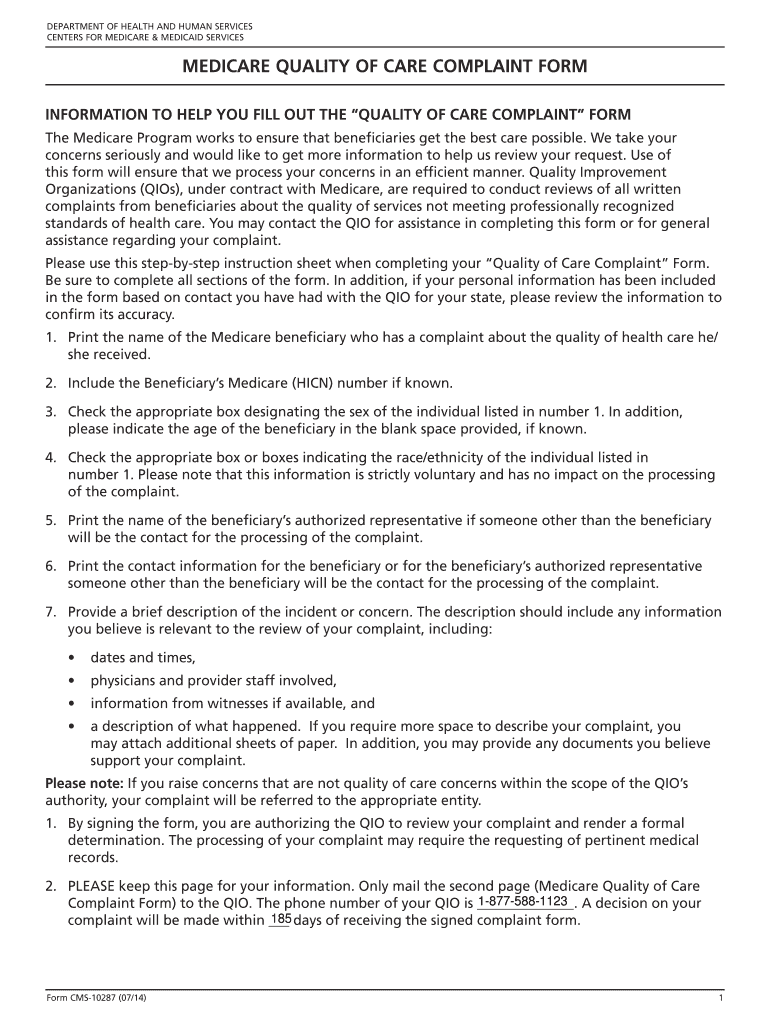
The Medicare Quality of Care Complaint Form serves as an essential tool provided by the Department of Health and Human Services for beneficiaries to report concerns about the quality of healthcare services received. This specialized form is designed to capture detailed complaints where beneficiaries suspect that their health care did not meet acceptable quality standards. It is an important element in the feedback process for improving healthcare services, as it aids the Quality Improvement Organizations (QIOs) in evaluating and addressing reported issues.
How to Use the Medicare Quality of Care Complaint Form
-
Identify the Right Form: Before proceeding, ensure that the form you are obtaining is specifically titled "Medicare Quality of Care Complaint Form." This will guarantee that your complaint is directed appropriately.
-
Gather Information: Compile all necessary details related to your complaint, including dates of service, names of healthcare providers, and any supporting documentation like medical reports or billing statements.
-
Fill Out the Form: Carefully input all required information, paying attention to the sections asking for personal details, descriptions of the incident, and the type of healthcare service in question. Use clear and concise language to describe your experience.
-
Review and Sign: Verify all entered information for accuracy before signing the form. Missing or incorrect details can delay the review process.
-
Submit the Form: Depending on the guidelines provided, submit the form either online, by mail, or in person at the designated location. Make sure to retain a copy for your records.
How to Obtain the Medicare Quality of Care Complaint Form
The Medicare Quality of Care Complaint Form can be obtained from several sources:
-
Online: Visit the official Medicare website or affiliated platforms offering the form for download. Websites often provide the most up-to-date versions.
-
By Phone: Request the form through Medicare’s telephone assistance service to have it mailed to you.
-
In Person: Pickup may be available at Medicare offices or associated healthcare providers.
Steps to Complete the Medicare Quality of Care Complaint Form
-
Personal Information: Begin by entering your full name, Medicare number, contact information, and any other requested identification data.
-
Incident Details: Describe the service received, what went wrong, and why you believe the care was inadequate. Include specifics like dates and names of involved healthcare personnel.
-
Documentation: Attach necessary documents that substantiate your claim. This might include test results, correspondence with the provider, or notes from healthcare appointments.
-
Submit and Track: After submission, monitor the progress of your complaint. You may receive confirmation and status updates, providing insight into any ongoing investigations or requests for additional information.
Importance of the Medicare Quality of Care Complaint Form
Filing a Medicare Quality of Care Complaint is crucial for several reasons:
-
Accountability: It holds healthcare providers accountable for the level of care they provide.
-
Improvement: It aids in identifying patterns of poor care and contributes to systemic improvements within the healthcare system.
-
Patient Voice: It empowers beneficiaries by giving them a platform to express concerns and ensure their experiences are recognized and addressed.
Key Elements of the Medicare Quality of Care Complaint Form
- Comprehensive Personal Details: To ensure complaints are matched accurately to the claimant’s Medicare records.
- Incident Description: A detailed account of what occurred, specifying symptoms, diagnoses, and treatments if relevant.
- Provider Information: Names and addresses of hospitals, clinics, or doctors involved.
- Consent and Privacy Sections: Acknowledgment sections to ensure personal data is used solely for resolving the complaint.
Legal Use and Protections Afforded by the Form
Filing this form is a legal way to raise awareness about care deficiencies and is protected by privacy laws to ensure your personal health information is safeguarded. Under the Health Insurance Portability and Accountability Act (HIPAA), all submitted information must be protected, and the form must be processed confidentially.
Examples and Scenarios of Using the Medicare Quality of Care Complaint Form
- Case Study 1: A patient received an incorrect diagnosis leading to unnecessary treatment. Filing the complaint may result in revisions to diagnosis procedures at the healthcare facility.
- Case Study 2: A beneficiary experienced neglect in nursing care resulting in a secondary health condition. Submitting a complaint could prompt thorough investigations and staff retraining.
Each detailed explanation above serves as a guide to understanding how crucial this form is in maintaining high standards within Medicare services, offering both a practical method of addressing individual healthcare grievances and a mechanism for widescale quality improvement.