



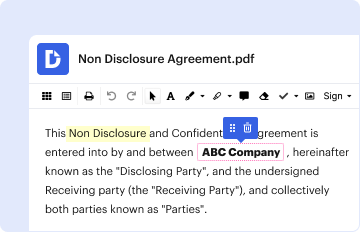
01. Edit your form online
Type text, add images, blackout confidential details, add comments, highlights and more.

Type text, add images, blackout confidential details, add comments, highlights and more.
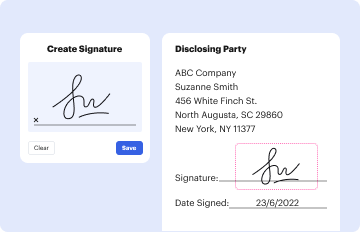
Draw your signature, type it, upload its image, or use your mobile device as a signature pad.

Send it via email, link, or fax. You can also download it, export it or print it out.
Form M-6, or the Hawaii Estate Tax Return, is used for calculating and filing estate taxes in Hawaii. It is applicable to estates of decedents who passed away between December 31, 2015, and January 1, 2017. This form outlines the process for reporting the decedent's estate and calculating any estate taxes owed. It includes sections for personal information, estate tax computations, and applicable exclusions. Understanding the definition and purpose of Form M-6 is essential for accurate tax filing and compliance with Hawaii's estate tax regulations.
The instructions for Form M-6 provide detailed guidance on completing the form accurately. Key elements include:
Estate tax returns in Hawaii must be filed within nine months of the decedent's death. Extensions can be requested but must be submitted before the original deadline. Late filing can result in penalties and interest charges, making timely submission crucial.
The instructions for Form M-6 can be obtained from the Hawaii Department of Taxation's website or by contacting their office directly. Many online tax preparation platforms also provide access to the form and its instructions. Always use the most current version to ensure compliance with the latest regulations.
Failure to file Form M-6 or pay estate taxes on time may result in penalties. These can include:
Understanding these penalties helps personal representatives prioritize timely compliance.
The legal significance of Form M-6 pertains to its role in settling a decedent's estate tax obligations in Hawaii. Filing it accurately ensures compliance with state tax laws and prevents legal disputes that could arise from incorrect or incomplete submissions. It is relevant to personal representatives managing estates, trust administrators, and legal professionals advising on estate matters.
Submitting Form M-6 requires several supporting documents, including:
Form M-6 instructions can be integrated with various tax software platforms, such as TurboTax and QuickBooks. These programs can automate calculations, ensure compliance, and streamline the preparation process. Using compatible software reduces errors and enhances accuracy, particularly for complex estates involving multiple assets and exclusions.
We've got more versions of the Instructions for Form M-6 Hawaii Estate Tax Return (Rev - Hawaii form. Select the right Instructions for Form M-6 Hawaii Estate Tax Return (Rev - Hawaii version from the list and start editing it straight away!
| Versions | Form popularity | Fillable & printable |
|---|---|---|
| 2025 | 4.7 Satisfied (44 Votes) | |
| 2024 | 4.4 Satisfied (34 Votes) | |
| 2022 | 4.7 Satisfied (44 Votes) | |
| 2021 | 4.8 Satisfied (110 Votes) | |
| 2020 | 4.4 Satisfied (177 Votes) | |
| 2019 | 4.3 Satisfied (68 Votes) | |
| 2018 | 4.3 Satisfied (82 Votes) | |
| 2017 | 4.3 Satisfied (48 Votes) | |
| 2016 | 4 Satisfied (26 Votes) | |
| 2015 | 4.3 Satisfied (141 Votes) | |
| 2014 | 4.4 Satisfied (492 Votes) | |
| 2013 | 4 Satisfied (58 Votes) | |
| 2005 | 4.3 Satisfied (33 Votes) |
At DocHub, your data security is our priority. We follow HIPAA, SOC2, GDPR, and other standards, so you can work on your documents with confidence.
Jan 31, 2012 voluntarily file Schedule M-3. See the distributions during S years and the normal tax accounting rules, the. Instructions for Schedule M-3 (
Instructions for Form M-6: Hawaii Estate Tax Return. State of Hawaii Tax Manual of the Federal Revenue Act of 1942 and Prior Laws Illustrating
Which Estates Must File If the decedent was a resident of Ha- waii or a nonresident of Hawaii, but a U.S. resident or U.S. citi- zen, and the taxable estate (


