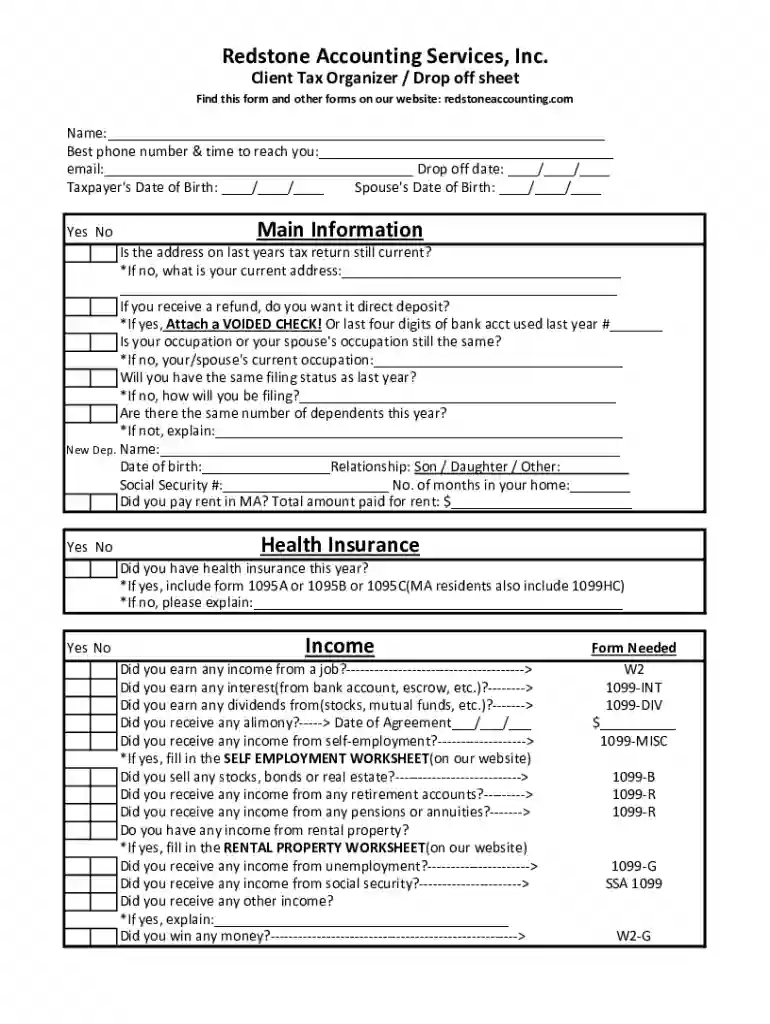
Definition & Purpose of the Client Tax Organizer with Engagement Letter - REDSTONE ACCOUNTING
The Client Tax Organizer with Engagement Letter from Redstone Accounting Services, Inc. serves as a comprehensive tool for clients to collect and provide necessary information for tax return preparation. This document combines a tax organizer and an engagement letter, ensuring both proper documentation and agreement on the terms of service. The tax organizer part systematically gathers details about personal information, income sources, deductions, and credits. The engagement letter outlines the mutual responsibilities of the client and the accounting firm, setting the stage for successful tax preparation.
Key Components
- Personal Information: Collects data such as name, social security number, and contact details.
- Income Sources: Includes wages, dividends, self-employment income, and other forms of earning.
- Deductions & Credits: Addresses available tax deductions and credits to maximize returns.
- Engagement Terms: Sets clear expectations regarding services offered, client responsibilities, and payment details.
How to Use the Tax Organizer with Engagement Letter
Utilizing the Client Tax Organizer with Engagement Letter efficiently requires understanding its structure and functions. This document simplifies the process of compiling tax information and formalizing the client's relationship with Redstone Accounting.
Step-by-Step Process
- Review the Engagement Letter: Before proceeding with the tax organizer, read the engagement terms carefully to ensure understanding and agreement.
- Complete Personal Information: Fill in the necessary personal details, ensuring the accuracy of the information provided.
- Document Income Sources: Provide comprehensive details of all income, using supporting documents such as W-2s, 1099s, and other relevant forms.
- List Deductions and Credits: Identify potential deductions and credits, using past tax returns as a reference if needed.
- Submit the Completed Form: Once finalized, submit the organizer and signed engagement letter to Redstone Accounting for processing and filing.
Components of the Engagement Letter
The engagement letter is a critical element that establishes a professional relationship between the client and Redstone Accounting. It lays out the scope of services, fees, and mutual responsibilities.
Essential Terms
- Scope of Services: Detailed description of services provided, such as preparation and filing of tax returns.
- Client Responsibilities: Outlines the need for accurate and timely provision of necessary information and documents.
- Fee Structure: Information on charges, including hourly rates or fixed fees, and payment terms.
- Confidentiality Clause: Assurance of privacy and protection of client information.
Filing and Important Deadlines
Understanding the timelines associated with the tax organizer and engagement letter is crucial for ensuring compliance and avoiding late penalties.
Critical Dates
- Submission Deadline: Must be submitted well in advance of tax filing deadlines to allow for adequate processing time.
- Tax Filing Due Dates: Generally aligns with IRS deadlines for individual and business tax returns, typically mid-April for individuals.
- Extensions: Procedures for obtaining an extension if more time is needed to gather information or complete filing.
Required Documents for Completion
Accurately completing the Client Tax Organizer involves gathering several documents, each playing a vital role in the tax preparation process.
Document Checklist
- W-2 and 1099 Forms: For reporting wages, non-employee compensation, and other income types.
- Charitable Donations Receipts: Evidence for claiming charitable deductions.
- Mortgage Interest Statements: Relevant for those claiming interest deductions on property loans.
- Medical Expense Receipts: Necessary for claiming health-related deductions.
- Investment Income Statements: To report dividends, capital gains, and other investment earnings.
Digital Versus Paper Version
In today's digital era, the choice between completing the tax organizer digitally or on paper can impact efficiency and accuracy.
Comparison
- Digital Version: Offers flexibility, ease of editing, and convenience of electronic submissions. Integration with tax software streamlines the process further.
- Paper Version: Preferred by those who favor physical documentation or lack access to digital tools.
Software Compatibility with the Tax Organizer
Compatibility with popular accounting software enhances the utility of the Client Tax Organizer.
Compatible Platforms
- TurboTax and QuickBooks: These platforms allow for seamless integration and data import, saving time and reducing errors.
- DocHub: Enables online editing and secure sharing of documents, aligning with the ease of digital tax preparation.
Examples of Using the Tax Organizer in Practice
Real-world scenarios illustrate the versatility and importance of the Client Tax Organizer in different contexts.
Case Scenarios
- Self-Employed Individuals: Benefit from capturing comprehensive income and expenses, ensuring accurate tax reporting.
- Small Business Owners: Use the organizer to keep track of multiple revenue streams and expenses across business ventures.
- Retirees: Facilitate proper reporting of pension incomes, social security benefits, and applicable deductions.
Legal and Compliance Considerations
The engagement letter and tax organizer adhere to legal standards, such as the IRS regulations, ensuring compliance and minimizing audit risks.
Legal Context
- IRS Approval: The structure and requirements of the document align with IRS guidelines.
- Audit Protection: Properly completed documents reduce the likelihood of discrepancies that could trigger IRS audits.
Penalties for Non-Compliance
Failing to submit the tax organizer and engagement letter accurately or timely can result in penalties.
Consequences
- Late Fees: Potential monetary penalties for missing submission deadlines.
- Audit Risks: Inaccuracies may lead to a heightened chance of being audited.
- Lost Deductions: Incomplete or incorrect documentation can lead to forfeiting eligible deductions.