




01. Edit your form online
Type text, add images, blackout confidential details, add comments, highlights and more.

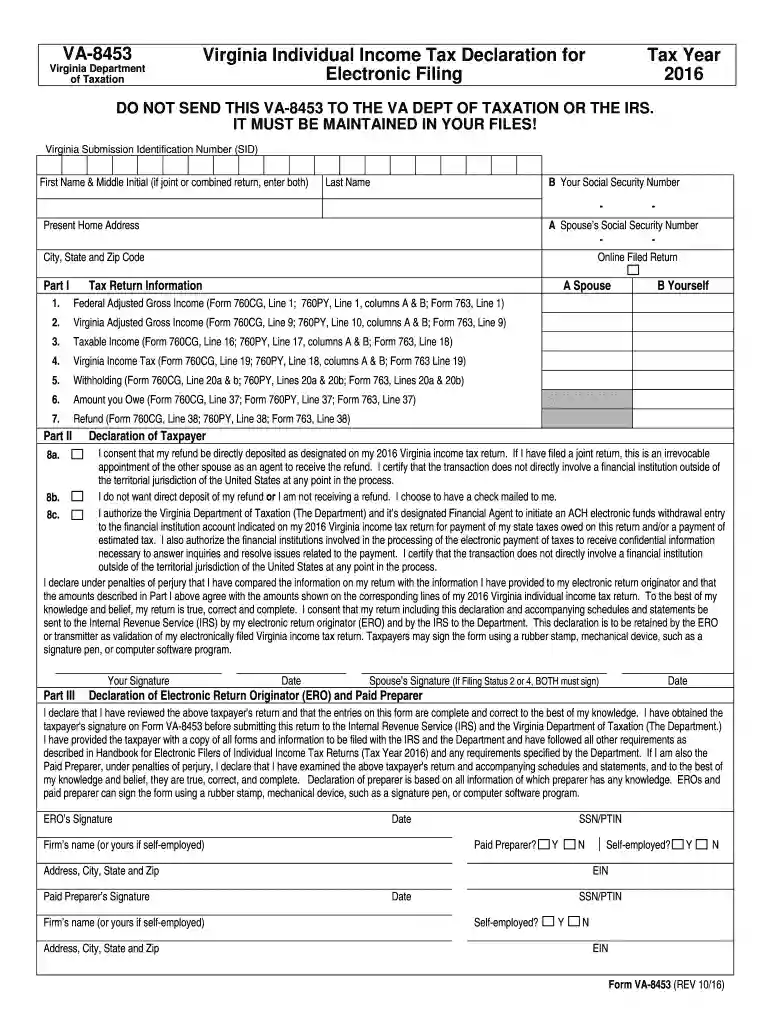
Type text, add images, blackout confidential details, add comments, highlights and more.

Draw your signature, type it, upload its image, or use your mobile device as a signature pad.

Send it via email, link, or fax. You can also download it, export it or print it out.
The "Individual Income Tax Electronic Filing FAQs - Virginia Department of" serves as a comprehensive reference for taxpayers in Virginia who need guidance on electronic filing of their income tax returns. This document provides detailed information regarding the process, requirements, and benefits of electronic filing. It aims to answer common questions and clarify procedures related to e-filing, ensuring taxpayers have accurate information to facilitate a seamless filing experience.
As the document is tailored specifically for residents of Virginia, it reflects the state's particular tax laws and regulations. This focus ensures that taxpayers are fully informed about state-specific filing obligations.
Electronic filing in Virginia involves a series of steps designed to ensure accuracy and compliance. Understanding these procedures is crucial for successful submission.
Understanding specific terms associated with electronic filing is essential for navigating the FAQs effectively.
Virginia has particular regulations that differ from federal guidelines, impacting how state tax returns are filed electronically.
Meeting deadlines is critical to avoid penalties and interest on unpaid taxes. The FAQs document emphasizes key dates.
The document outlines various methods available for submitting the Virginia Individual Income Tax return.
Non-compliance with Virginia tax filing rules can lead to penalties. The FAQs detail these risks to encourage compliance.
The FAQs cater to a wide range of taxpayer scenarios, ensuring broad applicability.



While the primary focus is on individual filers, small business owners may also refer to the FAQs for guidance on related personal income tax issues, especially those involving sole proprietorships.
We've got more versions of the Individual Income Tax Electronic Filing FAQs - Virginia Department of form. Select the right Individual Income Tax Electronic Filing FAQs - Virginia Department of version from the list and start editing it straight away!
| Versions | Form popularity | Fillable & printable |
|---|---|---|
| 2025 | 4.4 Satisfied (49 Votes) | |
| 2024 | 4.8 Satisfied (55 Votes) | |
| 2023 | 4.4 Satisfied (51 Votes) | |
| 2022 | 4.1 Satisfied (21 Votes) | |
| 2021 | 4.8 Satisfied (93 Votes) | |
| 2020 | 4.3 Satisfied (123 Votes) | |
| 2019 | 4.4 Satisfied (164 Votes) | |
| 2018 | 4.3 Satisfied (237 Votes) | |
| 2017 | 4.3 Satisfied (119 Votes) | |
| 2016 | 4.4 Satisfied (35 Votes) | |
| 2014 | 4.4 Satisfied (540 Votes) | |
| 2013 | 4 Satisfied (22 Votes) |
At DocHub, your data security is our priority. We follow HIPAA, SOC2, GDPR, and other standards, so you can work on your documents with confidence.
Get your refund faster - e-filed refunds are typically issued within about 2 weeks whereas refunds from paper filed returns can take up to 8 weeks or longer.
Provide Americas taxpayers top quality service by helping them understand and meet their tax responsibilities, and by applying the tax law with integrity and
Apr 2, 2025 The due date for your Virginia income tax return is May 1. If the due date falls on a Saturday, Sunday or legal holiday, you may file your return on the next


