
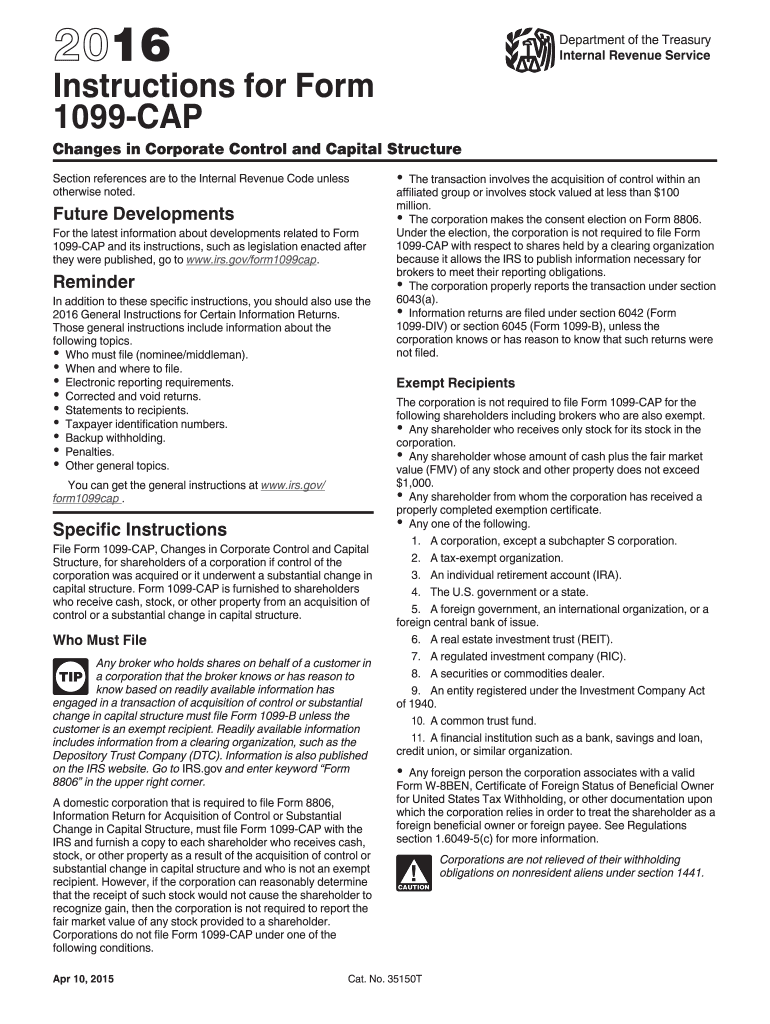







Definition and Purpose of Form 1099-CAP
Form 1099-CAP, also known as the "Changes in Corporate Control and Capital Structure" form, is used by corporations or brokers to report payments made to shareholders resulting from a change in control or capital structure. This form helps ensure transparency in reporting such transactions to both shareholders and the Internal Revenue Service (IRS).
- Change in Corporate Control: Occurs when one entity or individual obtains a significant degree of influence over a corporation, often through acquisition or merger.
- Alterations in Capital Structure: Includes modifications in the stock or asset arrangements, such as changes in the stockholder equity that significantly impact shareholder distributions.
How to Use the 2016 Instructions for Form 1099-CAP
The 2016 Instructions for Form 1099-CAP guide recipients in correctly filling out the form to report relevant transactions. Key steps include:
- Identifying the Reporting Entity: Determine if you are a corporation or broker required to file due to a change affecting the shareholders.
- Accurate Information Entry: Ensure the shareholder’s details and transaction specifics, like the type of security and cash amounts, are correctly noted.
- Reviewing for Exemptions: Verify if any shareholders qualify for reporting exemptions, such as certain non-taxable distributions.
Steps to Complete the 2016 Instructions for Form 1099-CAP
Filling out Form 1099-CAP requires careful attention to detail. Follow these steps for accurate filing:
- Gather Necessary Information: Compile the necessary corporate data, including shareholder names, addresses, and taxpayer identification numbers.
- Complete the Form Fields: Enter transaction details such as the cash, stock, or property dispensed and the specific conditions that triggered the filing necessity.
- Verify Shareholder Impact: Ensure documentation captures when shareholders received compensation due to corporate control changes or capital restructuring.
Who Uses the 2016 Instructions for Form 1099-CAP
Typically, the instructions are used by:
- Corporations: Engaged in mergers, acquisitions, or restructuring that necessitate shareholder compensation reports.
- Brokers: Responsible for overseeing transactions affecting multiple shareholders.
Legal counsel and financial advisors also frequently reference the instructions to assist in compliance.
Key Elements of the 2016 Instructions for Form 1099-CAP
The instructions contain essential sections for:
- Filing Requirements: Specifies conditions necessitating form submission.
- Transaction Reporting: Guides correct reporting of various transaction types, including property and cash settlements.
- Exemption Criteria: Lists scenarios where reporting may not be required, like specific corporate reorganizations.
IRS Guidelines for Form 1099-CAP
According to IRS rules, accurate and timely submission is mandatory:
- Filing with the IRS: Corporations must send completed forms to the IRS by the specified deadline.
- Shareholder Copy: A duplicate form must be sent to each reported shareholder for confirmation.
Filing Deadlines and Important Dates
Staying informed about critical deadlines ensures compliance:
- General IRS Deadline: Forms are typically due by February 28 (March 31 if filing electronically) of the year following the transaction.
- Shareholder Notification: Participants must receive their copies by January 31 of the reporting year.
Penalties for Non-Compliance
Failure to comply with reporting obligations can result in penalties:
- Monetary Fines: Corporations may face penalties ranging from $50 to $270 per form, depending on the lateness and degree of non-compliance.
- Increased Audits: Non-compliance could trigger heightened IRS scrutiny and potential audits.
Software Compatibility
For efficient form preparation, several software applications can be utilized:
- TurboTax and QuickBooks: Both can assist with automatic data entry and e-filing functionalities.
- Tax Professional Tools: Many commercial software solutions cater to high-volume preparers, simplifying complex transactions.
Examples of Using the 2016 Instructions for Form 1099-CAP
Practical scenarios illustrate how the instructions apply:
- Corporate Acquisition: A company must issue Form 1099-CAP when shareholders receive benefits from an acquiring entity.
- Capital Restructuring: Brokers oversee transactions whereby stock exchanges or bonuses necessitate form filing, ensuring shareholders are accurately reported.
Understanding and diligently applying the 2016 Instructions for Form 1099-CAP helps maintain compliance and transparency in changes affecting corporate control and capital structure.




