




01. Edit your form online
Type text, add images, blackout confidential details, add comments, highlights and more.

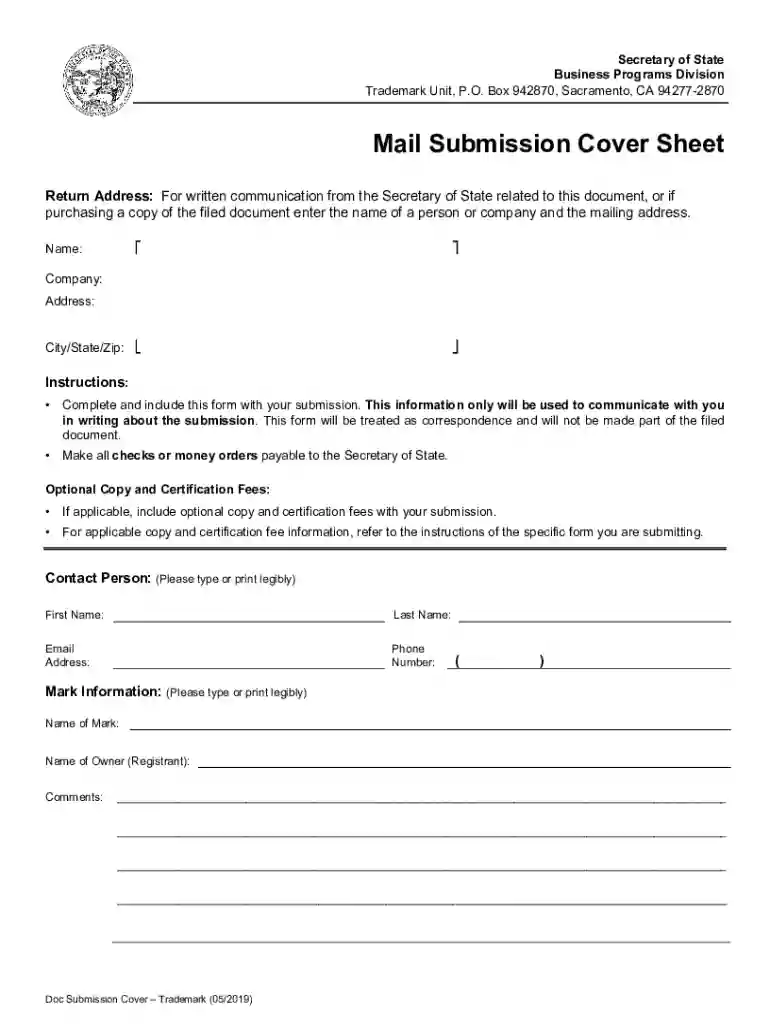
Type text, add images, blackout confidential details, add comments, highlights and more.

Draw your signature, type it, upload its image, or use your mobile device as a signature pad.

Send it via email, link, or fax. You can also download it, export it or print it out.
The Form 901Instructions is a guide to completing the Trade or Service Mark Application, an essential document for businesses and individuals seeking to register a trademark or service mark. A trademark typically refers to a word, phrase, symbol, or design that identifies and distinguishes the source of goods, while a service mark performs a similar function for services. Registering a trademark or service mark provides legal protection for brand identity, preventing others from using similar signs or symbols that could cause confusion. The process ensures the owner's exclusive rights to use the mark in commerce.
Gather Necessary Documentation: Collect all required information, including a clear depiction of the mark, the date of its first use, and an accurate description of the goods or services associated with the mark.
Prepare the Application: Carefully complete the Form 901, ensuring that all sections are accurately filled out. Provide precise details about the mark and its usage to prevent processing delays.
Sign and Date the Form: Ensure the application is signed and dated by the applicant or an authorized representative to validate the submission.
Submit with Fees: Include the required filing fee with your application. Check the specific fee amount as it may vary depending on the nature of the submission.
Track the Application Status: After submission, monitor the application status to address any potential issues or additional requests from the reviewing authority.
Form 901Instructions outlines the legal requirements for registering a trademark or service mark. This process offers protection by ensuring that only the rightful owner can use the mark, thus preventing unauthorized parties from exploiting it for commercial gain. The legal framework provided ensures that trademarks and service marks are consistently protected under intellectual property laws, crucial for safeguarding brand identity.
Form 901Instructions is primarily used by:


Though Form 901 is a general form, certain state-specific rules may influence the trademark registration process. States may have unique requirements related to filing fees, forms of evidence accepted, and particular legal provisions for protecting trademarks at the state level. Applicants should consult with state resources or legal advisors to ensure compliance with local regulations.
Form 901Instructions can be utilized with various document management platforms for ease of completion and submission, such as DocHub. These tools facilitate editing, annotation, and electronic signing, streamlining the form completion process. However, it is crucial to check compatibility with specific software like TurboTax or QuickBooks if tax-related documentation needs integration with business operations or accounting functions.
We've got more versions of the Form 901Instructions (Trade or Service Mark Application) The form. Select the right Form 901Instructions (Trade or Service Mark Application) The version from the list and start editing it straight away!
At DocHub, your data security is our priority. We follow HIPAA, SOC2, GDPR, and other standards, so you can work on your documents with confidence.
Jan 31, 2012 principal product or service of the business on line gain reported on Form 8825, lines 2, 19 and 20a. If. Internal Revenue Code. These
Application for Registration of a Trade or Service Mark. Form 901 (Revised 6/25). Submit Electronically through SOSPortal. Do not Mail. Application Fee: $50 per
Oct 12, 2016 Disclosure of a treaty-based position that reduces your tax. If you take the position that any U.S. tax is overruled or otherwise reduced.


