







Definition and Purpose of Illinois Form 700 (2011)
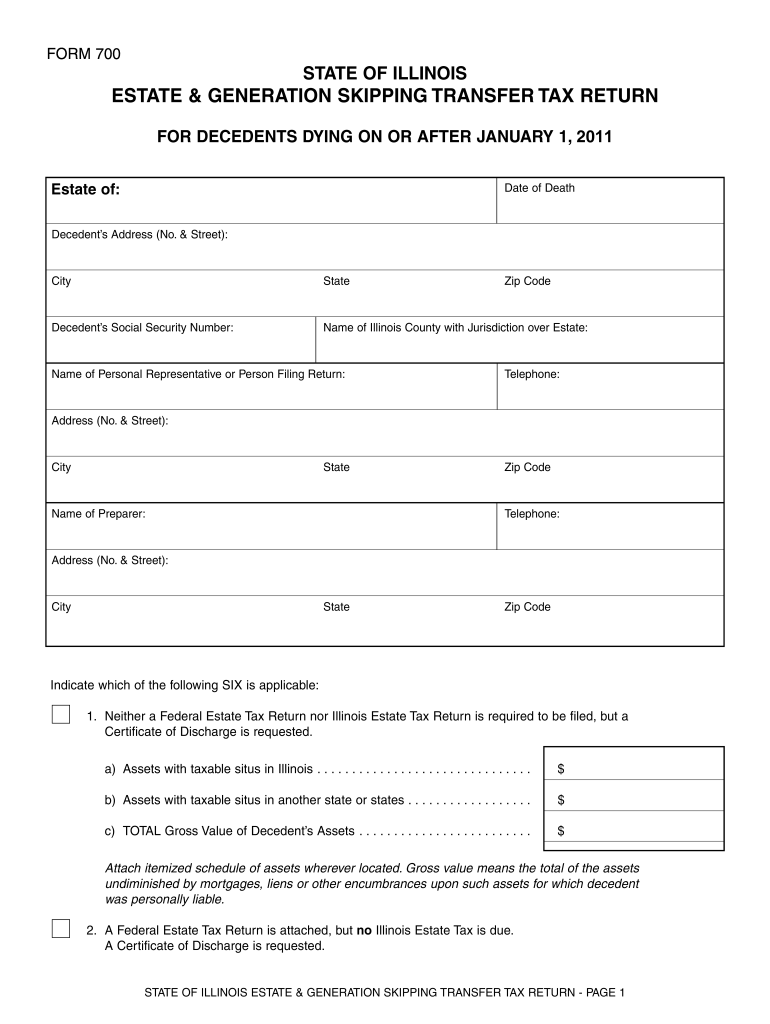
Illinois Form 700, also known as the Illinois Estate & Generation Skipping Transfer Tax Return, is a critical document for estates of decedents who passed away on or after January 1, 2011. This form is used to report and calculate taxes owed to the state of Illinois on the transfer of assets from a deceased person's estate. It includes detailed information on the decedent's assets and liabilities, ensuring proper assessment and payment of estate taxes according to state and federal regulations. Utilizing this form is crucial to complying with Illinois estate tax obligations and avoiding potential legal issues or penalties for non-compliance.
Key Components of the Form
- Personal Information: Includes fields for the decedent's name, social security number, and date of death.
- Asset Valuation: Requires a comprehensive inventory of the decedent's assets, including real estate, trusts, and personal property.
- Tax Calculation: Details the steps for calculating the estate tax based on state and federal guidelines.
- Filing Instructions: Provides directions on how to complete and submit the form correctly.
Steps to Complete Illinois Form 700
- Gather Required Information: Collect all necessary documents, such as the decedent's will, financial statements, and appraisals of any real estate or significant assets.
- Fill Out Personal Details: Input the decedent's official information in the designated sections, ensuring accuracy to prevent errors.
- Inventory Assets and Liabilities: Thoroughly list all properties, investments, and liabilities, with supporting documents about their valuation.
- Calculate Tax Liability: Utilize the provided worksheets and guidelines to determine the estate taxes owed.
- Complete Necessary Oaths & Certifications: Fill out the oath section, affirming that the information provided is accurate and complete.
- Review and Submit: Double-check all sections for completeness and accuracy before submission to the Illinois Department of Revenue.
Common Mistakes to Avoid
- Underestimating Asset Value: Ensure all assets are appraised correctly to avoid tax miscalculations.
- Incomplete Documentation: Attach all required supplemental documents to prevent delays or penalties.
- Missing Deadlines: Be aware of submission deadlines to avoid late fees or interest charges.
How to Obtain Illinois Form 700 (2011)
The Illinois Form 700 can be obtained through several avenues:
- Official State Website: Download the form directly from the Illinois Department of Revenue's website. This ensures you have the most current and officially sanctioned version.
- Local IRS Office: Visit an IRS office in Illinois for physical copies and potentially receive guidance on completion.
- Financial Advisors or Attorneys: Collaborate with estate planning professionals who often have access to necessary forms and can provide invaluable assistance in completing them.
Eligibility Criteria for Illinois Form 700
To determine the necessity of filing Illinois Form 700 for a decedent's estate, consider these criteria:
- Threshold Requirement: Estates exceeding the Illinois estate tax exemption amount need to file. For 2011, this requirement pertains to estates valued over $2 million.
- Date of Death: The form applies to individuals who died on or after January 1, 2011. For earlier dates, check applicable forms or revised tax obligations.


Scenarios Necessitating Filing
- High-Value Estates: Business owners or individuals with significant holdings or complex asset portfolios must file.
- Complex Trust Arrangements: Estates with numerous trusts or out-of-state assets may require additional documentation and adherence to both state and federal tax laws.
State-Specific Rules for Illinois Form 700
Illinois estate tax laws include unique stipulations affecting the filing of Form 700:
- QTIP Elections: Qualifying estates may elect to treat certain property as Qualified Terminable Interest Property, affecting tax calculations and liability.
- Amended Returns: In case of errors or additional discovered assets, amended Illinois Form 700 submissions are permitted, within specific time frames.
State vs. Federal Tax Differences
- Illinois estate taxes operate independently of federal estate taxes, hence unique rules and tax calculation frameworks apply. Proper alignment of both federal and state returns is necessary.
Important Terms for Understanding Illinois' Estate Tax Form
A clear understanding of terminology within Form 700 aids in accurate completion:
- Executor: The individual designated to administrate the decedent's estate, responsible for submitting Form 700.
- Taxable Estate: The portion of the estate subject to government taxation after subtracting applicable deductions.
- Exemption Amount: The value threshold above which estate tax is applicable.
Penalties for Non-Compliance
Failure to file or incorrectly filing the Illinois Form 700 can lead to:
- Late Fees: Missed deadlines incur financial penalties that add to the overall tax burden.
- Interest Charges: Unpaid taxes accrue interest, compounding the initial amount due.
- Legal Consequences: Prolonged non-compliance may result in legal proceedings or negotiations with tax authorities.
Strategies to Avoid Penalties
- Engage Professional Help: Certified public accountants or tax advisors can provide expertise, thus minimizing errors.
- Track Deadlines Diligently: Use calendar reminders and plan submissions with ample time to rectify potential issues before due dates.




