Definition & Meaning
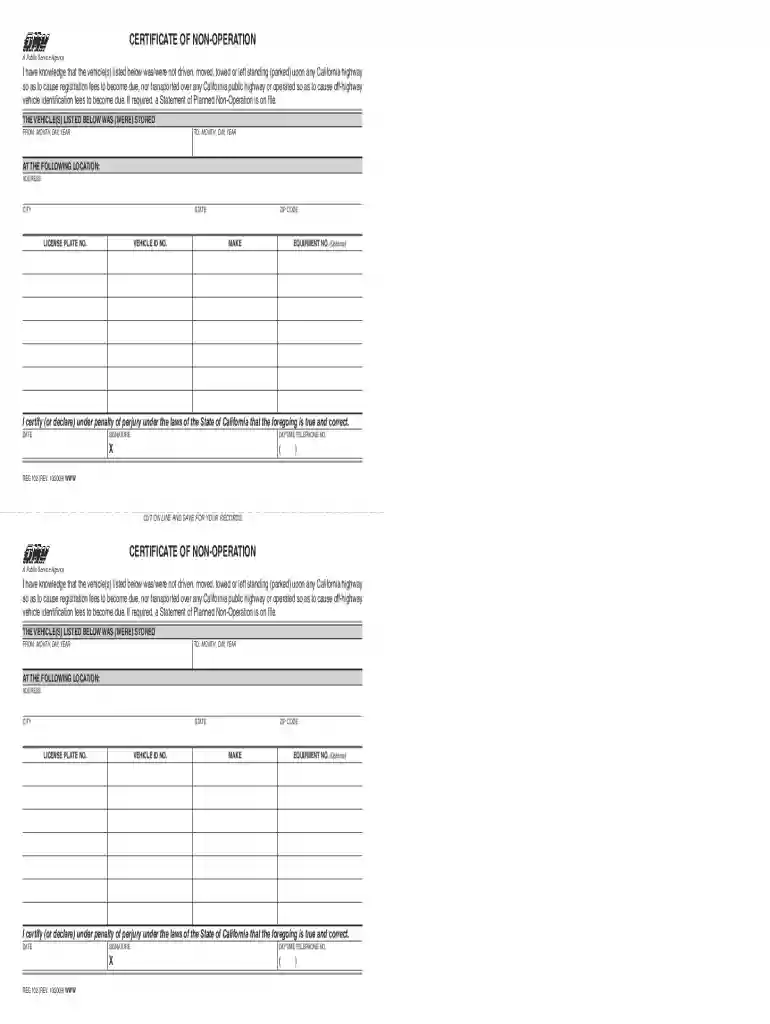
The "get PNO form" refers to obtaining the Certificate of Non-Operation (PNO) form, a document issued by the California Department of Motor Vehicles. This certificate certifies that a specific vehicle has not been operated or parked on California highways during a designated period. By filing this form, vehicle owners can avoid paying registration and identification fees for the mentioned non-operational period.
Purpose and Benefits
- Avoidance of Fees: Submitting a PNO form exempts vehicle owners from registration fees when the vehicle is not in use.
- Verification: The form officially verifies the non-use status of a vehicle, protecting owners from penalties.
- Peace of Mind: Accurately filing this form ensures you’re compliant with state regulations during periods of non-use.
How to Obtain the Get PNO Form
To obtain the Certificate of Non-Operation form, the process is straightforward. Here's how you can acquire it:
- Visit the DMV: You can go to a local California DMV branch.
- Online Requests: Many DMV services offer online request forms that can be submitted electronically.
- Download the Form: Access the form directly from the California DMV website, where it can be downloaded and printed.
Additional Resources
- Customer Assistance: Contact the DMV customer service for help in filing the form.
- Consultation Services: Some third-party vendors offer services to acquire and process DMV forms.
Steps to Complete the Get PNO Form
Completing the Certificate of Non-Operation requires attention to detail. Follow these steps to ensure accuracy:
- Personal Information: Provide the vehicle owner's details, including name and contact information.
- Vehicle Details: Enter the Vehicle Identification Number (VIN) and plate number.
- Storage Dates: Indicate the exact dates during which the vehicle was non-operational.
- Signature: Sign under penalty of perjury to validate the non-operational claim.
Tips for Accuracy
- Double-Check Details: Ensure all information accurately reflects the vehicle and owner's details.
- Consult Documentation: Have your vehicle registration documents handy for reference.
Who Typically Uses the Get PNO Form
Typically, this form is utilized by vehicle owners under specific circumstances:

- Seasonal Vehicle Owners: Those owning recreational vehicles or convertibles used only in specific seasons.
- Short-Term Storage Situations: Individuals placing vehicles in storage for significant time periods.
- Non-Operated Vehicles: Vehicles awaiting repairs or restoration projects.
Notable Exceptions
- Active Vehicles: Vehicles actively used on public roads should not file this form.
- Commercial Vehicles: Unique stipulations might apply based on vehicle use and business requirements.
Legal Use of the Get PNO Form
The legal implications of a PNO form mean that vehicle owners must adhere to state guidelines. Incorrect or fraudulent claims may result in penalties.
Legal Considerations
- Perjury Clause: Signing the form involves a legal declaration of truthfulness under penalty of perjury.
- Verification: Be ready to present any supportive documents if questioned by authorities.
Key Elements of the Get PNO Form
Various crucial sections require attention:
- Owner Information: Name, address, and contact information.
- Vehicle Identification: Comprehensive details like VIN and license plate.
- Non-Operation Period: Exact timespan of non-operation must be clearly defined.
- Declaration: Signature verifying the accuracy and truthfulness of the information.
Ensuring Completeness
- Cross-Reference: Make sure all details align with vehicle ownership and registration documents.
State-Specific Rules for the Get PNO Form
California has particular rules regarding the PNO form essential for compliance:
- Filing Period: The form must be filed within a specific timeframe relative to the vehicle's registration expiration.
- Annual Renewal: In certain circumstances, renewals of the PNO status are required.
Regional Compliance
- Local Regulations: Always refer to the California DMV for the most current state-specific regulations.
Examples of Using the Get PNO Form
Real-world scenarios where the get PNO form is beneficial include:
- Extended Travel: Owners traveling abroad temporarily store vehicles in a non-operational state.
- Restoration Projects: Classic car fans might keep vehicles non-operational while undergoing restoration.
- Military Deployment: Active duty members can use the form when vehicles remain unused during deployments.
Common Missteps
- Inaccurate Dates: Incorrectly recording non-operation dates can lead to non-compliance.
- Missed Deadlines: Filing outside the designated filing window can invalidate the form.