






Definition & Meaning
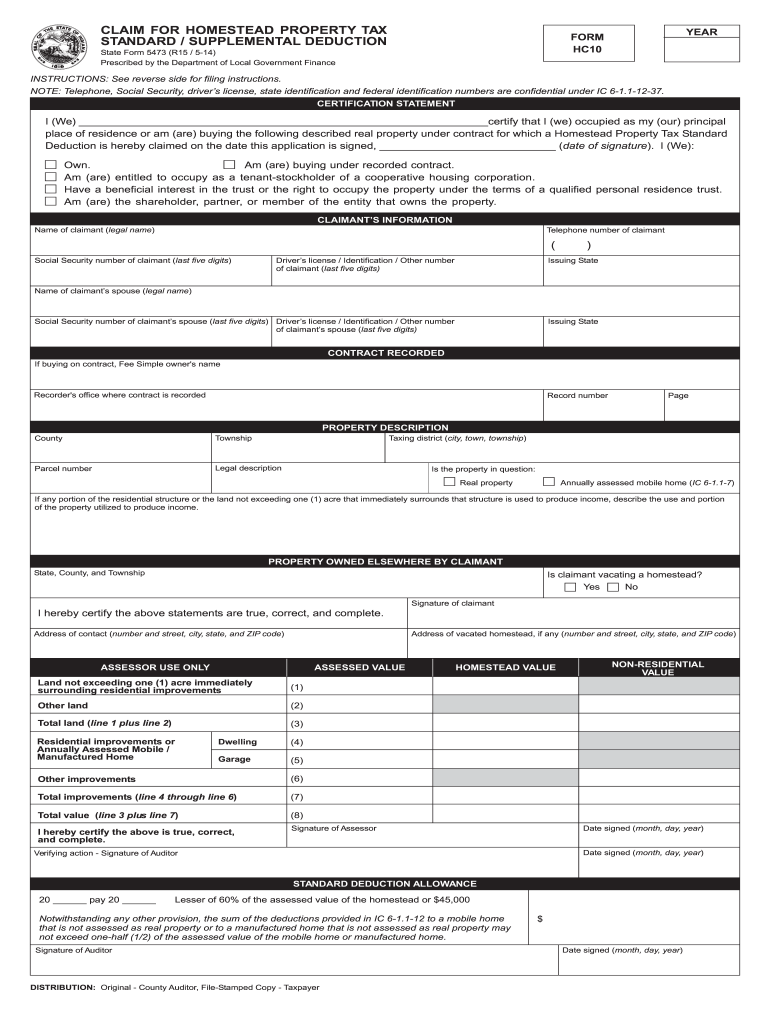
The "Claim for Homestead Property Tax Standard Supplemental Deduction" is a tax form used in Indiana to apply for deductions on property taxes for principal residences. This form allows homeowners to reduce the amount of property tax they owe, ultimately providing financial relief. A "homestead" refers to a primary dwelling where the homeowner resides. The standard and supplemental deductions under this claim aim to lessen the financial burden on taxpayers by factoring in aspects like property value and plausible exemptions. Homeowners must understand these deductions' eligibility requirements, benefits, and limitations to use them effectively.
How to Use the Claim for Homestead Property Tax Standard Supplemental Deduction
To effectively use this claim form, homeowners should follow a structured approach. Start by reviewing the form's requirements to determine if your property and residency status qualify for the deduction. Ensure all the necessary information, like personal details and accurate property descriptions, is ready before filling out the form. If eligible, complete the required sections carefully to avoid errors or omissions, which could delay processing or lead to rejection. Submit the finalized form using the preferred method — online, by mail, or in-person — based on what is available in Indiana. Always double-check for required documentation attached with the submission to streamline processing.
Eligibility Criteria
The eligibility for the Homestead Property Tax Standard Supplemental Deduction primarily hinges on the homeowner's residency status and the property's use. The claimant must be a resident of Indiana and the property must serve as their primary residence. Owners of vacation homes or rental properties typically do not qualify. Additionally, the property may need to meet certain valuation thresholds stipulated by Indiana tax laws. Understanding these criteria is crucial, as incorrect claims could lead to penalties or disputes. In some cases, specific situations like recently acquired or newly constructed homes might require additional documentation.


Required Documents
When submitting the claim, several essential documents must accompany the form. Typically, this includes proof of residency, such as a driver's license or utility bill registered at the property address, and legal documents like the deed to establish ownership. In some cases, additional paperwork demonstrating occupancy might be necessary. Having these documents ready can expedite the approval process and prevent delays. Homeowners are advised to keep copies of all submitted materials for future reference. Comprehensive documentation supports the claim's legitimacy and ensures smoother processing by the assessing authorities.
Steps to Complete the Claim for Homestead Property Tax Standard Supplemental Deduction
-
Determine Eligibility: Confirm that you meet Indiana's requirements and that your property qualifies as a homestead.
-
Collect Required Documents: Gather any necessary documentation, such as proof of residency and ownership.
-
Fill Out the Form: Provide accurate personal and property information. Be diligent to complete all sections of the form without errors.
-
Attach Documentation: Include all required documents to substantiate your claim and prevent processing delays.
-
Submit the Form: Choose a submission method — online, by mail, or in-person. Ensure it's completed by the deadline.
-
Retain Copies: Keep copies of all submitted forms and documents for your records.
-
Follow-Up: Monitor the status of your claim and respond promptly if additional information is requested.
Important Terms Related to the Claim
Understanding key terms is vital when dealing with the claim for homestead property tax deductions. These include:
- Homestead: The primary residence or dwelling of a homeowner.
- Standard Deduction: A base reduction applied to the property tax assessment.
- Supplemental Deduction: Additional reductions complementing the standard deduction based on specific criteria like property improvements.
- Assessed Value: The valuation of the property determined by assessors, used to calculate tax liability.
- Claimant: The individual filing for the deduction.
Clarifying these terms can help homeowners navigate the application process more effectively.
State-Specific Rules for the Claim for Homestead Property Tax Standard Supplemental Deduction
The rules and regulations surrounding the homestead deduction can vary significantly by state, with Indiana having its specific statutes. This includes detailed state-level guidelines on how the property should be assessed, deadlines for filing, and the criteria for both standard and supplemental deductions. Homeowners must familiarize themselves with these nuances, as the failure to comply with state-specific requirements might result in disqualification or penalties. In Indiana, state tax authorities often hold the most current information, so consulting their resources or a local tax advisor can provide valuable guidance in line with regulatory standards.
Penalties for Non-Compliance
Filing for the homestead deduction comes with specific obligations, and failure to adhere to these can result in penalties. These may include fines, back taxes for deducted amounts, and in severe cases, legal action. Misrepresentation of property information or fraudulent claims can also lead to revocation of the deduction and additional financial liabilities. It's crucial for homeowners to comply with all filing requirements and maintain transparency. Understanding the potential consequences of non-compliance underscores the importance of accuracy and honesty in the filing process and helps protect homeowners from legal and financial repercussions.