Definition & Meaning
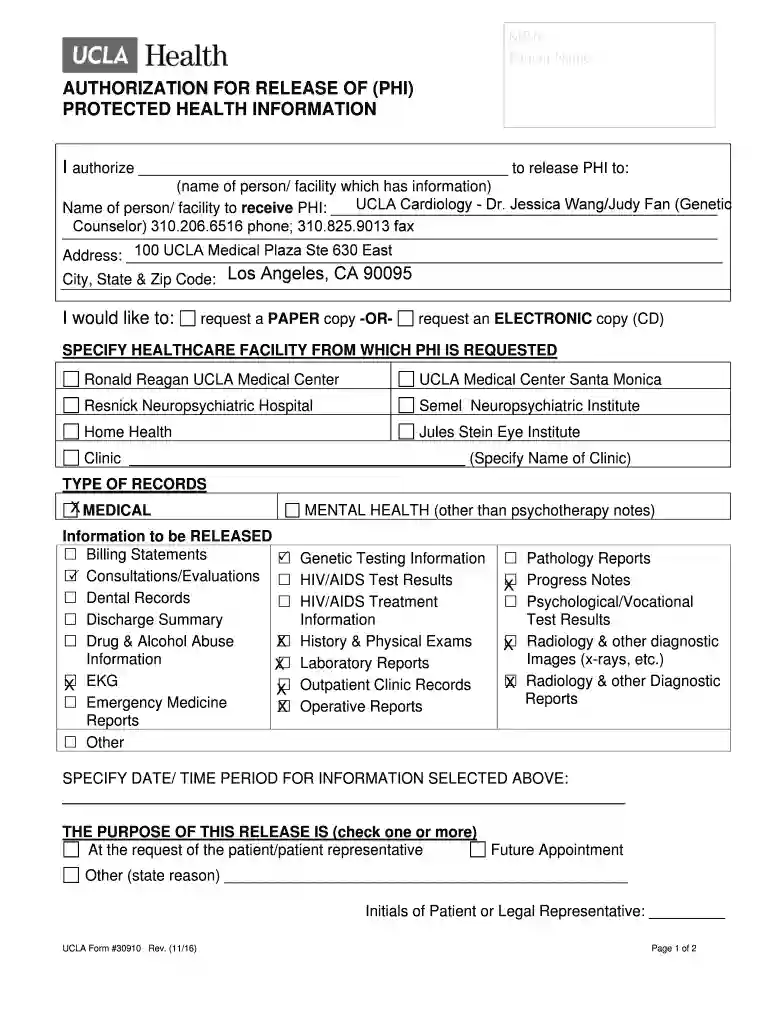
The "Authorization for Release Request of Protected Health" is a formal document utilized to grant permission for the sharing of an individual's Protected Health Information (PHI). This includes sensitive data such as medical records, consultation details, and test results, which are protected under privacy laws like the Health Insurance Portability and Accountability Act (HIPAA) in the United States. The form ensures that only specified individuals or entities have access to the patient's health information, maintaining confidentiality and respecting the rights of the patient to control who accesses their personal health data.
Key Elements of the Authorization for Release Request
Several critical elements must be present in the Authorization for Release Request of Protected Health to ensure it is valid and compliant with legal standards:
- Patient Information: Full name, date of birth, and contact information of the patient authorizing the release of information.
- Recipient Details: Identification of the individual or entity authorized to receive the PHI, including their contact information.
- Description of Information: Specification of the exact health records or types of information that the patient has agreed to disclose.
- Purpose of Disclosure: The reason for the information release, which could be for continued healthcare, legal purposes, or insurance claims.
- Expiration Date/Condition: The date or event upon which the authorization will expire, ensuring that access is time-bound and not indefinite.
- Revocation Terms: Description of how the patient can revoke the authorization before it expires, maintaining their control over their health information.
How to Use the Authorization for Release Request
Using the Authorization for Release Request of Protected Health involves certain steps to ensure that the process is compliant and the patient's privacy is protected. Here’s a step-by-step guide:
- Fill out the Form: Enter all necessary details as required by the form, including patient and recipient information.
- Specify Information for Release: Clearly describe the specific health information being authorized for release.
- State the Purpose: Indicate the reason you are consenting to release your health information.
- Set Expiration: List the expiration date or condition under which the authorization becomes void.
- Sign and Date the Form: The patient must sign and date the form to validate the authorization.
Completing these steps ensures a legal and orderly process for releasing your protected health information.
Steps to Complete the Authorization for Release Request
Completing the Authorization for Release Request of Protected Health involves multiple steps to ensure the document is filled out correctly:
- Download the Form: Obtain the form from your healthcare provider or their website.
- Provide Patient Information: Include identifying details such as name, date of birth, and contact information.
- Detail the Recipient: Clearly identify the person or entity who will receive the information.
- Specify the Scope of Information: List the specific types of health records that can be accessed.
- Indicate Purpose: Provide a clear reason for the information release.
- Review Terms and Conditions: Ensure you understand the expiration terms and revocation process.
- Sign the Document: Provide a signature and date to finalize the authorization.
Following these steps ensures that the form is comprehensive and compliant with legal requirements.
Who Typically Uses the Authorization Form
The Authorization for Release Request of Protected Health is primarily used by patients who need to share their PHI with third parties. This could include:

- Patients: Individuals who require sharing of their medical records for secondary consultations, insurance claims, or transfer to another healthcare provider.
- Healthcare Providers: Medical facilities or professionals who need to send patient records to specialists, labs, or other treatment centers.
- Legal Representatives: Lawyers or legal representatives who require access to medical records for legal cases or documentation.
- Insurance Companies: To verify claims, where patients may need to provide consent for their records to be reviewed.
State-Specific Rules for Authorization Forms
While federal laws like HIPAA provide overarching regulations, each state may have specific rules regarding the Authorization for Release of Protected Health Information. These can include:
- Additional Consent Requirements: Some states might require additional consent for releasing certain types of sensitive information, such as mental health records or HIV status.
- Different Expiration Guidelines: States may have varying regulations on how long an authorization remains valid.
- Language Specificity: Forms might need to be available in multiple languages to accommodate non-English speaking residents.
Understanding these state-specific regulations ensures compliance and protects patient privacy rights.
Legal Use of the Authorization Form
The Authorization for Release Request of Protected Health must be used legally to ensure compliance and protect patient information:
- Ensure Compliance with HIPAA: The form must adhere to HIPAA requirements, ensuring patients' rights are protected.
- Validity Checks: Ensure all necessary elements, such as patient identification and specified information, are included to validate the form.
- Respect for Revocation: Patients should be informed of their right to revoke authorization, ensuring they maintain control over their health information.
This legal use ensures that both patients and recipients of health information uphold privacy laws and ethical standards.
Examples of Using the Authorization Form
The Authorization for Release Request of Protected Health can be used in various scenarios:
- Medical Treatment Coordination: A patient is being referred to a specialist and needs their primary care provider to share relevant medical records.
- Insurance Claims: A patient authorizes the release of medical records to their insurance provider to process a claim.
- Legal Proceedings: A patient involved in a personal injury lawsuit permits their attorney to access medical records as evidence.
These examples highlight the form's key role in ensuring that PHI is shared responsibly and securely.