




01. Edit your non profit 990 online
Type text, add images, blackout confidential details, add comments, highlights and more.

Type text, add images, blackout confidential details, add comments, highlights and more.

Draw your signature, type it, upload its image, or use your mobile device as a signature pad.

Send what is form 990 via email, link, or fax. You can also download it, export it or print it out.
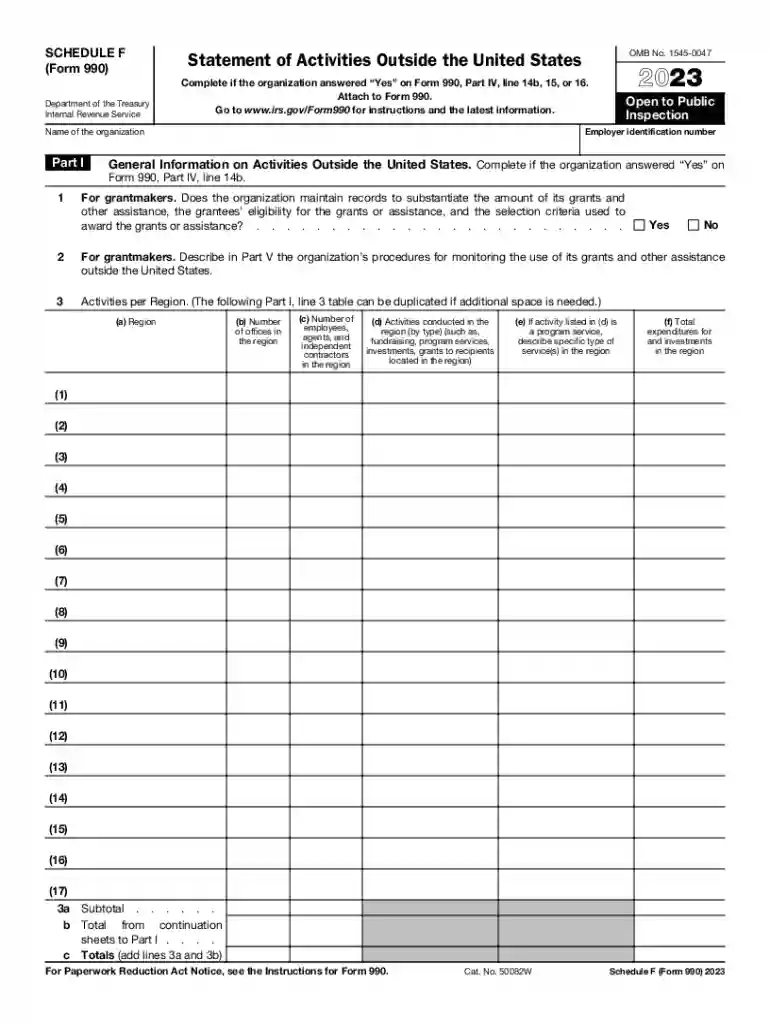
Form 990 is an annual tax return required by the Internal Revenue Service (IRS) for tax-exempt organizations, including charities and other non-profits. This form serves both as a financial reporting document and a transparency tool. It provides the IRS and the public with crucial information about an organization’s financial status, activities, governance, and compliance with tax regulations.
Form 990 contains several critical sections that require detailed financial and operational data:
Tax-exempt organizations with gross receipts of $200,000 or more, or total assets of $500,000 or more, are generally required to file Form 990. Smaller organizations may be eligible to file Form 990-EZ or Form 990-N, depending on their size and financial activity.


The IRS mandates that Form 990 must be filed annually and provides specific guidelines for each section of the form. Organizations should ensure they meet the deadline to avoid penalties. Also, the IRS offers resources and instructions to help charities and non-profits accurately complete the form.
Non-profit organizations that fail to file Form 990 timely may incur penalties. The IRS may impose a daily penalty for each day the return is late; the penalty amount depends on the entity’s gross receipts. Chronic failure to file can lead to the loss of tax-exempt status.
Organizations can submit Form 990 electronically or via mail. Electronic filing is recommended for faster processing and confirmation of receipt by the IRS. However, some smaller organizations may still choose to file a paper form, although electronic filing offers benefits like automated error-checking.
Non-profit organizations, such as charities focused on environmental conservation or educational foundations, use Form 990 to report to donors and stakeholders. For instance, a foundation distributing grants for educational initiatives will detail its financial distribution and intended outcomes, highlighting its accountability and effectiveness in using funds towards its mission.
We've got more versions of the non profit 990 form. Select the right non profit 990 version from the list and start editing it straight away!
| Versions | Form popularity | Fillable & printable |
|---|---|---|
| 2024 | 4.8 Satisfied (44 Votes) | |
| 2023 | 4.3 Satisfied (37 Votes) | |
| 2022 | 4.4 Satisfied (22 Votes) | |
| 2021 | 4.8 Satisfied (58 Votes) | |
| 2020 | 4.4 Satisfied (158 Votes) | |
| 2019 | 4.3 Satisfied (37 Votes) | |
| 2018 | 4.4 Satisfied (122 Votes) | |
| 2017 | 4.2 Satisfied (83 Votes) | |
| 2016 | 4.3 Satisfied (56 Votes) | |
| 2015 | 4.2 Satisfied (68 Votes) | |
| 2014 | 4.3 Satisfied (64 Votes) | |
| 2013 | 4.1 Satisfied (35 Votes) | |
| 2012 | 4.2 Satisfied (56 Votes) | |
| 2011 | 4.1 Satisfied (37 Votes) | |
| 2010 | 4 Satisfied (31 Votes) |
At DocHub, your data security is our priority. We follow HIPAA, SOC2, GDPR, and other standards, so you can work on your documents with confidence.
Oct 9, 2025 Annual electronic filing requirement for small exempt organizations Form 990-N (e-Postcard) Internal Revenue Service. Official websites use .Read more
Tax-exempt organizations, nonexempt charitable trusts, and section 527 political organizations file Form 990 to provide the IRS with the information requiredRead more
Form 990-PF. Department of the Treasury. Internal Revenue Service. Return of Private Foundation. or Section 4947(a)(1) Trust Treated as Private Foundation.


