
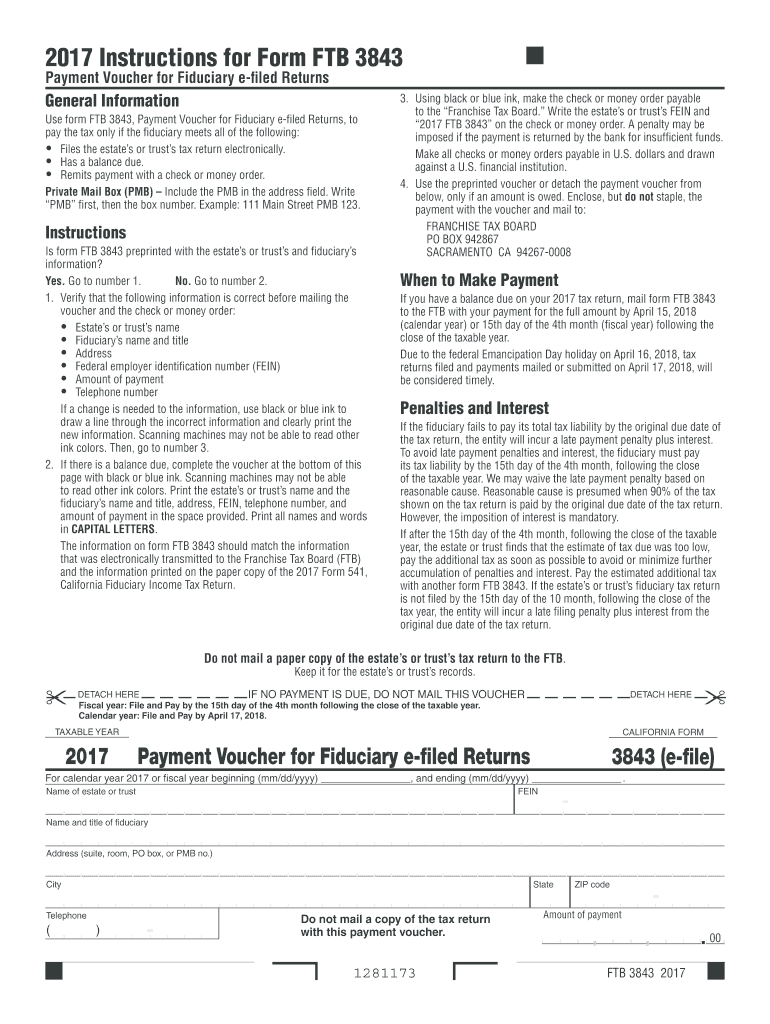







Definition and Purpose of Form FTB 3843
Form FTB 3843, known as the Payment Voucher for Fiduciary e-filed Returns, is specifically designed for fiduciaries filing estate or trust tax returns in California. It facilitates the payment of taxes owed at the time of e-filing these returns. Understanding its purpose helps ensure compliance with California's tax obligations, avoiding potential penalties or interest on unpaid taxes.
How to Use the 2017 Instructions for Form FTB 3843
To effectively use the 2017 Instructions for Form FTB 3843, follow these steps:
-
Verify Eligibility: Ensure you are a fiduciary responsible for an estate or trust with a tax obligation for the relevant tax year.
-
Review Filing Requirements: Understand the tax liabilities that necessitate using Form FTB 3843.
-
Complete the Voucher: Enter all required information accurately, including the Fiduciary’s Entity Identification Number (FEIN) and total payment amount.
-
Submit Payment: Follow the outlined methods for payment submission, ensuring it corresponds with the filed e-return.
-
Keep Records: Maintain documentation for reference and potential audit scenarios.
Steps to Complete the 2017 Form FTB 3843
Completing Form FTB 3843 involves several critical steps:
-
Download the Form: Access Form FTB 3843 from the official California Franchise Tax Board website or retrieve a copy from your tax software.
-
Accurate Identification Details: Fill in the fiduciary’s name, address, and contact information as instructed.
-
Tax Year Specification: Clearly indicate the applicable tax year for the payment voucher.
-
Payment Information: Input the precise amount being paid; this should align with calculations from your e-filed return.
-
Payment Method Selection: Choose between electronic or mailed payment, ensuring you follow the specific instructions for each method.
-
Submission Confirmation: Record confirmation of receipt if paying electronically or secure proof of mailing.
Filing Deadlines and Important Dates
Meeting the deadlines associated with Form FTB 3843 is crucial. Key dates include:
-
Tax Return Due Date: Aligns with federal deadlines, generally on April 15, unless falling on a weekend or holiday.
-
Payment Deadline: Coincides with the tax return due date; late payments may incur penalties or interest.
-
Extension Period: Extensions may be requested, but they do not extend the payment deadline.
Legal Use and Compliance with Form FTB 3843
Legal compliance with the use of Form FTB 3843 ensures adherence to California tax laws. Critical aspects include:
-
Authorized Use: Intended solely for fiduciaries managing estates and trusts in California.
-
Accuracy: Misrepresentation or inaccuracies could lead to audits or legal consequences.
-
Timely Filing and Payment: Ensures avoidance of penalties related to late submissions.
Who Typically Uses the 2017 Instructions for Form FTB 3843
The primary users include:
- Fiduciaries managing an estate or trust in California that owe taxes.
- Tax professionals aiding clients with estate or trust responsibilities.
- Legal representatives who assist in managing fiduciary tax obligations.


Key Elements of the 2017 Instructions for Form FTB 3843
Essential components outlined in the instructions include:
-
Detailed Steps for Completion: Provides line-by-line guidance for filling out the form.
-
Payment Methods and Options: Explains both online and physical payment options.
-
Penalty and Interest Information: Outlines potential financial repercussions for non-compliance.
IRS Guidelines and State-Specific Rules
While federal IRS guidelines help in understanding e-filing rules, California’s specific rules for Form FTB 3843 must be followed:
-
California-specific Identification Requirements: Mandatory for voucher processing.
-
Fiduciary Responsibilities: State laws define fiduciary duties in tax compliance.
By following these structured guidelines and instructions, fiduciaries can navigate the complexities of California’s tax obligations for trusts and estates with greater confidence and accuracy.




