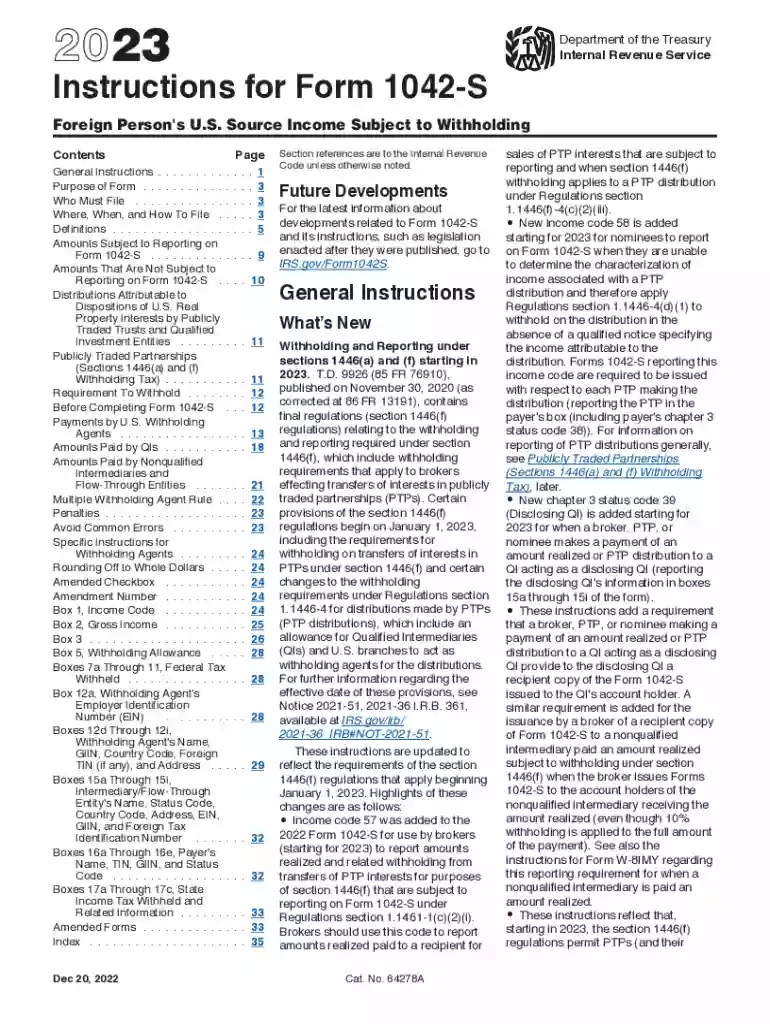
Definition & Meaning of Form 1042-S
Form 1042-S is an IRS tax form used primarily to report income that has been paid to foreign persons and is subject to U.S. withholding tax. Commonly known as the 1042-S, this form is an essential documentation tool for withholding agents, which include both businesses and individuals that make certain types of payments to foreign entities or individuals. The income reported on this form can include dividends, interest, royalties, and compensation for services.
The primary purpose of Form 1042-S is to ensure compliance with U.S. tax regulations regarding foreign persons. It provides the IRS with information about the identity of the recipient, the type of income, the amount of tax withheld, and the amount of income that is exempt from tax under any applicable tax treaties. Understanding the components of Form 1042-S is vital for both the payor and the recipient to ensure correct filing and compliance with IRS requirements.
How to Use the 1042-S Instructions Effectively
Using the 1042-S instructions accurately is crucial for proper filing and reporting. The instructions provide comprehensive guidance on how to fill out the form, including specific requirements based on the type of income and the recipient's residency status. Here's how to effectively use the instructions:
-
Review Your Role: Determine your role as a withholding agent or recipient. This will dictate the necessary information you need to complete on the form.
-
Understand Reporting Requirements: Analyze the income types that must be reported under Form 1042-S. Familiarity with the specifics, such as interest payments, dividends, or rental income, will help you to determine the exact reporting obligations.
-
Identify Exemption Criteria: Review the sections related to tax treaty benefits. Various countries have tax treaties with the U.S., potentially allowing certain types of income to be exempt from withholding.
-
Complete All Sections: Pay attention to every section of Form 1042-S. Each box must be filled out accurately, including identifying information and amounts subject to withholding.
-
Schedule with IRS Deadlines: Be aware of filing deadlines provided in the instructions to avoid penalties.
By following these guidelines, you can maximize the effectiveness of the 1042-S instructions in your reporting process.
Steps to Complete the 1042-S Instructions
Completing Form 1042-S involves several structured steps to ensure accuracy and compliance. Below is a detailed breakdown of the process:
-
Gather Required Information:
- Collect necessary details of the foreign recipient, including name, address, and taxpayer identification number (TIN).
- Compile information on the income type along with the amounts paid and tax withheld.
-
Choose the Correct Form Version:
- Make sure you are using the latest version of Form 1042-S as per IRS guidelines for the current tax year.
-
Fill Out the Form:
- In the “Withholding Agent” section, provide your identifying information.
- In the “Foreign Recipient” section, accurately fill in the recipient's information, ensuring that TIN and address are correct.
- Specify the total amount of income paid and the tax withheld in the designated boxes.
-
Review Tax Treaty Benefits:
- If applicable, indicate any tax treaty exemptions that apply to the recipient. Review the treaty benefits to ensure compliance.
-
Submit Form:
- File the form electronically or send it by mail to the IRS. Ensure that you follow up with the required copies to the recipients.
-
Maintain Records:
- Keep copies of all submitted documents and supporting materials for future reference and compliance.
Following these steps carefully will help in accurate completion and submission of Form 1042-S.
Filing Deadlines for Form 1042-S
Awareness of filing deadlines is crucial for avoiding penalties associated with late submissions of Form 1042-S. The typical deadlines are as follows:
-
Form Submission: The IRS requires Form 1042-S to be filed by March 15 of the year following the tax year in which the income was paid. Ensure that the form is either mailed or electronically submitted by this date.
-
Recipient Copies: Copies of Form 1042-S must also be provided to recipients (the foreign persons) by the same deadline of March 15.
Failure to meet these deadlines may result in financial penalties. For example, if you are late in filing, penalties can accrue starting at $50 per form, escalating based on how late the form is submitted.
Important Terms Related to 1042-S Instructions
Understanding key terminology associated with Form 1042-S is essential for proper compliance and completion of the form. Below are important terms to know:
-
Withholding Agent: This refers to any person or entity that has control, receipt, or custody of income that is subject to withholding tax. Withholding agents have a responsibility to report and remit taxes withheld.
-
Tax Treaty: International agreements between the U.S. and specific countries that determine how certain incomes are taxed in either jurisdiction, often allowing for reduced withholding rates or exemptions.
-
Foreign Person: Any individual or entity that is not a U.S. citizen, U.S. national, or a permanent resident alien, and is subject to specific reporting requirements when receiving income from U.S. sources.
-
Exemption Code: Codes provided on the form to indicate specific circumstances under which payments to a foreign recipient are exempt from taxation, often referenced from IRS guidelines.
-
TIN: Taxpayer Identification Number, which is required from recipients to ensure proper identification for tax reporting purposes.
Familiarity with these terms will enhance your understanding of the filing process, ensuring smoother compliance with IRS requirements.
Consequences of Non-Compliance with Form 1042-S
Failing to comply with Form 1042-S regulations can have significant repercussions. Below are some of the potential consequences for both the withholding agent and foreign recipients:
-
Financial Penalties: The IRS imposes penalties for late filings, which can range from $50 to $270 per form, depending on the duration of the delay. This amount increases significantly for forms that remain unfiled and may attract additional interest.
-
Increased Scrutiny: Non-compliance may lead the IRS to further investigate the withholding agent's reporting practices, which can result in audits or inquiries into other compliance issues.
-
Loss of Treaty Benefits: If Form 1042-S is not completed correctly, foreign recipients might lose their eligibility for tax treaty benefits, resulting in higher tax liabilities.
-
Legal Consequences: Failing to report correctly can lead to legal actions against the withholding agent, including damage claims from the foreign recipient for withheld funds or incorrect reporting.
Understanding these consequences underscores the importance of accurate filing and adherence to IRS requirements for Form 1042-S.