




01. Edit your form online
Type text, add images, blackout confidential details, add comments, highlights and more.

Type text, add images, blackout confidential details, add comments, highlights and more.

Draw your signature, type it, upload its image, or use your mobile device as a signature pad.

Send it via email, link, or fax. You can also download it, export it or print it out.
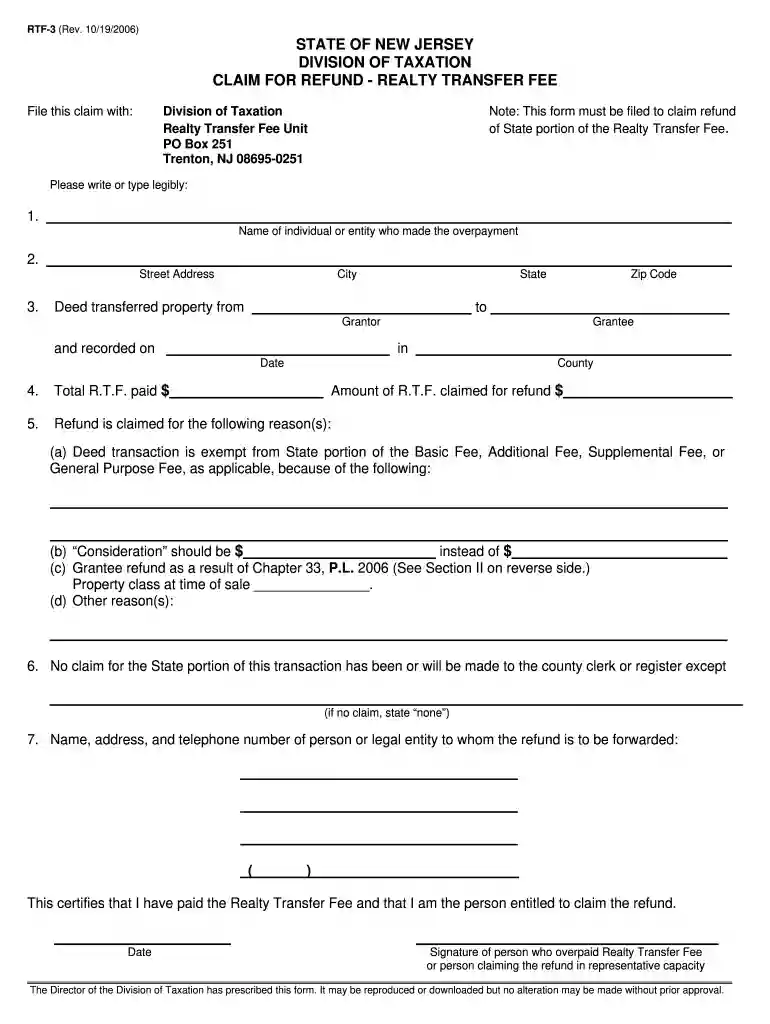
The RTF-3 form is a specific document issued by the New Jersey Division of Taxation. It is designed for individuals or entities seeking a refund of the Realty Transfer Fee. This fee typically applies to the transfer of property, and the form facilitates the claim process by collecting pertinent information related to any overpayment that may have occurred during the transaction. In essence, the RTF-3 form streamlines the refund procedure by ensuring both grantors and grantees can submit their claims with all necessary details clearly outlined.
Gather Necessary Information: Collect all relevant data, including details about the property transaction, the amount of the realty transfer fee paid, and any overpayment specifics.
Complete Personal and Property Details: Fill in your personal details along with information regarding the property involved in the transaction. This includes address, property identification numbers, and transfer dates.
Specify Overpayment Details: Clearly explain the nature of the overpayment, including the amount and reason for the refund claim. Additional space is often available for detailed explanations if needed.
Attach Required Documentation: Include any supporting documents such as proof of payment, transaction records, and previous correspondence with the New Jersey Division of Taxation about the transfer fee.
Review and Sign the Document: Ensure all sections are completed accurately and sign the form. Double-check for any errors or omissions before submission.
The RTF-3 form is predominantly used by property sellers, referred to as grantors, who have incurred an overpayment of the Realty Transfer Fee at the time of property conveyance. It can also be utilized by legal representatives handling the estates of deceased individuals, businesses managing property portfolios, or entities such as trusts and partnerships. It's especially relevant for parties involved in real estate transactions where there has been a miscalculation or an exemption that was not applied correctly, resulting in an overpayment.


To file the RTF-3 form effectively, you'll need to gather several documents including:
The RTF-3 form is available directly from the New Jersey Division of Taxation's official website or local tax offices. It is downloadable and printable, allowing for easy access from home or office. For those who prefer traditional methods, physical copies can often be requested by mail or collected in person from the relevant division offices.
To ensure eligibility for a refund, claimants must file the RTF-3 form within a specific time frame post-property transaction. Typically, these deadlines are linked to the statute of limitations on tax refunds in New Jersey, generally around three years from the date of payment. Adhering to these deadlines is crucial to avoid losing out on potential refunds due to delayed claims.
Legally binding under New Jersey law, the RTF-3 form must be completed accurately to avoid any discrepancies or potential legal issues. Misrepresentation or falsification of information on the form could lead to penalties or legal action. Ensuring compliance with the outlined procedures and maintaining accurate records supports a smooth refund process and adherence to state tax regulations.
We've got more versions of the rtf 3 2006 form form. Select the right rtf 3 2006 form version from the list and start editing it straight away!
At DocHub, your data security is our priority. We follow HIPAA, SOC2, GDPR, and other standards, so you can work on your documents with confidence.
The claimant or his representative must file a CLAIM FOR REFUND - REALTY TRANSFER FEE with the Division of Taxation. Evidence to show that the deed has been re-
Apr 9, 2020 There is a form of RTF failure now very much on the increase, certainly in Europe and that is Prolonged Loss of Communication (PLOC).
Mar 16, 2021 The links below allow for the downloading of individual and combined form files in MS Word and PDF formats. Some of the files are large and may take a few


