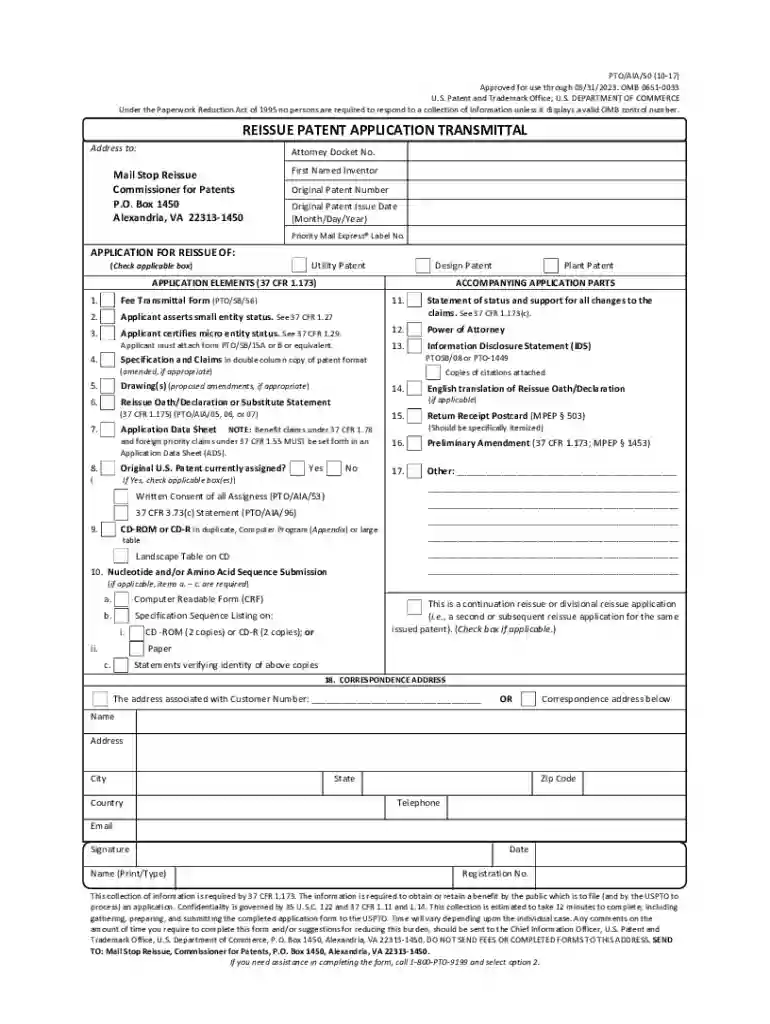
Application 56 form 2026

Get Form
form reissue application Preview on Page 1

Here's how it works

01. Edit your form reissue application online
Type text, add images, blackout confidential details, add comments, highlights and more.

02. Sign it in a few clicks
Draw your signature, type it, upload its image, or use your mobile device as a signature pad.

03. Share your form with others
Send sb 56 via email, link, or fax. You can also download it, export it or print it out.

Definition and Meaning of Application 56 Form

The application 56 form, officially known as Form 56, is used by individuals to notify the Internal Revenue Service (IRS) of the creation or termination of a fiduciary relationship. This fiduciary relationship typically involves an executor, trustee, or other fiduciary role in the management of taxes or other financial obligations on behalf of another person or entity.

Key Purposes

  • Notification of Fiduciary Role: It informs the IRS when a fiduciary role begins or ends.
  • Tax Management: Ensures the right person is recognized for managing tax obligations.
  • Compliance: Helps maintain compliance with IRS requirements for fiduciaries.

Applicability

  • Estate Executors: Often used by executors of estates to signal their role to the IRS.
  • Trustees: Applicable to trustees managing the taxes of a trust.
  • Guardians: Used by guardians overseeing the financial matters of a ward or individual.

How to Use the Application 56 Form

Form 56 is vital for fiduciaries in correctly reporting their duties to the IRS, ensuring that tax obligations are met in accordance with federal regulations.

Step-by-Step Procedure

  1. Identify the Fiduciary Role: Determine if you are acting as an executor, trustee, guardian, or another type of fiduciary.
  2. Collect Necessary Information: Include details of both the fiduciary and the person or entity on whose behalf you are acting.
  3. Complete the Form: Fill out all relevant sections detailing the nature and specifics of the fiduciary relationship.
  4. Sign and Date: Ensure the form is signed and dated by the person assuming or relinquishing the fiduciary role.
  5. Submit to the IRS: Send the completed form to the appropriate IRS service center.

Important Points

  • Multiple Fiduciaries: If multiple fiduciaries are involved, each must submit their own Form 56.
  • Updating Information: Submit a new form if there are changes in fiduciary responsibility or contact details.

Obtaining the Application 56 Form

Access to Form 56 is straightforward, and it is available through several avenues for individuals assuming fiduciary responsibilities.

Where to Find It

  • IRS Website: Download from the official IRS platform.
  • IRS Offices: Pick up a paper form at an IRS office for those who prefer physical documentation.

Digital Accessibility

  • PDF Format: Available in a downloadable PDF that can be printed or edited digitally.
  • Considerations for Printing: Ensure your printer is set to the correct settings to avoid issues with form layout.

Steps to Complete the Application 56 Form

Completing Form 56 requires attention to detail to ensure accuracy and compliance with IRS stipulations.

Detailed Instructions

  1. Section I - Identification: Clearly identify the fiduciary's and the person's information.
  2. Section II - Nature of the Fiduciary Role: Specify the type of fiduciary relationship.
  3. Section III - Rights and Privileges: Outline any specific rights or privileges tied to the fiduciary's role.

Common Mistakes to Avoid

  • Incomplete Information: Ensure all sections are thoroughly completed.
  • Incorrect Dates: Accurately report the dates when the fiduciary role begins or terminates.
  • Unsigned Forms: Ensure the form is properly signed; unsigned forms are not valid.

Why You Should Use the Application 56 Form

Form 56 plays a crucial role in ensuring fiduciaries are recognized and obligations are appropriately managed, providing clarity in tax and financial matters.

Benefits

  • Legal Recognition: It legally acknowledges the fiduciary's role, which is crucial in managing another's tax affairs.
  • IRS Compliance: Aligns with IRS expectations and prevents potential legal issues.

Practical Relevance

  • Tax Efficiency: Streamlines processes for individuals dealing with estate or trust taxes.
  • Documentation: Serves as an essential record should disputes arise over tax management.

Who Typically Uses the Application 56 Form

Form 56 is not universally applicable but is specialized for individuals with specific fiduciary responsibilities.


decoration image ratings of Dochub

Typical Users

  • Estate Managers: Executors managing deceased estates.
  • Trust Officials: Trustees overseeing trust taxation.
  • Guardians: Individuals legally responsible for managing finances of dependents.

Scenarios of Use

  • Large Estates: Necessary for executors handling significant estate taxes.
  • Complex Trusts: Especially relevant for trustees dealing with large or intricate trusts.

Important Terms Related to Application 56 Form

Understanding terminology related to Form 56 is crucial for its correct use and ensures accurate completion.

Key Terms

  • Fiduciary: Individual or entity tasked with managing someone else's assets.
  • Executor: A fiduciary responsible for executing a will and managing an estate.
  • Trustee: A person or firm that holds and administers property or assets for the benefit of a third party.

Nuances

  • Legal Duties: Fiduciaries have a legal duty of care and loyalty to manage assets prudently.
  • Accountability: Fiduciaries must maintain clear records for the person or entity they represent.

Legal Use of the Application 56 Form

The legal framework surrounding Form 56 is pivotal for fiduciaries in maintaining compliance with federal tax obligations.

Regulations

  • IRS Guidelines: Must adhere strictly to guidelines concerning fiduciary responsibilities and tax management.
  • Legal Precedence: Case law often highlights the importance of fiduciary compliance and correct form usage.

Compliance

  • Filing Requirements: Submit the form promptly to avoid penalties.
  • Updates Required: Amend the form when any changes occur, such as a change in fiduciary or the end of the fiduciary role.

By understanding these facets of the application 56 form, fiduciaries can ensure they effectively manage their responsibilities while maintaining compliance with IRS regulations.

See more application 56 form versions

We've got more versions of the application 56 form form. Select the right application 56 form version from the list and start editing it straight away!
Versions Form popularity Fillable & printable
2017 4.8 Satisfied (100 Votes)
2008 4.3 Satisfied (50 Votes)
2005 4.4 Satisfied (173 Votes)
be ready to get more

Complete this form in 5 minutes or less

Get form

Got questions?

We have answers to the most popular questions from our customers. If you can't find an answer to your question, please contact us.
Contact us
Generally, you must file Form 56 when you create (or terminate) a fiduciary relationship. File Form 56 with the Internal Revenue Service Center where the person for whom you are acting is required to file tax returns. Proceedings (other than bankruptcy) and assignments for the benefit of creditors.
You may use Form 56 to: Provide notification to the IRS of the creation or termination of a fiduciary relationship under section 6903.
Penalties: While there is no specific penalty for not filing Form 56, failing to notify the IRS can lead to complications in handling tax responsibilities and may result in penalties for late filing or errors in tax submissions.
You can download Form 56 from the official IRS website (.irs.gov) or request a copy by calling the IRS forms line at 1-800-829-3676.

Security and compliance

At DocHub, your data security is our priority. We follow HIPAA, SOC2, GDPR, and other standards, so you can work on your documents with confidence.

Learn more
ccpa2
pci-dss
gdpr-compliance
hipaa
soc-compliance