







Definition and Purpose of Form 320-A
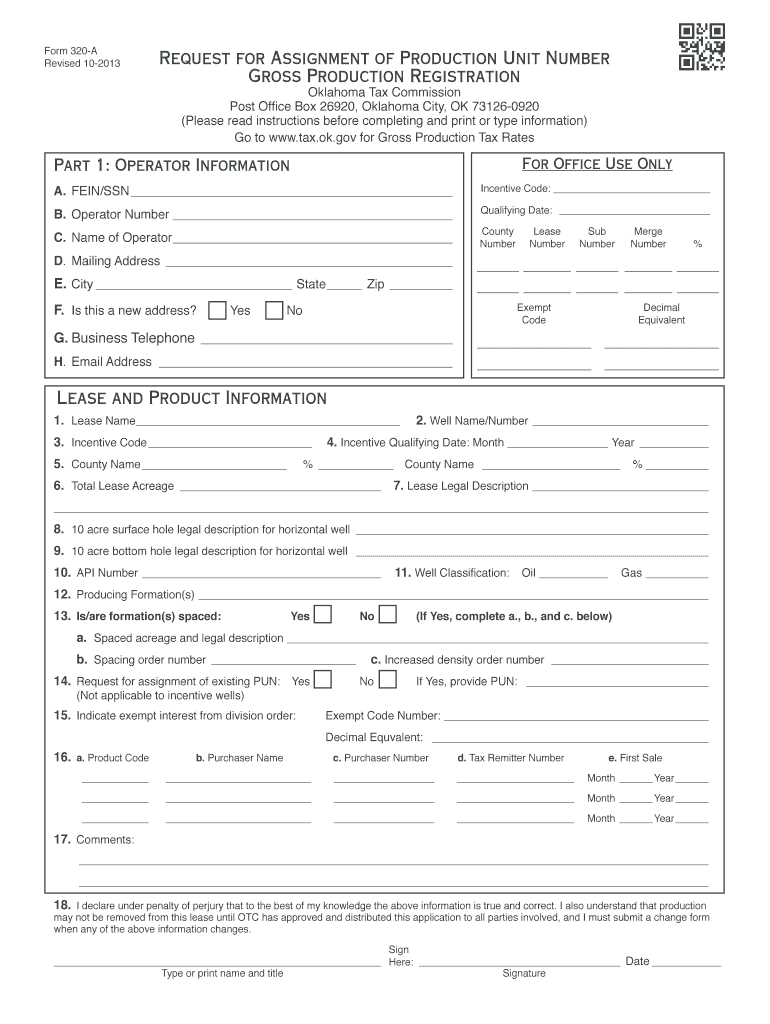
Form 320-A is used by operators in Oklahoma to request the assignment of a Production Unit Number (PUN) for gross production registration with the Oklahoma Tax Commission. It is crucial for recording and reporting oil and gas well production. Operators must provide detailed information about their wells, such as operator details and legal descriptions, ensuring proper tracking and taxation.
How to Use the State of Oklahoma Form 320-A
To use Form 320-A effectively, operators should familiarize themselves with the form's structure and information requirements. The form includes sections for operator details, well locations, and production data. Accurate completion is essential for regulatory compliance and for obtaining a PUN. Errors may lead to delays or penalties.
Steps to Complete the State of Oklahoma Form 320-A
- Gather Necessary Information: Include operator details, lease and product information, and legal descriptions.
- Fill Out the Form: Enter each piece of required information in its designated section. Pay special attention to incentive codes, well classifications, and exemption codes.
- Review for Accuracy: Double-check data entries to ensure that all information is correct. An accurate form helps avoid processing delays.
- Signature Requirement: The operator must sign the form to confirm the accuracy of the information.
Obtaining the State of Oklahoma Form 320-A
Operators can obtain Form 320-A through the Oklahoma Tax Commission's official website or by contacting their offices directly. This ensures you receive the most current version of the form. Forms may also be available from legal or professional advisors specializing in oil and gas industry services.
Key Elements of the State of Oklahoma Form 320-A
- Operator Information: Details about the organization or individual managing the well.
- Lease Information: Identification of the specific lease under operation.
- Product Type: Description of the product being extracted, such as oil or natural gas.
- Legal Descriptions: Precise location details of the well.
Legal Use of the State of Oklahoma Form 320-A
Form 320-A must be used in compliance with Oklahoma's regulatory framework for oil and gas production. Operators are legally obligated to provide truthful and comprehensive information. This form supports regulatory adherence, ensuring that all extraction activities are properly recorded for taxation and environmental management.
Who Typically Uses the State of Oklahoma Form 320-A
Operators in the oil and gas sector within Oklahoma are the primary users of Form 320-A. These include companies of various sizes managing oil and gas wells. It is essential for ensuring that their production outputs are accurately registered and taxed. Legal and financial advisors may also assist operators in completing the form.


Examples of Using the State of Oklahoma Form 320-A
- New Well Registration: An operator initiates production on a new well and uses Form 320-A to assign a PUN, ensuring all production is officially recorded.
- Updating Production Data: An existing operator uses the form to update changes in production methods or well parameters, ensuring continued compliance with tax regulations.
Important Terms Related to the State of Oklahoma Form 320-A
- Production Unit Number (PUN): A unique identifier assigned to each well for tracking production and taxation.
- Incentive Codes: These refer to specific tax incentives applicable based on production criteria.
- Exemption Codes: Used to identify any tax exemptions that the well may be applicable for, reducing tax liability.
Penalties for Non-Compliance
If an operator fails to submit Form 320-A correctly, it may result in penalties, including fines or restrictions on well operations. Non-compliance can affect production tracking and result in incorrect tax assessments, emphasizing the importance of accurate and timely filing.
State-Specific Rules for Form 320-A
The regulations governing Form 320-A vary uniquely within Oklahoma. It's important for operators to stay updated on state-specific compliance requirements, including potential changes in reporting guidelines or tax incentives that influence how the form should be completed and submitted.




