
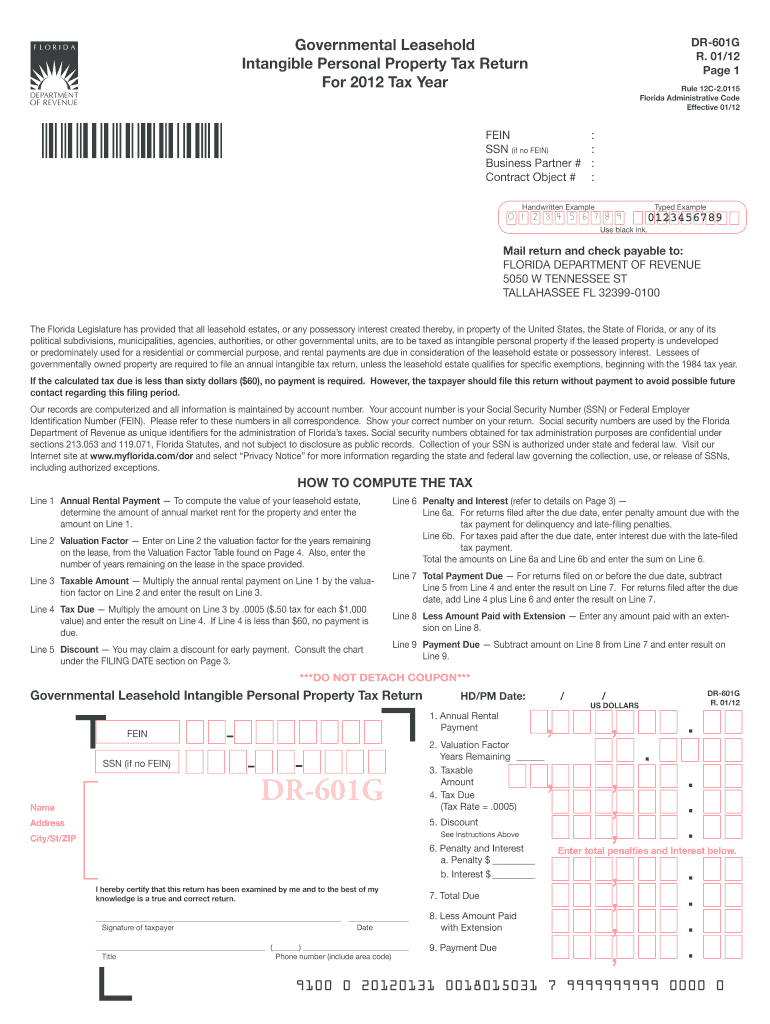







Definition and Purpose of the DR-601G 2012 Form
The DR-601G 2012 form is a tax return document used in Florida for the Governmental Leasehold Intangible Personal Property Tax. It specifically applies to lessees of government-owned property for the 2012 tax year. This form is essential for reporting and computing taxes based on rental payments and lease terms associated with such properties. The tax is focused on leasehold estates in government property unless specific exemptions are outlined.
How to Use the DR-601G 2012 Form
Using the DR-601G 2012 form requires familiarity with its sections and guidelines:
- Filing Requirements: Ensure that you meet the conditions necessary to file this form, typically involving leases on government-owned properties.
- Information Entry: Accurately detail all taxable leasehold interests, compute the correct amount due, and gather any supplementary information as required by the instructions.
- Review and Submission: Carefully review the completed form for accuracy before submission to avoid penalties.
Steps to Complete the DR-601G 2012 Form
- Gather Necessary Information: Collect details about the lease terms, payment schedules, and any applicable exemptions.
- Fill Out Lease Information: Provide thorough details on each lease, including start date, property description, and lessee information.
- Calculate Tax Due: Utilize the form's instructions to compute the appropriate tax based on your leasehold interests.
- Complete All Sections: Ensure all relevant parts of the form are filled in, including any additional schedules or attachments.
- Review and Sign: Confirm completeness and accuracy before signing the form to validate your submission.
Who Should Use the DR-601G 2012 Form
This form is primarily utilized by:
- Corporations and Individuals: Engaged in leasing government-owned properties, possessing leasehold interests.
- Property Managers: Handling leases on behalf of entities that include leasehold interests within their property portfolio.
- Tax Professionals: Assisting clients with government property leases in Florida.
Filing Deadlines and Important Dates
Timely filing of the DR-601G 2012 form is crucial to avoid penalties:
- Annual Filing Date: Typically due on April 1st, following the taxable year.
- Penalty for Late Submission: Late filings may incur penalties, so ensure the form is submitted on or before the deadline.
Key Elements to Include on the DR-601G 2012 Form
- Property Details: Precise information about the leased property and its government owner.
- Lease Term Information: Start and end dates, rental amounts, and any adjustments or modifications.
- Exemptions Applied: Clearly state any exemptions claimed with supporting documentation if necessary.
- Tax Calculation Worksheet: Use this to display calculated tax due from leases.
Penalties for Non-Compliance
Failure to comply with filing requirements may result in:
- Monetary Penalties: Interest accrued for late payments or submissions.
- Legal Repercussions: Potential audits or further investigations by tax authorities if non-compliance is detected.
State-Specific Rules for the DR-601G 2012 Form
- Florida Regulations: Specific to Florida, recognizing differing intangible tax regulations than other states may impose.
- Exemption Clauses: Florida law may offer unique exemptions not available in other jurisdictions for similar leasehold interests.
Obtaining the DR-601G 2012 Form
This form is generally accessible through:
- Florida Department of Revenue: Visit their official website for downloadable forms.
- Tax Professional Offices: They often have forms available and offer assistance in filling them out.
This comprehensive guide should help users understand, complete, and submit the DR-601G 2012 form accurately, ensuring their compliance with Florida's tax requirements for government leasehold intangible personal property.




