




Here's how it works

01. Edit your form online
Type text, add images, blackout confidential details, add comments, highlights and more.

02. Sign it in a few clicks
Draw your signature, type it, upload its image, or use your mobile device as a signature pad.

03. Share your form with others
Send it via email, link, or fax. You can also download it, export it or print it out.
How to use or fill out Tax Exempt Manufacturing Application Packet - Oklahoma Tax with our platform

- Click ‘Get Form’ to open the Tax Exempt Manufacturing Application Packet in the editor.
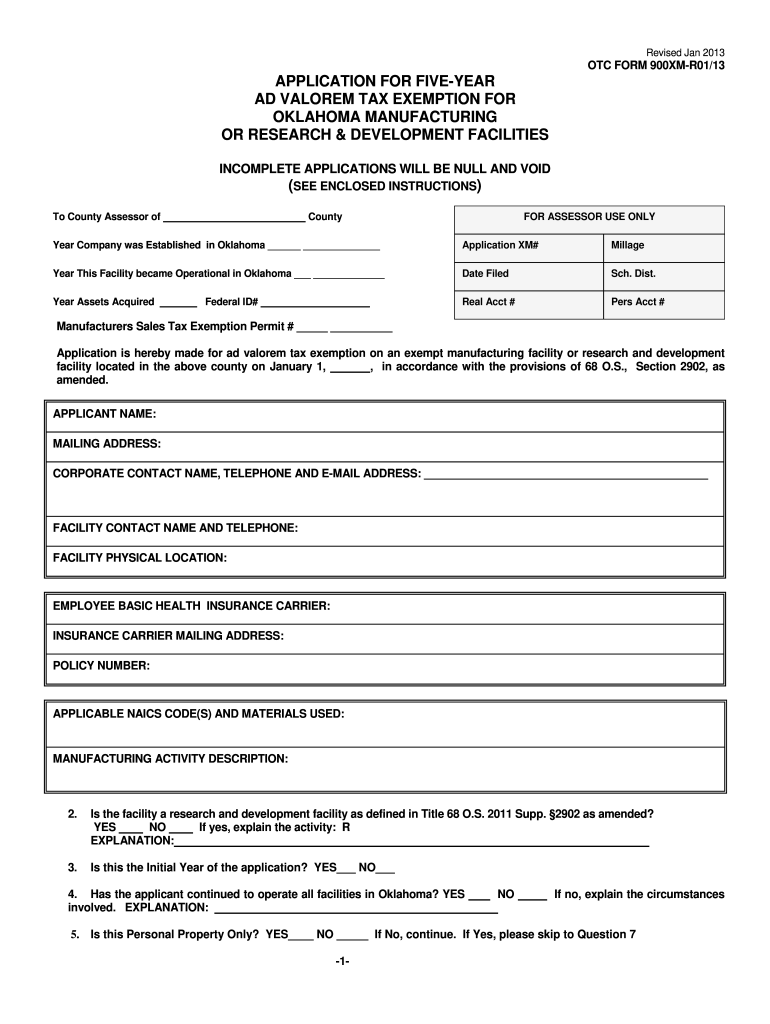
- Begin by entering the year in which each asset group was acquired in the upper right corner marked 'Assets Acquired ___.'
- In the first paragraph, specify the tax year for which you are filing by filling in the blank marked 'January 1, ___.'
- For Question 1, provide your North American Industrial Classification System (NAICS) code and a detailed description of your manufacturing activity.
- Answer either Question 6A, 6B, 6C, or 6D to indicate your eligibility scenario regarding real estate involvement.
- In Question 7, clearly state the amounts of exemption you are claiming on eligible property located in Oklahoma as of January 1.
- Complete Page 4 with your signature and ensure it is notarized. If signed by someone other than a company officer, attach Power of Attorney form #BT129.
- Fill out Page 5 with employment level and payroll information as instructed.
- On Page 6, list all tangible and intangible personal property using the provided worksheet format.
Start using our platform today to streamline your application process for free!
Fill out Tax Exempt Manufacturing Application Packet - Oklahoma Tax online
It's free
It's free
See more Tax Exempt Manufacturing Application Packet - Oklahoma Tax versions
We've got more versions of the Tax Exempt Manufacturing Application Packet - Oklahoma Tax form. Select the right Tax Exempt Manufacturing Application Packet - Oklahoma Tax version from the list and start editing it straight away!
Got questions?
We have answers to the most popular questions from our customers. If you can't find an answer to your question, please contact us.
Contact us
What products are exempt from tax?
Zero-rated supplies basic groceries such as milk, bread, and vegetables. agricultural products such as grain, raw wool, and dried tobacco leaves. most farm livestock. most fishery products such as fish for human consumption. prescription drugs and drug-dispensing services.
How to turn in an application for a sales tax exemption in Oklahoma?
To apply for an Oklahoma Sales Tax Exemption Certificate, businesses or organizations must complete and submit Form 13-16-A to the Oklahoma Tax Commission (OTC). Supporting documentation, such as proof of nonprofit or manufacturing status, may be required.
What qualifies for sales tax exemption in Ohio?
Some customers are exempt from paying sales tax under Ohio law. Examples include government agencies, some nonprofit organizations, and merchants purchasing goods for resale. Sellers are required to collect a valid exemption or resale certificate from buyers to validate each exempt transaction.
What is considered tax-exempt in manufacturing?
Running a manufacturing business involves complex tax obligations, particularly when navigating sales tax exemptions. These exemptions are often available on purchases like raw materials, machinery, or equipment used directly in manufacturing.
Is manufacturing exempt from sales tax in Oklahoma?
Purchases by a manufacturer of tangible personal property or services for use in a manufacturing operation are exempt from sales and use taxes in Oklahoma.
Security and compliance
At DocHub, your data security is our priority. We follow HIPAA, SOC2, GDPR, and other standards, so you can work on your documents with confidence.
Learn more


People also ask
What qualifies for tax exempt in Oklahoma?
While Oklahoma imposes a state sales percentage of 4.5%, it also provides several tax-exempt purchases, including food ingredients, prescription medications, and certain agricultural supplies.
What are examples of tax exempts?
Exempt organization types Charitable organizations. Churches and religious organizations. Private foundations. Political organizations. Other nonprofits.
What is tax exempt for manufacturing?
These exemptions are often available on purchases like raw materials, machinery, or equipment used directly in manufacturing. However, the rules and qualifications for these exemptions vary by state, making it crucial to understand the specific regulations in your area.


