
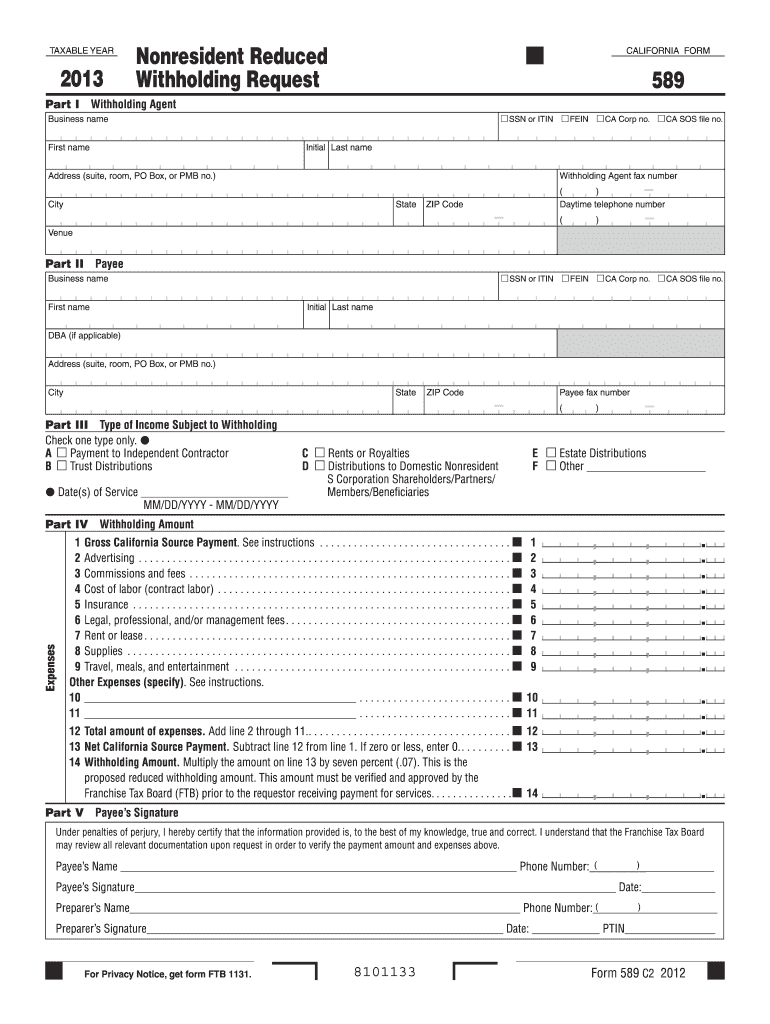







Definition & Meaning
The "2013 form withholding" typically refers to any forms required by the IRS or state tax agencies to report or adjust withholding amounts for taxes. Withholding forms are used by both employees and employers to ensure the correct amount of income tax is deducted from paychecks or other payments. This often involves calculating the appropriate tax liability based on personal exemptions, filing status, and special tax credits. By using the correct form for 2013, taxpayers aimed to avoid underpayment or overpayment of taxes, which could result in a more accurate final tax bill.
How to Use the 2013 Form Withholding
When using the 2013 form withholding, it is crucial to anticipate your tax liability accurately. Employees typically complete these forms by inputting personal information such as filing status and claiming exemptions. Employers then utilize this information to calculate and withhold the proper amount of federal and possibly state income tax from the employee’s wages. If you are self-employed, this form could help anticipate quarterly tax payments to avoid penalties at year's end.
Example Scenarios
- Single Individuals: Claiming one exemption for themselves and possibly having additional taxes withheld.
- Married Couples: May need to coordinate withholding between spouses' incomes to optimize tax withholding.
- Retired Individuals: Adjust withholding on retirement income to account for new sources of income or changes in income level.
Steps to Complete the 2013 Form Withholding
- Collect Personal Information: Your name, Social Security number, and your filing status need to be filled in correctly.
- Determine Exemptions: Decide the number of personal exemptions based on your dependents and filing status.
- Compute Additional Withholding: If necessary, add a specific additional dollar amount to ensure proper withholding.
- Sign and Date: Ensure accuracy, then sign and date the form, which validates the information you have provided.
- Submit to Employer: For employees, submit the completed form to your HR department or payroll service; for others, keep a copy for tax preparation.
IRS Guidelines
The IRS provides specific guidelines that govern how much should be withheld based on income and personal circumstances. This involves tables and calculators to assist in what the withholding amount should be relative to your earnings and tax situation. These guidelines are the cornerstone for completing the form effectively to avoid underwithholding, which could lead to penalties, or overwithholding, meaning a larger-than-necessary tax refund.
Filing Deadlines / Important Dates
The withholding form itself does not have a specific filing deadline, as it can be submitted to employers any time there is a change in personal circumstance or income. However, it is essential to submit a new form each year or as soon as any major life change occurs (e.g., marriage, birth of a child) to ensure withholding is up to date.
Key Timing Considerations
- Beginning of the Year: Great for starting with clear tax expectations.
- Major Life Events: Immediate submission to adjust withholding if you get married, have a child, etc.
- Job Changes: New job start requires immediate submission of an updated form.
Who Typically Uses the 2013 Form Withholding
Typically, the form is used by employees at the start of new employment or at the beginning of each calendar year to ensure their withholding is correct. Self-employed individuals can also use similar computations to determine quarterly tax payments. Each estate and trust that makes payments subject to withholding may also need to utilize this form for payment recipients.


Key Elements of the 2013 Form Withholding
- Filing Status: Single, married filing jointly, married filing separately, head of household.
- Allowances and Exemptions: Directly affect the withholding amount.
- Additional Dollar Amounts: To be specified for higher-earning individuals or to adjust underpaid tax amounts.
Legal Use of the 2013 Form Withholding
In the United States, the legal use of the form includes accurately reporting to ensure the correct tax liability is applied. Legal use ensures compliance with federal income tax laws, avoiding penalties associated with underpayment such as interest charges from the IRS.
Examples of Using the 2013 Form Withholding
- Employee Revision: An employee may need to submit an updated form if taking on a second job affects total annual income.
- Seasonal Workers: Adjustments during higher earning months to prevent sizable tax obligations at end-of-year.
- Married Changes: Combining incomes or if a spouse starts or stops working, necessitating withholding readjustment.
By following these comprehensive insights into the 2013 form withholding, taxpayers and employers can ensure accurate tax processing and compliance with IRS regulations.


