
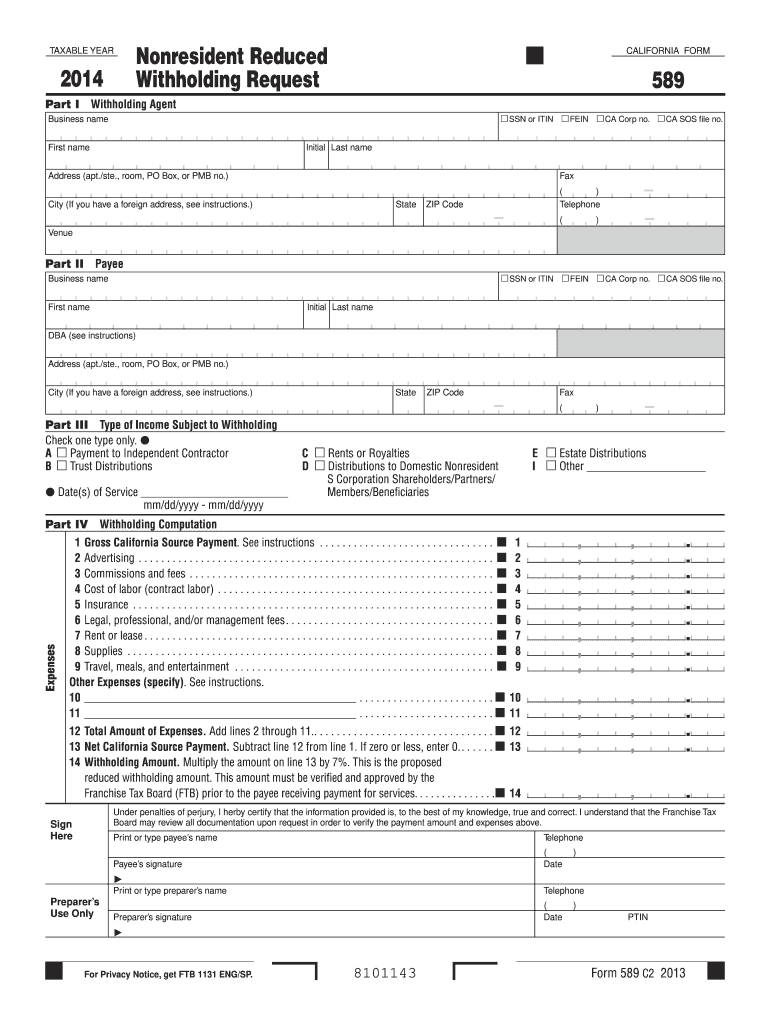







Definition and Meaning
The "2014 form withholding" refers to the tax withholding documents used during the year 2014, typically utilized for federal and state income tax purposes in the United States. This document is pivotal for taxpayers and employers in determining the amount of income tax that is to be withheld from an employee's wages or other income sources. The form serves as a guideline to ensure that the correct amount of taxes are gradually paid to the Internal Revenue Service (IRS) or relevant state tax agencies throughout the year.
How to Use the 2014 Form Withholding
To use the 2014 form withholding effectively:
-
Identify the Required Form: Determine whether you need federal or state-specific withholding forms. Common federal forms include the W-4.
-
Complete Personal Details: Fill in personal information like your name, Social Security number, and filing status. This section is crucial for calculating accurate withholding amounts.
-
Determine Allowances: Use the form’s worksheets to calculate the number of withholding allowances you can claim. More allowances generally mean less tax is withheld.
-
Adjust Additional Withholding: Indicate any additional tax you want withheld per pay period if standard withholding does not meet your needs.
-
Submit to Employer: Once the form is completed, submit it to your employer's payroll department to update your withholding status.
Steps to Complete the 2014 Form Withholding
Completing the 2014 form withholding involves several methodical steps:
-
Access the Form: Obtain a copy of the form from the IRS website, your employer, or a tax preparer.
-
Fill in Personal Information: Provide accurate personal details, including your legal name and Social Security number.
-
Claim Allowances: Use the form's worksheets to accurately claim the number of allowances. Consider using additional resources like IRS calculators to guide this process.
-
Select Filing Status: Choose your filing status based on your marital situation or tax declarations from previous years.
-
Sign and Date the Form: Ensure that you sign and date the form to make it valid for processing.
-
Submit the Form: Turn the completed form into your employer, who will adjust payroll withholdings accordingly.
Key Elements of the 2014 Form Withholding
Several elements are key to understanding and effectively completing the 2014 form withholding:
-
Personal Information Section: Contains fields for name, address, and Social Security number. These details must match IRS records for correct processing.
-
Allowances Worksheet: Guides the calculation of withholding allowances based on dependents, personal tax credits, and deductions.
-
Withholding Adjustment: Option to request extra withholding to cover expected tax liabilities beyond standard withholdings.
-
Employee’s Signature: Validates the form; without a signature, the form is not actionable.
Who Typically Uses the 2014 Form Withholding
Individuals and entities that would typically use the 2014 form withholding include:
-
Employees: To update their federal and state withholding preferences, ensuring taxes are adequately covered throughout the year.
-
Employers: To adjust payroll systems based on employee elections, ensuring accurate tax reporting and withholding.
-
Tax Preparers: To assist clients in determining optimal withholding settings based on their comprehensive tax circumstances.
-
New Employees: Individuals new to a job, often fill out these forms when they begin employment to ensure timely tax setups.


IRS Guidelines
The IRS offers specific guidelines to ensure the proper use of the 2014 form withholding:
-
Review Periodically: Employees should review and, if necessary, adjust their withholding at least annually or when significant life changes occur.
-
Resources for Calculation: Utilize IRS-provided calculators and simulations to ascertain the optimal number of allowances.
-
Deadline for Submission: Employers are required to incorporate withholding changes into payroll systems promptly, typically within a pay cycle after receiving the employee's form.
Penalties for Non-Compliance
Failure to properly utilize the 2014 form withholding can result in a range of penalties such as:
-
Under-withholding: May result in tax underpayment penalties and accrued interest on overdue taxes at the end of the tax year.
-
Failure to Provide Form: An employer failing to ensure employees have proper withholding forms may face IRS fines or penalties.
-
Audit Flags: Incorrect information or unexplained discrepancies in withholding can increase the likelihood of an IRS audit.
State-Specific Rules for the 2014 Form Withholding
Each state may have unique requirements, such as:
-
Separate State Forms: Some states require separate forms with additional allowances and fields not covered by federal forms.
-
Differences in Allowance Calculations: Variation in how allowances are counted might necessitate consulting state guidelines for the most accurate withholding.
-
State-specific Filing Deadlines: Observe state-specific submission timelines to avoid penalties and ensure compliance.
Thorough understanding and adherence to these comprehensive guidelines ensure proper use and submission of the 2014 form withholding for federal and state tax compliance.


