
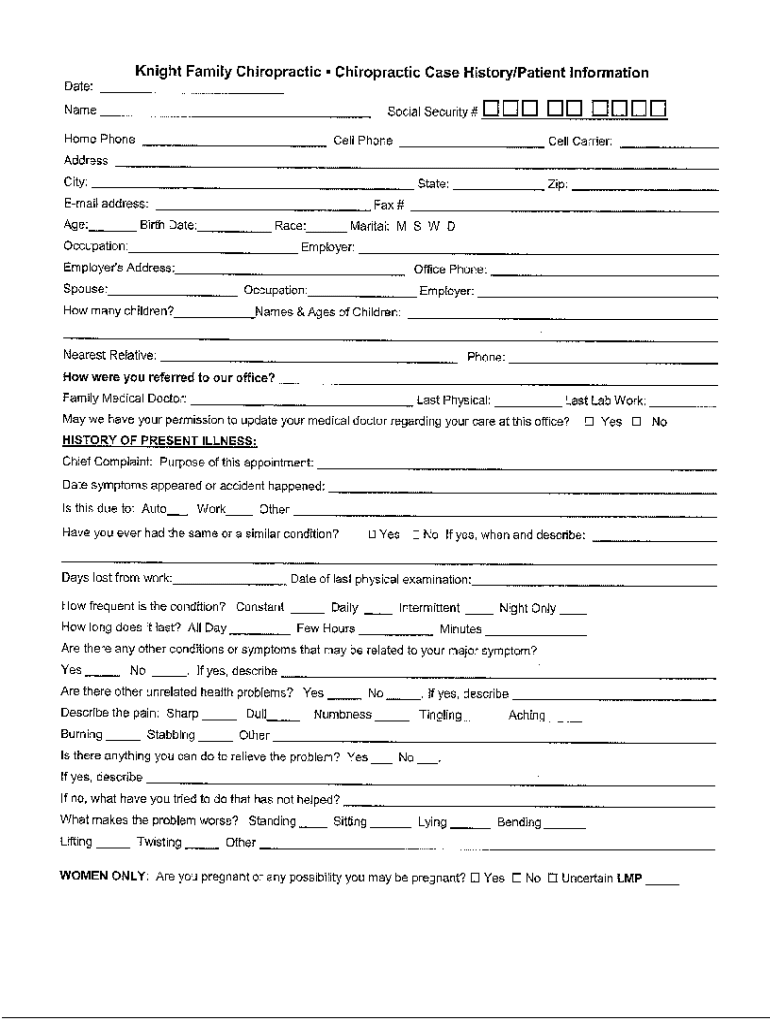







Definition and Purpose of the New Patient Medical Information Form
The new patient medical information form is a crucial document used by healthcare facilities to gather essential medical information from patients. It serves as a comprehensive record of a patient's medical history, current health status, and other relevant information such as medications and allergies. This form is an integral part of the initial patient registration process, allowing healthcare providers to deliver personalized and effective medical care.
Components of the Form
Typically, this form includes sections for personal details like name and contact information, insurance details, emergency contacts, medical history, current medications, allergies, and consent to treatment. By capturing this data, healthcare providers can make informed decisions regarding diagnoses and treatment plans.
Importance of Using the New Patient Medical Information Form
The new patient medical information form plays a vital role in healthcare settings. It ensures that medical staff have access to accurate and complete medical records, which is essential for safe and consistent patient care. Moreover, collecting this information upfront reduces the likelihood of medical errors and enhances the patient experience by streamlining administrative processes.
Benefits for Patients
- Reduced Wait Times: By filling out the form prior to an appointment, patients minimize in-clinic wait times.
- Informed Consent: Patients have the opportunity to provide informed consent on their treatment options directly through the form.
- Improved Communication: Shared information improves communication between patients and healthcare providers, fostering a more trusting relationship.
Steps to Complete the New Patient Medical Information Form
Filling out the new patient medical information form involves a systematic approach to ensure that all required information is accurately provided. Below is a step-by-step guide on how to complete the form:
- Personal Information: Enter your full name, birthdate, address, and contact numbers.
- Insurance Details: Provide your insurance provider's information and policy numbers.
- Emergency Contacts: List contacts that should be reached in case of an emergency, including their relationship to you.
- Medical History: Note any pre-existing conditions, surgeries, and ongoing treatments.
- Current Medications: Enumerate all medications you are currently taking, along with dosages.
- Allergies: Clearly list any allergies, including medication, food, and environmental triggers.
- Consent and Signature: Review the final document, ensure all information is correct, sign, and date the form.
Who Typically Uses the New Patient Medical Information Form
Healthcare providers across various settings utilize this form to ensure comprehensive patient record-keeping. The primary users of this form include:
- Doctors' Offices: To create baseline medical profiles for new patients.
- Hospitals: For inpatient and outpatient admissions.
- Urgent Care Centers: To quickly evaluate walk-in patients.
- Specialist Clinics: To assess patients who are referred for specialized care.


Key Elements of the New Patient Medical Information Form
The form consists of several key sections that collect different aspects of a patient's medical profile:
- Patient Identification: This section captures the patient's demographic details.
- Medical History: Essential for understanding past health issues and surgeries.
- Current Health Status: Includes symptoms or health concerns that brought the patient to seek care.
- Medication and Allergies: Critical for preventing adverse drug interactions and allergic reactions.
- Insurance Information: Necessary for processing claims and determining coverage.
Examples of Using the New Patient Medical Information Form
Real-world scenarios illustrate the form's utility in healthcare settings:
- Primary Care Integration: When a patient joins a new primary care practice, completing this form ensures the provider has comprehensive health insights before their first appointment.
- Specialist Referrals: Specialists use this form to learn about a patient's medical background, enabling targeted investigations and treatments.
- Pediatrics: Parents complete the form to document child-specific health needs and immunization records for new pediatric patients.
Digital vs. Paper Versions of the New Patient Medical Information Form
Both digital and paper versions of the new patient medical information form serve important roles in modern healthcare:
- Digital Forms: These are often used in digital health systems, where patients can complete and submit forms online. Benefits include easy access, automatic updating, and integration with electronic health records.
- Paper Forms: Traditional paper forms remain prevalent in many practices. They provide a tangible record and are easily accessible in settings without robust digital infrastructure.
Advantages of Digital Forms
- Convenience: Forms can be completed remotely, reducing in-office wait times.
- Efficiency: Digital forms streamline data entry into electronic health record systems.
- Accessibility: Patients can access and update their information as needed through secure portals.
Legal and Compliance Considerations for New Patient Medical Information Form
Using the new patient medical information form involves adherence to important legal requirements, including:
- HIPAA Compliance: Ensures that patient medical information is handled with confidentiality and security.
- Informed Consent: Patients must provide consent for treatments and share sensitive health data.
- Tamper-proof Records: Digital submissions should ensure data integrity and be compliant with healthcare regulations.
Healthcare providers must ensure that both digital and paper versions of the form meet these compliance standards to protect patient privacy and facilitate ethical medical practices.




